
As it stands with physical activity…
We’ve long supported exercise, and overall physical activity of any form is directly a contributor to better long-term health outcomes and improved holistic wellness. Some studies have shown that irregularities with data indicate that there is a mix of health outcomes regardless of training intensity or modality. We are learning generalized interventions of focusing on increasing the estimated 1-RM for single-leg strength through resistance training and increasing your VO2 Max through aerobics, which are valid concepts. These are excellent interventions to improve quality of life for the long term. However, the “X-Factors” of some data observed also show that there are outliers from the generalization of getting stronger at a leg press, etc. Some people still have diseases, poor health outcomes, and a loss of abilities for ADLs and quality of life, even with a training… Why?
Why are there outliers when we look at how some individuals’ health outcomes may vary regardless of training intensity or modality of exercise?
Physical Activity Frequency and Its Role in Preventive Medicine.
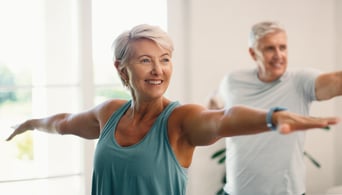 One important aspect of why this is a phenomenon is how often we move. The amount of movement outside of the gym often correlates to better mobility, better strength, better balance, and one of the most important factors being it is easier to move. If you move often, it becomes a habit to stay in motion and it becomes less demanding as you continue.
From my position as an exercise physiologist, I have worked with clients living with and managing various disease factors. I talk with these populations daily and get a sense of what their lifestyle factors are to gain an understanding of a better approach to their health and wellness holistically. As some studies would indicate, frequency of movement outside of the gym is the most important predictor of long-term health outcomes and a better quality of life. That is why, regardless of increasing single-leg press strength, if we lack the mobility to get up from the ground or walk with a natural gait… it becomes harder to move over time. When this happens, many people move less.
I had a profound conversation with an individual who excelled in their personal wellness journey throughout their Parkinson’s diagnosis. He explained to me a similar thing that I have seen firsthand with many other clients of varying capabilities, limitations, and disease diagnoses. He shared a belief that many people stop moving because they can no longer move in the same way. There is an aversion to physical activity as it becomes more challenging to be active. This is the critical concept we need to emphasize in the fitness industry. The easier we can make movement quality, the more an individual will tend to choose to move. Often, the easier it is to move, the more active an individual will be.
Ease of movement can be affected by cognitive ability, control of the body, balance, mobility, energy systems, and numerous aspects that are all interconnected.
Building Stable and Lasting Movement
Starting with mobility as the basic building block of natural movements and patterns of movement. If we have restrictions in the range of motion and tension around muscles and fascia surrounding those muscles (which occurs as we age and see changes in elastin in our musculoskeletal system), then muscle imbalances become more of an issue. We see compensation no longer move as our structural anatomy might necessitate. Mobility improvement should be an initial focus for movement quality.
Once a level of mobility has been improved, the next focus should be on rebuilding stability with a correct movement pattern. This requires a focus on slow and intentional movement. Studies show that as we speed through an activity, we lose accuracy as a tradeoff. If we are learning a movement pattern that requires intentional focus and muscle engagement, then slower movement develops much more quickly.
The most important recommendation I might make when wanting to develop balance and stability is to focus on the frequency of those movements. The focus should not be on intensity. You might instead plan how often you are performing the movement. We adapt and learn movement patterns largely through our processes of learning, sleeping, and re-learning these movements during the various stages of sleep cycles. That is why when you cram before a test, you perform poorly, whereas if you study often and sleep on it. You connect more long-term information. Input signals and body awareness (proprioception) from feedback traveling from our nerves toward your central nervous system, and the signals going out toward your muscles, etc., to react, are all information that your brain is very clever to recognize and learn.
If your exercises are working on balance or stability, slow it down, progress slowly, and do these exercises regularly. Then these actions and your reactionary control will become second nature… Or the cliché term… “muscle memory.”
What’s next after improving? … Balance, coordination, and stability…
Once movement quality improves to a point that it is good enough to prevent injury and progress, you can then focus on the performance aspect. Performance training can be focused on strength, hypertrophy, etc., but these aspects should not be focused on when we don’t have control and coordination to exercise safely.
Prioritize Safety first, slowing things down as needed, and once you are ready, progress with the performance aspects.
Did You Know?
Exercise is one of the most powerful tools available to help manage Parkinson’s disease. Research shows that regular physical activity—especially exercises that challenge balance, coordination, and mobility—can help slow the progression of symptoms and improve overall quality of life.
At NIFS, we’re committed to raising awareness about the role movement plays in Parkinson’s care. Join us on April 9 for Pump It 2026, a nationwide movement event dedicated to highlighting how exercise supports those living with Parkinson’s while bringing communities together to promote awareness and support ongoing research.
