
<img height="1" width="1" style="display:none" src="https://www.facebook.com/tr?id=424649934352787&amp;ev=PageView&amp;noscript=1">

NIFS Healthy Living Blog

Fueling Training Days vs. Rest Days

Note: Please consult with your physician and/or a nutritionist before incorporating any major dietary changes or restrictions.


How Exercise Affects Your Body

GettyImages-2210432581Your entire body is put under stress during a workout. Each body system fires in its own unique way in unison to keep pushing. Quite simply put, you might think of exercise as a controlled practice of breaking your body down to rebuild stronger.

With each repetition, your muscle tissues are breaking down, releasing byproducts that stimulate your energy systems for sustained effort. We need this to keep moving, once we’ve used up our initial ATP Phosphocreatine and glycogen.

In recovery phases, these byproducts of lactate contribute to growth responses at the cellular level. Through the process of rebuilding, in recovery, our body utilizes nutrition, sleep, and hydration to “fortify” itself. It is amazing the adaptations the human body can make to a stimulus it is exposed to.

We also see with weight training or impact loading in aerobic exercises, that our bones have little cells called osteocytes that calcify and contribute to denser bone structures. All processes in your entire body are affected by physical activity, but the adaptations I mentioned are only optimal when we fuel our bodies correctly.

Why You Might Not Be Making “Gains”

Let me ask you this… How much do you eat every day? How much are you sleeping every night?

If you answered conservatively or with a low estimate of calories per day, that is your first issue. To gain muscle mass, or any mass, a surplus of daily calories is ideal. That isn’t eating the maintenance level of calories per day; that is eating above that range.

Prioritizing healthy and nutrient-dense food options may be an obvious thing for some. Assuming you do not have special dietary considerations, you might look at a macromodel of nutrition.

Understanding the Macromodel of Nutrition

The macromodel of nutrition is a generalized diet practice incorporating an emphasis on the content of major macromolecules in our foods. Carbs, Proteins, and Fats are the Macromolecules that our body utilizes.

Daily Caloric Split (Macromodel Example):

  • Carbohydrates: 45–65%

  • Proteins: 10–35%

  • Fats: 10–25%

Carbohydrates: Fuel Your Activities

Carbohydrates consist of an average of 45-65% of our total caloric intake per day. These molecules can be simple and complex. Simple carbs are found in sugar, bread, fruits, and quickly digested foods. Complex carbs consist of starches, vegetables, legumes, and fibrous options. Complex carbs take longer to digest, but keep the body fueled for sustained effort due to a generally higher caloric content.

The positive aspect of simple carbohydrates is that they offer quick energy with less time to digest and offer availability in our tissues for rapid use. The drawback of simple carbs is that they hike up our blood sugar, which puts a higher glycemic load on the body. In a healthy individual, that is fine and could offer recovery benefits if training (paired with protein), because they have a healthy insulin response to this sudden sugar spike. The sugar gets to our muscles and “where it needs to go” with insulin release from our liver. In an older individual or an individual with compromised energy systems, such as diabetes and metabolic conditions, it may be better to favor more complex carbs that slow digestion and the release of sugar due to the fiber content.

For the general person, the main consideration for training days would be windows of digestion and bioavailability. Typically, 2-3 hours would be a good timeframe before training to prioritize your simpler sugars. Beyond that, 3-5 hours before exercise would emphasize complex carbohydrates. For example, when you train legs at 4 pm, you might look at a 12 pm lunch with a fibrous salad and lean protein. At 3 pm, you may eat an apple for a quick pick-me-up before your squats. You allow that digestion time for fibrous foods in advance and rely on the quick, simple carbs before your higher activity level. 

Fats (Lipids): Essential and Beneficial

Many people are misinformed by thinking that limiting fats in their diet is “healthy” is good, but this is a nuanced subject. Fats (Lipids) support our health more related to sustained low-intensity activities, cellular function, and hormonal responses. We need an essential level of fat stored on our bodies to allow for healthy bodily functions. Our body can convert excess energy into body fat from other macromolecules like carbs and proteins, when eating those in surplus as well.

Don’t shy away or eliminate fat in your diet, because it is necessary for your health and functioning. In a macromodel meal plan, you might prioritize 10-25% of your diet to involve a balance of saturated animal fats and unsaturated fats such as nuts, olive oil, avocados, and chia seeds.

Saturated fats can be moderately consumed by healthy individuals with well-regulated metabolism and regular physical activity. However, when eaten in excess amounts regularly in our diet, it may be connected to endothelial dysfunction and, in the long term, may contribute to atherosclerosis. This happens when the endothelial layer (inside walls of our blood vessels and capillaries are unable to release Nitric oxide as effectively to dilate. The reduced endothelial function leads to the formation of superoxide and oxidative stressors, which, over time, can lead to heart disease. Continued moderate to high intensity aerobic activity is one way to protect against the oxidative stress caused by excess fats in our diet.

One consideration before exercise would be to avoid high-fat content in your food choices before exercise, because it may negatively affect nitric oxide bioavailability when going into exercise.

Proteins: Your Body’s Building Blocks

Proteins are less involved in our daily energy levels during activities or at rest, and are more involved in the recovery processes across your entire body. As members of a gym, we think in terms of muscle tissue, but realistically, protein and amino profiles from our diet are involved in building all cells from our own DNA structures. We need proteins to utilize our “genetic scaffolding” and, from that, adapt and build new tissues after they break.

Maintaining a consistent protein intake of around 0.8-1.1g per kilogram per day is a minimal maintenance guideline. That need could be higher based on the individual, their regular physical activity, and other lifestyle factors.

One consideration after exercise would be to consume protein and carbohydrates within a 45-minute window after exercise. For strength training, that would look like a 3:1 ratio of grams of protein to carbohydrates. This would aid in replenishment of glycogen (“sugar” in our muscles) after exercise and may mitigate loss of muscle mass after exercise.

How NIFS Can Help

If you’d like to learn more about your caloric needs at rest or with activity, please contact our fitness center. We offer RMR (resting metabolic rate) testing, as well as Vo2 Max testing. Both assessments may help you dial your diet to reach your goals.

Topics: rest workout plan health and fitness

Goal Setting that Actually Sticks

GettyImages-2190201821We made it to 2026! NIFS has your back this year, and we want to see you reach your big goals and be the healthiest version of yourself. So, where do we start this year?

The hardest part of adopting healthier habits is envisioning where we truly want to be long term. It is hard to start if we don’t know the finish line. If there is a disconnection between our intrinsic motivation and our current behaviors, then that is a good place to explore first.

Check-In / Let’s Stop for a Moment…

Take a moment to think about what fitness and wellness goals you might have for yourself. If you don’t have a clear one, you might explore areas of your life you’d like to improve upon.

In health coaching, we often use a wellness wheel activity or a self-rating scale (1-10) to gauge how you feel about your performance in different areas of life. There are eight dimensions of wellness: physical, emotional, social, financial, occupational, environmental, intellectual, and spiritual.

Think about how you might grade yourself in these areas. You may be an A+ student in physical wellness while giving yourself a D- in finances. That is okay! We are in a constant state of growth every day and taking on new opportunities.

How Can Your Strengths Help You Grow?

Lean into your strengths—they are your north star. For example, maybe you’re a student and very disciplined with your time management. You could approach a new fitness goal in terms of time management. Instead of jumping straight into a new routine, build momentum into your day-to-day schedule.

Perhaps set a calendar reminder for ten minutes of walking and some bodyweight exercises. You don’t have to reach the end goal immediately; start by using your strengths as resources. Excelling in one area can eventually help you grow in others.

Start SMART

Setting a goal with SMART formatting is a perfect way to tackle the areas of wellness you want to improve. SMART stands for Specific, Measurable, Attainable, Realistic, and Timely.

The specificity of a goal is important because lasting habits are often tied to our values. Start with an “I” statement, such as “I will be going to the gym more often” or “I will eat more whole foods.”

Measurable goals clarify how you will know you’ve made progress. For example, “Going to the gym more often… after work on at least three days every week” gives you a tangible habit and a way to track success.

Set goals that are attainable within a realistic timeline. In health coaching, we usually start with three months to adopt new behaviors, though it can take nine months or more to make them habits. A three-month goal challenges you to grow but is short enough to fit your current schedule. Be realistic about your abilities to avoid discouragement.

Let’s Put It All Together and Tackle 2026!

Remember, set yourself a goal that sounds possible to yourself in a foreseeable timeline. It may take effort, but by clearly articulating WHAT you want or WHERE you’d like to be it removes some of the challenges around the unknown. Focus on the behaviors you want to improve and hold yourself accountable to how you are measuring your progress.

Setting a weekly action plan can help with accountability. This can be something simple like 3 small actions to perform that can assist the great goal.

If your goal is to get to the gym more, then maybe you might be setting these weekly action steps, for example:

1. I’ll pack my water bottle, and gym shorts the night before.

2. I’ll turn off my email at 5pm to get to the gym.

3. I’ll look at my fit watch to make sure I hit my goal.

Keep things simple and clear for yourself. You can easily spot when you may be falling off a bit and put yourself back into gear. You will have periods of a lack of motivation or perhaps many distractions in life…

Going back to your plan and focusing on small action steps will keep you moving forward foot by foot… day by day… and year by year. If you need help in setting a SMART goal, please reach out to me at acarpenter@nifs.org. I’m a health coach (NBC-HWC) here at NIFS and would enjoy the opportunity to help you reach your long-term goals.

You’ve got this!

Topics: new year fitness goals workout plan

Five Tips for Maintaining Your Health and Fitness over the Holidays

GettyImages-1406790902With the holidays coming up, it can be easy to get caught up in the busyness of it all. From Thanksgiving to Christmas, we are bombarded with festive meals, holiday parties, sweet treats, and family gatherings that simply interrupt our normal routine. The holiday season is one of the most difficult times to stay motivated to be healthy. Not to mention the fact that it is several degrees cooler and I would rather hibernate than go out to the gym. Plus, many of us travel to visit family and friends and we are just not close to our gym.

I know that I personally struggle with all of these things, especially because the food around the holiday time is absolutely my favorite. To really get myself into the right mindset, I follow these five tips to make sure I can keep my health and fitness at the level I want it to be at.

1. Maintain the right mindset.

Staying motivated won’t be possible unless you start out with the right mindset. Go into the holiday season determined and dedicated. Do not make excuses when it comes to working out. Make sure that it is really a priority for you and something that is attainable.

2. Make a schedule.

Making a plan and workout schedule ahead of time will make it a lot more difficult to make excuses when the time comes. If you are prepared, you are more likely to get it done. Take a look at your schedule and write down the times that you will be able to get in your workout session.

3. Make it a family activity.

If you are struggling to find the time to balance working out and also spending time with your family, make getting exercise a family activity. For example, my family goes out and walks together, takes fun exercise classes together, and even runs fun holiday-themed 5Ks together. Not only are we working out, but we are making memories as well.

4. Switch up your normal workout.

You can add new exercises to keep it new and exciting. You are less likely to get bored with something that you are working on improving. You can also include more HIIT workouts that will help you achieve a lot in a short amount of time.

5. Know that you don’t always need a gym.

During the holidays, you are more than likely going to be traveling a lot and may not be by a gym. Doing body-weight exercises or using at-home items to lift can be a useful temporary solution when you are away. Try some of these exercises and workouts.

***

Even though it's the season of giving, be sure to not give yourself a hard time. Some days a workout just won’t happen, and you may find yourself consuming more calories. We have to remember to be gracious to our minds and our bodies. Being too strict on yourself can cause you to burn out and even create unhealthy habits. Make sure you understand your balance so that you can live your best life.

Happy Holidays and Happy Fitness!

New call-to-action

This blog was written by Emily Lesich, NIFS Health Fitness Specialist. To learn more about the NIFS bloggers, click here.

Topics: motivation holidays Thanksgiving traveling new year's mindset christmas workout plan health and fitness family

Making Time for Fitness During the School Year

GettyImages-1352437839With the new school year upon us, it’s time to start thinking about “back to school” fitness. Summer was a time for adventure, vacation, trying new foods, and so much more. Although all that stuff is fun, it can get us out of a routine. As a newly graduated college student, I know how much a routine helped me stay on track for my classes. One thing I always included was exercise. Having consistent workouts is the first step toward a disciplined life.
Studies show that working out consistently actually helps you stay with your schedule. When you plan specific times to exercise, you become more committed, and you can track your progress. When you see that you can stick to a workout schedule and are successful at it, you can start to change your view on other tasks in your life. When one area of your life becomes more manageable, it is easier to do the same with other aspects of your life.

Now you might be asking yourself, “Where do I even start?” Here are a couple of easy steps to making sure you create a workout routine that is a perfect fit for your schedule.

  1. Make fitness a priority: If fitness is important for you, you need to make time for it. Your health should always be your number-one priority. And as a wise person once said, “If you don’t make time for your health, you will make time for your illness." If working out is not one of your top priorities, it will not happen. If you really want to get the most out of it, you need to prioritize it.
  2. Be realistic: The key is to consistently do your best. Make sure you don’t sign up for too much. If you keep missing classes or training sessions because your schedule is too crazy, you’re going to get really discouraged when you don’t see the results you want. When starting a workout routine, start small. At NIFS we offer free classes to members throughout the week at different times (see the schedule here). This is a great way to get started, especially if you don’t know exactly where to start.
  3. Make goals: Making goals is one of the best ways to start your workout routine. If you know what you are working toward, you’re going to work harder to get it. Make sure these goals are SMART. This means that they are Specific, Measurable, Attainable, Realistic, and Time-bound. This will help you track your progress and really see successful results.
  4. Time it right: Make sure you go to the gym at a time that is good for you. If you have a lot of morning classes, go in the afternoon or evening or vice versa. If you're more of a morning person, make sure you get up early in the morning and work out. If you know you have a lot of schoolwork, only work out for 30 minutes. When it comes to timing everything, make sure you come up with a good plan and discern when is the best time for you.
  5. Short workouts count, too: Everyone is busy and sometimes crazy schedules are what stop people from working out. People think that they need to train for 60 to 90 minutes straight or else they won’t see any results. Research shows that 10 to 15 minutes of training can be beneficial for people throughout the day. So, if you want to, you could do a quick 10-minute workout four times a day and you would have completed a 40-minute workout!
  6. Come prepared: Make it a habit to pack a gym bag before you go to classes or work. This way you can go straight to the gym without any additional trips that can get you sidetracked.
  7. Get in more daily fitness: You can get in easy workouts by just doing everyday things. For example, you can take the stairs instead of the elevator, or walk instead of taking the bus. These seem simple, but they add up over the course of the week. A study from The Ohio State University found that you can burn around 20% more calories by just altering your walking pace instead of keeping a consistent speed. You can even make sure you’re active over the weekend. Go for a walk, go for a bike ride, go hiking, or even play a game of baseball.
  8. Be accountable, but reasonable: Some days are going to be harder than others, and you’re just trying to tackle it all. There are going to be many days where you don’t honestly have the time or energy to work out, and that’s okay! When those days happen, allow yourself to miss. But make sure you get moving the next day. Although you don’t want to create the habit of not working out, give yourself room to be human.

Working out does not have to be a scary or daunting thing. Make the most out of it and make it yours! Trying to balance school and fitness can be a lot, but it’s totally doable. Whether you are a student or parent of a student, do your best and keep pushing toward your goals!

New call-to-action

This blog was written by Emily Lesich, NIFS Health Fitness Specialist. To learn more about the NIFS bloggers, click here.

Topics: goal setting group fitness college school fall time management exercise plan workout plan

Step Class: Step Up to a New Level of Fitness!

Step

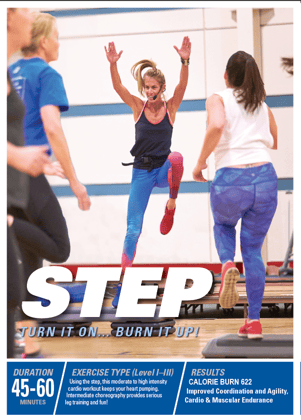
Whether you are 18 or 80, man or woman, looking to lose weight or simply maintain, step class just might be the perfect addition to your fitness program. Have you ever considered taking a step class? Perhaps you have found yourself thinking, "I'm not coordinated enough," or “that's too intense for me (or not intense enough"). Well, give me two minutes to change your mind.

Does It Burn Calories?

The bottom line is, stepping up and down off of a raised platform burns calories. In fact, it burns a lot of calories. According to Self magazine, stepping up and down off of a raised platform burns more calories than doing jumping jacks, split lunges, power squats, or speed skating for the same length of time. A great exercise for weight loss? YES! Great way to maintain weight? YOU BET!

Am I Coordinated Enough?

Maybe you’re thinking that you lack the required coordination. But the reality of it is, if you can march in place, you can do step. The basic step is just that: basic. Up, up, down, down. Of course that move would get boring pretty quickly, so we add music, rhythm, and variations on that basic move. While it helps to have a little rhythm (can you clap your hands to the beat of a song?), anyone can step. It might take a few classes to really get the hang of it, but it is quite doable, and FUN! Don't be intimidated!

There is a first time for everything. At some point, every single person in the class, including the instructor, attended their very first step class. I’m not gonna lie, you probably won't pick up every single thing in the first class you take, but let's face it: what would be the fun of mastering it in the first hour? Half the fun is seeing yourself improve, seeing your cardiovascular fitness level improve, and becoming more efficient overall (more work with less effort). Step will get you there!

Is It Too Intense?

You might be thinking that step would be too hard or too intense for you. While step is designed to be a challenging cardio workout, the intensity level can be adjusted in a number of ways to meet the needs of each participant.

  • The height of the platform is not uniform; with use of individual risers at each end, the platform can be set as low as just a few inches off the floor (or as high as 8–12 inches).
  • Another easy adjustment, which your instructor will show you, is to limit your range of movement with each step. As you become more comfortable with the format, you will be able to add intensity by increasing range of motion with the steps, and by adding arm movements to further increase your heart rate. Because of this, the challenge never ends. There is no plateau.

Is It Not Intense Enough?

On the flip side, maybe you are thinking step is not intense enough. Perhaps you’re thinking that only girls take step, or that you are too fit to benefit from it. Regardless of your fitness level, step can be a very challenging cardiovascular workout. It is a well-known fact that the US military utilizes step aerobics to improve our troops' agility, coordination, and endurance. If it's tough enough for our soldiers, then it's tough enough for me! In addition to step, I also teach Insanity, total-body conditioning, and kickboxing classes. Step meets or exceeds these other formats in intensity level and calories burned per hour.

Step is the perfect group fitness format because it accommodates all fitness levels. (And if you haven't tried group fitness, well that's a whole other conversation.) But in short, try it! The camaraderie and accountability among the participants, the music, and the FUN factor will have you hooked!

So, are you ready to take your fitness regimen to the next STEP? See you in class soon, soon, soon!

Yours in fitness,
Rachel

null


This blog was written by Rachel Pfeiffer, ACE and AFAA Certified Group Fitness Instructor, and proud NIFS Step instructor since 1999.

Topics: cardio group fitness step class workout plan physical fitness

Finding the Right Workout Program (with Some Help from NIFS)

GettyImages-641793510When I discuss working out and fitness with others, one question that I normally ask is, “What are your goals?” and “What does your training look like?” Most times, there will be two responses. The first is from people who are casually exercising without a plan. If you are currently this type of person, don’t get me wrong, it’s good that you are being active, but what if I told you that there is a quicker way to achieve the results that you want?

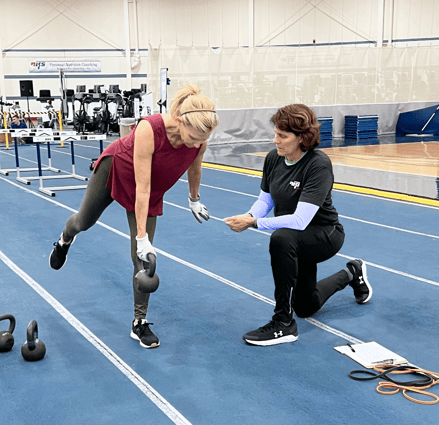
The second response I often hear is from people who write their own programs. At times they get frustrated because they’re not seeing the results that they want. I love seeing people take the initiative to chase their fitness goals, but why leave results on the table when you have great resources at your disposal?

Three Tips for Choosing an Exercise Program

In general, here are three things I consider when I decide what programming to follow.

  • Solidify your goals. I am a big proponent of writing down your goals and posting them somewhere that will constantly remind me of them. I like to post my goals on the refrigerator and on social media; this helps hold me accountable as I have a tangible reminder of my goals and the intangible support from others.
  • Cross-reference available material. I make it a point to cross reference several sources or training methods to see whether a program will really add to my ability to achieve my goal. Always make sure you ask “why” you are doing something as well. Understanding the deeper meaning behind my programming motivates me to work harder, knowing that I have invested myself in something worthwhile.
  • Make sure it’s FUN! I am much more likely to stick to my programming if I find it enjoyable. Myriad training styles will help you accomplish your goals, so pick the one that you will enjoy and adhere to.

NIFS and Your Fitness Goal-Setting

NIFS offers several ways to help you get a jump-start on achieving your goals. The staff members and personal trainers at NIFS are degreed individuals in the exercise science field and have a variety of certifications; they use this knowledge to program workouts that are effective and fun. With an extensive knowledge of exercise physiology and biomechanics, their ever-growing toolbox is full of ways to get you closer to your fitness goals. Having an expert by your side is always an advantage!

***

Picking a program can seem daunting at first, but when you use the right resources, you will pave your pathway to success!

Like what you've just read? Click here to subscribe to our blog!

This blog was written by David Martin. To learn more about the NIFS bloggers, click here.

Topics: NIFS goal setting accountability nifs staff fitness goals workout plan

Get with the Program: 5 Benefits of Having an Exercise Plan

Kris_Personal Training“Success favors the prepared” is one of my favorite quotes highlighting what it takes to be successful in life and any pursuit that interests you. Without preparation and planning, effort and action really have no direction, which can result in you being lost. I would also offer that a misguided workout plan, although it’s a plan you didn’t have before, can be just as detrimental to your success. So having an exercise plan is really important, but having a solid and well-thought-out plan is super important!
Don’t confuse movement with progress when it comes to your weekly and daily training. Getting to the gym is step one, but what you do with your time there will be the difference between achievement and disappointment. We don’t usually argue the benefits of writing down your goals; it’s important and can usually lead to reaching those goals. You have heard me say many times “if you think it, ink it.” Why don’t we do that with our exercise programs? Goals give you your destination; your training program is the roadmap that can get you there. A well-designed map can get you there more quickly and safely.

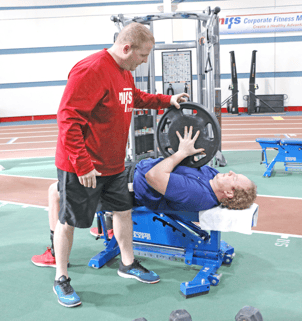
So get with the program! Or should I say, get with a professional about your program. A well-trained and educated coach’s eye can be a game changer when working toward your fitness goals. The guidance they can provide is crucial to your development and ability to reach new heights. Named number 6 on the ACSM fitness trends list, educated and experienced fitness professionals remain an important commodity to you and the rest of the public. Utilize them!

And here are five more benefits of following an exercise program that is designed specifically for you by a fitness pro.

No More Guessing

Having a plan of attack takes the guesswork out of your workout. Fitness centers can be overwhelming at times; and with the amount of information and opinions that are out there, without a plan you could find yourself kind of meandering around not getting a lot of work done. I also think that not having a clear direction can lead to low confidence, resulting in an increased rate of giving up. Getting a program is not just a list of great exercises to do; it can act as your ticket to an “I CAN DO IT” mindset instead of “I don’t know what to do, so I’ll skip it today.” Which mindset do you think is the more successful one?

Proper Techniques and Principles: Injury Prevention

Mike_Personal Training“Move well then move often” is a great quote from the folks over at FMS and one that we carry as our motto around here. Performing exercises correctly that are based on safe and proper movement principles will be the difference between reaching your goals and being laid up for weeks because of an injury due to improper technique or progression. You can’t work if you are injured, and no one should be injured in fitness. But people get hurt all the time due to improper exercise technique and poor guidance. And if you don’t get hurt, you will definitely not receive all the great benefits of an exercise if you are performing it poorly. A great coach can design a program and provide the technical support you need to execute it well. Move well, move often! You get only one body; don’t you want to keep it running for a long time?

Progress Tracking

With a personal program design, you have your record-keeping right in front of you. Whether you are a paper-and-pencil person or a tech-savvy individual, logging your exercises, loads, intensity levels, and rate of perceived exertion is the best way to keep an eye on your progress. And believe me, when you see the weights go up, so does your confidence level and positive mindset.

Just as you wrote out your goals and the benefits of that process, logging your efforts is the next step. How do you know you are heading in the right direction if you don’t document the journey? Seeing is believing, and what better way to see the progress than to log the important variables that make up your program?

Keeping It Fresh

A great fitness pro will be able to design programming for you that is always progressing as you do, and will include different exercises and intensities to continually add new challenges. New stimulus equals new results; that’s just how the body works. After a certain amount of time, your body will no longer have to adapt to the previous stimulus, and with no adaption, there are no results. Also, keeping your program evolving will increase the enjoyment factor, leading to greater adherence to the exercise program. Nobody wants to do the same old thing over and over again. If variety is the spice of life, let a new fitness program be the chili powder!

Challenge Preconceived Limits

One of the main jobs of a great coach is to demonstrate to an individual that they are far more capable than their mindset tells them. A personal fitness program that includes all of the above, designed specifically for you, will take you out of that box you have been living in and prove to you that you are stronger than anyone (including yourself) gave you credit for. I have worked with so many who believed that they were supposed to reside on an elliptical machine for their workout and prove to themselves that they are an athlete and love to move. Working with a fitness pro to develop your specific program can unlock the physical potential that has been waiting to be shown the world!

Most of us have heard the ageless quote from Ben Franklin: “Failure to plan is planning to fail.” Without a proper fitness program that fits your needs and works toward your specific goals, failure is a very real outcome. Like most aspects of our lives, a solid plan of attack usually leads to success. Why should we treat our health and fitness differently? Get with the program and be ready for the results!

Like what you've just read? Click here to subscribe to our blog!

This blog was written by Tony Maloney, ACSM Certified Exercise Physiologist. To find out more about the NIFS bloggers, click here.

Topics: injury prevention goals tracking fitness exercise plan workout plan fitness professional fitness program coach