
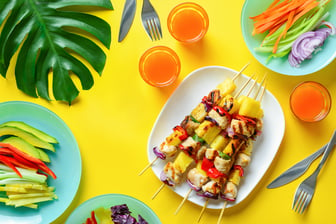
 Grilling is one of the most popular ways to cook during the summer months, with nearly 70-80% of American households owning at least one grill. Cooking with a grill creates unique flavors and smells that are hard to achieve through other cooking methods, gets people outdoors, and oftentimes brings people together, so it is easy to understand why it is so popular! While grilling is typically a beloved tradition, depending on your grilling methods and preferences, it may not always be the best for you.
For example, there is some concern about the safety of grilling, specifically its potential link to cancer. Grilling meat over intense heat or open flames may cause the development of cancer causing compounds. Similarly, grillable favorites often consist of fattier cuts of red meat and processed meats, such as burgers, hot dogs, sausages and more, which are independently thought to increase risk of cancer, specifically colorectal cancer. Lastly, side dishes typically served when grilling include pasta and potato salads, are generally high in calories, carbohydrates and fats. When you combine all of these factors, you can see why frequent backyard barbeques and grill outs can lead to health consequences. However, following the following strategies can help you stay healthy while enjoying your grill this summer:
● Choose leaner protein sources. Skinless chicken or turkey, fish and seafood, lean cuts of beef and pork (>90% lean beef, tenderloins/sirloins, etc), tofu and tempeh all make excellent choices as they provide fewer saturated fats than standard grilled meats.
● Grill non-starchy vegetables alongside proteins. Research has found that the carcinogens produced by cooking meats at high temperatures are not produced when cooking vegetables at high temperatures. Asparagus, bell peppers, corn, onions, and zucchini all cook great on the grill. Be sure to cut them evenly and toss them generously in a heart-healthy oil such as olive or avocado oil for best results.
● Limit high fat, starchy sides. When you think of side dishes to compliment your grilled proteins, oftentimes pasta and potato salads come to mind. This summer, opt for grilled or fresh vegetables and fruits, fresh salads, whole grain pasta or bean salads as sides! Love the classics? Make your favorite potato or pasta salad healthier by incorporating more vegetables, leaving the skin intact on the potatoes or opting for whole grain pastas or other whole grains for more fiber, and using nonfat plain greek yogurt instead of or in addition to mayonnaise or sour cream.
In sum, there’s no need to fear the grill this summer if you’re trying to be health conscious. While certain grilling practices and choices may increase health risks, small adjustments can help you enjoy the grilling experience, smells and flavors while keeping your health a priority.
 Here are some recipes for patriotic healthy eating. Bring one of these red, white, and blue creations to your Fourth of July
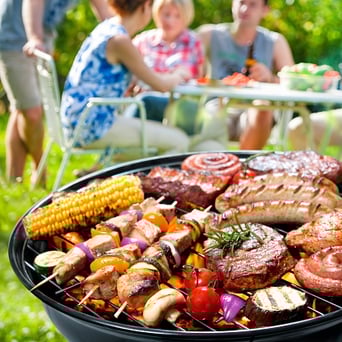 The weather is warming up, the flowers are coming out, and daylight is around much longer at night. All of these things mean one thing: time to start grilling again! Having a barbecue or cookout is a wonderful way to do a majority of your cooking because it is a healthy preparation method and leaves little to no cleanup in the kitchen!