<img height="1" width="1" style="display:none" src="https://www.facebook.com/tr?id=424649934352787&amp;ev=PageView&amp;noscript=1">

NIFS Healthy Living Blog

Finding Stillness in a Busy World: Why Giving Yourself an Hour to Reset Matters

09 - FC September 2026We live in a world that moves fast. From the moment we wake up, we're checking emails, scrolling through notifications, planning our day, and thinking about what's next. Even when we finally have a quiet moment, our minds often don't naturally slow down. We've become so accustomed to being busy that taking an hour to simply be present can almost feel uncomfortable.

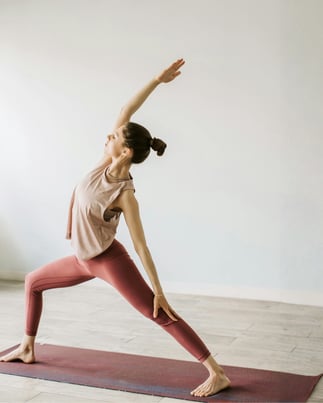
If you've ever heard someone say yoga is called a "practice," this is why. It's not because you're trying to perfect a pose. It's because you're practicing something that doesn't come naturally in today's world—being still. Our minds are wired to jump from one thought to the next, replay conversations, plan tomorrow, or worry about what's ahead. Yoga gives us the opportunity to notice when our minds wander and gently bring our attention back to our breath and the present moment. Just like building physical strength takes practice, so does learning to quiet our busy minds.

For me, yoga complements the rest of my fitness routine. I enjoy lifting heavy weights and challenging myself in the gym, but yoga offers something different. It gives me the opportunity to stretch muscles that have worked hard while improving my balance and flexibility. While I appreciate those physical benefits, it's the mental practice that keeps me coming back. When else do we give ourselves an hour with no phones, no chatter, and nowhere else we need to be—just fully present on the mat and in our own bodies? Taking an hour to slow down, focus on my breath, and be reminded to stay present is a practice that carries over into everyday life.

Many people think of yoga as a single type of class, but there are actually dozens of different styles, each with its own purpose and approach. Some are energetic and flowing. Others focus on building strength, while some are designed to help you slow down, recover, and restore both your body and your mind. The beauty of yoga is that there isn't one "right" way to practice. It's about finding the style that meets you where you are.

At NIFS, our yoga program has been shaped by longtime instructor Grace, whose years of teaching experience have created classes that are welcoming, supportive, and adaptable for all experience levels. While each class has a different focus, they all share the same philosophy: meet people where they are, encourage progress over perfection, and leave participants feeling a little lighter than when they arrived.

Vinyasa Yoga

For those who enjoy movement, Vinyasa Yoga offers a dynamic flow of standing, balancing, and seated postures that are connected through the breath. The continuous movement helps build strength, improve flexibility and balance, and encourages mindfulness throughout the practice. As Grace often reminds her students, it's a yoga practice, not yoga perfect. Whether you're new to yoga or have years of experience, modifications are available so everyone can participate at their own level.

Yoga Strength & Restore

If you enjoy strength training but also recognize the importance of recovery, Yoga Strength & Restore offers the best of both worlds. The first half of class focuses on building strength using weights, resistance bands, and bodyweight exercises. The second half transitions into traditional yoga postures, helping improve flexibility, mobility, balance, and relaxation. It's a balanced approach that leaves you feeling both challenged and restored. Grace describes this class as your "workout and your work-in," combining the challenge of strength training with the restorative benefits of yoga.

Restorative Yoga

Sometimes the best thing we can do is simply slow down. Restorative Yoga is a gentle practice designed to help you relax, restore, and reconnect. Using bolsters, blankets, and yoga blocks for support, you'll move through calming postures while focusing on your breath. The result is improved flexibility, reduced stress, and an opportunity to give both your body and mind the deep relaxation they deserve.

It's Grace's favorite style of yoga because, as she says, "When the body feels supported and safe, we can finally let go. We don't have to hold everything together all the time."

Whether you're new to yoga or have practiced for years, there's a style that can meet you where you are. Grace hopes every participant feels welcomed, supported, and encouraged—whether it's their first class or their hundredth. At NIFS, we want yoga to be a place where you can reconnect with yourself, challenge your body, quiet your mind, and simply meet yourself where you are.

In today's fast-paced world, taking an hour to practice being present may be one of the healthiest things we can do. Whether you choose Vinyasa, Yoga Strength & Restore, or Restorative Yoga, you're not just making time for movement—you're making time to reset.

Topics: yoga group fitness recovery relaxation

Maximizing Your NIFS Membership: Tools to Achieve Your Fitness Goals

Training Services and Personal Guidance

D85_3494 (2)NIFS offers several services to help you take your fitness to the next level. Here’s how you can get started:
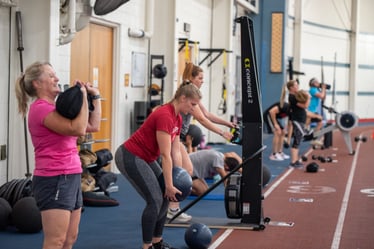

Schedule a free Strategy Session with one of our trainers to receive your free yearly BodPod and NIFS 3D scan. These assessments provide insights into your body fat percentage and measurements, helping you set realistic fitness goals. A trainer will explain your assessment results and use them to create a personalized workout program tailored to your needs. Your trainer will guide you through the initial workouts and provide ongoing accountability. After 6-8 weeks, you can update your program to stay motivated.

For one-on-one guidance, NIFS offers personal training sessions in 30- or 60-minute increments to ensure you stay on track. You can also enjoy closer guidance in a supportive group setting with Small Group and High-Intensity Interval Training, making your fitness journey more engaging and affordable.

Group Fitness Classes

Your NIFS membership includes unlimited access to our group fitness schedule! Join a variety of classes led by our expert coaches, including boxing, yoga, and Pilates. These classes cater to all fitness levels, making them perfect whether you’re discovering a new activity or enhancing your current routine. Working out in a group also adds a sense of community and extra motivation.

Specialty Training Programs

Looking to focus on a specific goal or event? Explore these exciting options:

The Mini Marathon Training Program offers a community-driven approach to race training. No matter your pace, you’ll find support to prepare for the big day. Launching in 2025, the Powerlifting Program is perfect for members who want to get stronger and master their squat, bench, and deadlift. The DEKA Training Program helps you conquer all 10 stations of this unique challenge with guidance from our training staff.

Our training staff and group fitness coaches are here to help you determine which services, classes, or programs best fit your needs. Meet with us, explore your options, and start achieving your fitness goals today!

Hope to see you soon!

Training at NIFS

Topics: NIFS group fitness NIFS programs personal training

DEKA: The Decathlon of Functional Fitness

What is DEKA?

From the creators of the Spartan Race, DEKA is the ultimate test of strength, endurance, and grit. Known as the "Decathlon of Functional Fitness," DEKA is quickly gaining popularity in the fitness community.

The word "DEKA" comes from the Greek term meaning "ten," representing the ten zones of the competition. It’s inspired by the ancient Greek decathlon, which tested overall athleticism. However, what sets DEKA apart from other functional fitness competitions is its accessibility for every skill level. Before fitness became synonymous with bodybuilding, protein shakes, and Pilates classes, it was simply a means of "survival." People engaged in fundamental movements like lifting, carrying, pushing, pulling, jumping, climbing, as well as rowing, skiing, and cycling. DEKA integrates these primal movements into its design, making it a great option if you’re looking for a new competition to train for.

DEKA Format and Zone Sequence

The DEKA competition consists of 10 zones, which progressively increase in difficulty, focusing on full-body movements towards the end.

  • DSC_1048ZONE 1: 30 RAM Alt Reverse Lunges
  • ZONE 2: 500M Row
  • ZONE 3: 20 Box Jumps/Step Overs
  • ZONE 4: 25 Med Ball Sit-Up Throws
  • ZONE 5: 500M Ski Erg
  • ZONE 6: 100M Farmer’s Carry
  • ZONE 7: 25C Air Bike
  • ZONE 8: 20 Dead Ball Wall Overs
  • ZONE 9: 100M Tank Push/Pull
  • ZONE 10: 20 RAM Burpees

These zones are based on fundamental functional movements, making them easy to learn without requiring extensive instruction. Whether you’re looking to improve endurance, learn new movements, test your athleticism, or simply get moving, our DEKA classes at NIFS are the perfect fit for you!

Get REGISTERed for DEKA


Topics: group fitness functional training fun cross-training DEKA

Finding Your Balance: Juggling Academics and Fitness

GettyImages-1371148660-1Starting school can be exciting and overwhelming. Whether it is meeting new people, trying to manage a demanding class schedule, handling new responsibilities, or facing academic pressure, balancing everything can seem challenging. Many students also want to focus on their personal fitness goals but struggle to find time to manage with everything else going on. However, finding a balance between academics and health can be extremely beneficial for you, both physically and mentally. Here are some tips on how to manage both your academics and fitness goals. 

Prioritize Your Schedule

This is a key point when creating that balance between academics and fitness. Start off by planning your class schedule with your free time, and implement time for both your study hours and exercise. Use a planner or calendar to track your commitments, blocking off time for classes, studying, and your workouts. Prioritizing your exercise time should be as important as a class or meeting, treating it as a non-negotiable to hold yourself accountable.

Optimize Your Workouts

Your workouts do not have to be hours on end at the gym, especially if you are already pressed for time in your schedule. Focus on short, effective workouts, such as a 30-minute high-intensity interval training (HIIT), a 2–3-mile run, or a heavy lifting day with low rest time intervals. Consider your workout type when deciding your workout space, such as your local gym, dorm room, or the outdoors.

Combine Studying and Fitness

Using stationary bikes or treadmills can also be a great exercise to be able to study, take notes, and listen to recorded lectures, or audiobooks. Try to find ways to implement studying time with different exercises so you don't have to sacrifice any studying time.

Fitness Classes and Social Time

Most colleges offer a wide variety of fitness classes, such as here at NIFS! These classes can range anywhere from 30 minutes to an hour, giving you some direction if you are unsure of what to do. This is also a great opportunity to meet new people and create new relationships and open new doors to things you may not have known beforehand.

Adjust Accordingly

Your schedule will change as the year goes on, so you want to make sure you can be flexible with it and make adjustments as you see fit. Consistency is key, don't let a few hiccups in your schedule take away from your motivation to stay on track.

Balancing your academics and fitness may initially be challenging, but once you start to create that consistency, you will notice a significant improvement in your overall health and lifestyle. Learning how to do this early on will help you achieve a much healthier, well-balanced lifestyle that you can follow all through college.

Group Fitness Schedule

Topics: group fitness balance school students fitness goals friendship

Elevate Your Summer Workouts with New Classes at NIFS

IMG_0476This summer just got 10x hotter with new and exciting group fitness classes for NIFS Fitness Center members! We are kicking off June with the addition of LIFTOFF and Girls Just Wanna Have Fun to our group fitness schedule. Coached by me, Kennedy, these classes are designed to engage members, introduce functional strength training, and more importantly bring you closer to your fitness goals. Let’s take a closer look at how these are formatted so you can have a better understanding of what to expect when you attend.
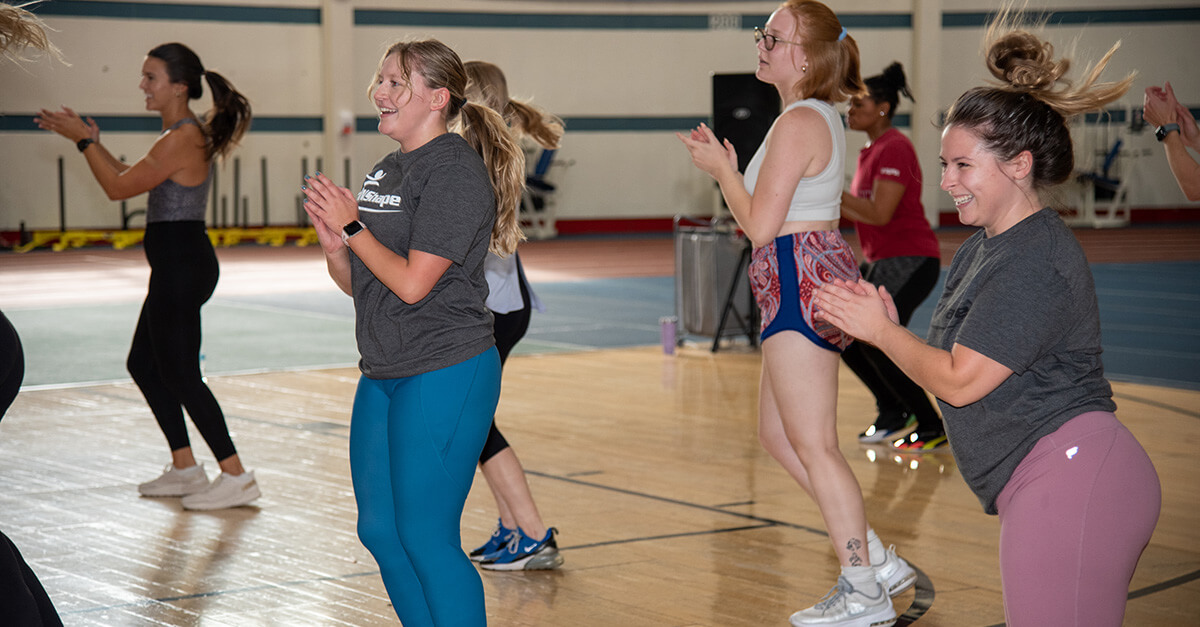
LIFTOFF: a strength and conditioning class designed to boost athleticism! The goal of this class is to improve speed, power, plyometrics, and mobility. It is the perfect complement for runners, bikers, rec league athletes, and anyone looking to improve their athletic abilities!

Formatted with plenty of variety, you can expect the same class structure each day with differing workouts. One day may consist of explosive lifts developing power, while day two might focus on sprints and speed training. By attending both offerings each week you will incorporate a good variety into your routine.

Mark your calendar for Mondays and Wednesdays at 9:00am (EST) to boost your athleticism with LIFTOFF!

Girls Just Wanna Have Fun: a functional, female-focused strength class designed to introduce you to weightlifting, improving form, and teaching proper body mechanics all while building strength in a FUN and INVITING atmosphere.

This class will give you more of a personal training feel but in a group setting. You can expect to have the support of others to build your confidence in the gym and in your abilities to lift weights in the gym.

Block your schedule on Tuesdays and Thursdays at 9:00am (EST) to spend an hour with your own girl gang in the gym!

Members have access to all our group fitness classes, if you are not a member and want to try group fitness try out our FREE Tabata in the Park offerings at White River State Park just behind the NCAA. Offered all summer long on Tuesdays and Thursdays at noon! Follow us on social media for updates on these offerings as they are weather permitting!

Group Fitness Schedule

Topics: group fitness building muscle group fitness culture athleticism

The Benefits of NIFS for a College Student

As a full-time student, balancing your studies, work, and health can be difficult. I have found one of the best ways to relieve stress, stay healthy, and feel good overall is through working out. For as long as I can remember, I have enjoyed working out—not just for my physical health, but my mental health as well. It has always been a way for me to work through my emotions, good or bad, and it always makes me feel better in the end, even if the workout is difficult.

dance-1

An Outlet for Movement and Mindfulness

NIFS has been my go-to gym since starting college in 2021. Whether l am lifting weights or participating in group fitness classes, moving my body has always helped take my mind off of things when I need to clear my head and relax. NIFS has allowed me to have multiple outlets for movement all in one place with its variety of equipment and classes ranging from things that work my body, like our Zumba class, to relax my mind, like our yoga classes.

Social Benefits

NIFS has also been a place where I have met some amazing people. It’s a wonderful place to be social and work with like-minded people who push you to be your best even when you do not feel like it. It has been a great community that I have found myself and others thriving in. There is a mix of both students and regular gym-goers from the community that promotes all kinds of different interactions. In fact, some of my favorite people I have met are not even students and have even helped me outside of the gym.

Overall, NIFS has been extremely beneficial to me as a full-time, working student. It allows me to balance my studies and work with my mental and physical health. The community and environment are healthy and promote people to be their best selves. I couldn’t imagine being a student and not having NIFS as my outlet.

New call-to-action

This blog was written by Sydney Poindexter, NIFS Membership Specialist. To learn more about the NIFS bloggers, click here.

Topics: NIFS yoga group fitness Zumba students working out

Motivating Friends and Family to Embrace a Healthier Lifestyle

Knowing the importance of exercise and maintaining a healthy lifestyle is always positive progress to becoming your best self, but getting your family and friends on board with this commitment can be a challenging task. If you want to encourage your loved ones to incorporate exercise into their daily routines, here are some tips and strategies to help you motivate them.

GettyImages-1167801332

  • Lead by example: Setting a positive example is the most powerful way to inspire others. Demonstrate your commitment to a healthy lifestyle by consistently engaging in exercise and making nutritious choices. They may be more inclined to follow suit after seeing your dedication to working on yourself and your lifestyle.
  • Make it fun: Other people might see exercise as a chore; however, it can be an enjoyable activity. Encourage your family and friends to participate in activities they genuinely enjoy, whether it's dancing, hiking, playing a sport, or even trying out new fitness classes together. Fun makes fitness sustainable!
  • Set realistic goals: Help your loved ones establish achievable fitness goals. Whether it’s running a certain distance, losing a specific amount of weight, or improving overall health, having clear objectives can motivate them to stay on track.
  • Create a supportive environment: Foster an environment that encourages exercise. Create a home gym space, stock up on healthy snacks, and incorporate active outings into your social plans. Surrounding your loved ones with opportunities for fitness makes it more likely they'll join in.
  • Educate and share information: Share articles, videos, and success stories related to fitness and its benefits. Knowledge can empower your loved ones to make informed decisions about their health. Offer to answer questions and provide guidance when needed.
  • Be flexible: Recognize that everyone's fitness journey is unique. Be open to adapting to their preferences and schedules. Encourage them to find a routine that works for them rather than imposing your own.
  • Hold each other accountable: Partner up with family and friends for workouts. Exercising together provides motivation because you're less likely to skip a session if someone is counting on you. Consider friendly fitness challenges or competitions to keep things interesting.
  • Celebrate achievements and use incentives: Celebrate their milestones, no matter how small. Whether it's completing a week of consistent workouts or reaching a fitness goal, acknowledging their achievements reinforces their commitment. You can use incentives like a post-workout treat, a movie night, or a small reward for reaching specific goals to act as short-term motivators.

It’s important to always remember that the journey toward a healthier lifestyle is personal and unique for everyone. Your role is to provide support, encouragement, and a positive environment. Ultimately, the decision to embrace exercise and a healthier lifestyle lies with your loved ones, but your influence can be a powerful catalyst for positive change. By using these strategies, you can help them take those crucial first steps toward a happier, healthier life.

New call-to-action

This blog was written by Deveon Martin, NIFS Health Fitness Specialist. To learn more about the NIFS bloggers, click here.

Topics: exercise motivation group fitness healthy eating accountability healthy lifestyle physical fitness family

Finding the Motivation to Work Out

GettyImages-1164633763Let’s be real. We aren’t always motivated to work out, and sometimes it’s hard to find that motivation. It’s even harder to find motivation when you don’t even enjoy exercise. It’s important to learn why getting active is so important, and it all starts with changing your mindset about it.

So Why Exercise in the First Place?

There are hundreds of good reasons why it’s important to stay active, but here are a few reasons that you might not know of.

  • Exercise charges you up. Thirty minutes or more of vigorous exercise releases endorphins to the brain, giving you energy and an intense natural high. This can help you have more energy for your everyday activities and keeps you going.
  • Exercise can help your positivity. Studies show that exercise is a great way to help manage depression. It not only releases endorphins, but it also helps clear your mind of stress, confusion, and worry
  • Exercise can help with your social life. Exercising with others who are going to the gym for Group Fitness classes can be a great way to meet new people and help each other stay motivated.
  • Exercise helps you sleep. Working the body and clearing the brain ensures a good night’s sleep. It can help regulate problematic sleeping patterns.

Switch Your Mindset

The biggest key to staying motivated with exercise is trying to switch your mindset. If you really dislike the idea of exercise, you need to switch the way that you’re thinking, or you’ll never get up and get active. Start to think of exercise as “being active” or “feeling healthy.” A great way to start is to increase the overall amount of movement and activity in your day. For example, you can start by walking 10,000 steps per day. You also don’t have to work out in a gym. Of course, gyms are useful and have a lot of equipment, but some days you can go outdoors or ride a bike. You can also try yoga or dancing as another method to stay active. At NIFS, we offer a variety of different Group Fitness classes to fit your needs and wants, so you are never bored or tied down to one form of exercise.

Small Steps

Sometimes you just have to take small steps to keep motivated. For instance, laying out your workout clothes or packing your gym bag the night before can remove several barriers in the number of decisions you need to make the next day. Or you can even have your gym bag in your car ready for the next day! You can also give yourself achievement awards, such as your favorite drink or new workout shoes. Use it as your motivation to get your workout done so that you can reward yourself with something you enjoy. Maybe you can even try a lunchtime workout. This will allow you to mix it up with some outside lunchtime training, and it can be an awesome way to experience natural light in your workout. Consider taking a brisk walk around the block or doing a quick HIIT workout before you go back to work.

Find What Works for You

The key is to really find what works for you. What might work for someone else might not be the right fit for you. Your health is your journey, and sometimes you must personalize it to make it worth it. Continue to try new things until you make your workout routine a habit. Remember that it’s okay to take rest days. But always get back up and fight the next day.

New call-to-action

This blog was written by Emily Lesich, NIFS Health Fitness Specialist. To learn more about the NIFS bloggers, click here.

Topics: staying active healthy habits motivation group fitness accountability HIIT outdoor exercise

Making Time for Fitness During the School Year

GettyImages-1352437839With the new school year upon us, it’s time to start thinking about “back to school” fitness. Summer was a time for adventure, vacation, trying new foods, and so much more. Although all that stuff is fun, it can get us out of a routine. As a newly graduated college student, I know how much a routine helped me stay on track for my classes. One thing I always included was exercise. Having consistent workouts is the first step toward a disciplined life.
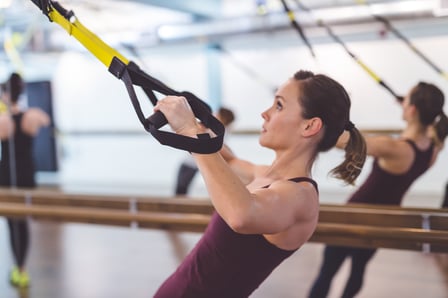
Studies show that working out consistently actually helps you stay with your schedule. When you plan specific times to exercise, you become more committed, and you can track your progress. When you see that you can stick to a workout schedule and are successful at it, you can start to change your view on other tasks in your life. When one area of your life becomes more manageable, it is easier to do the same with other aspects of your life.

Now you might be asking yourself, “Where do I even start?” Here are a couple of easy steps to making sure you create a workout routine that is a perfect fit for your schedule.

  1. Make fitness a priority: If fitness is important for you, you need to make time for it. Your health should always be your number-one priority. And as a wise person once said, “If you don’t make time for your health, you will make time for your illness." If working out is not one of your top priorities, it will not happen. If you really want to get the most out of it, you need to prioritize it.
  2. Be realistic: The key is to consistently do your best. Make sure you don’t sign up for too much. If you keep missing classes or training sessions because your schedule is too crazy, you’re going to get really discouraged when you don’t see the results you want. When starting a workout routine, start small. At NIFS we offer free classes to members throughout the week at different times (see the schedule here). This is a great way to get started, especially if you don’t know exactly where to start.
  3. Make goals: Making goals is one of the best ways to start your workout routine. If you know what you are working toward, you’re going to work harder to get it. Make sure these goals are SMART. This means that they are Specific, Measurable, Attainable, Realistic, and Time-bound. This will help you track your progress and really see successful results.
  4. Time it right: Make sure you go to the gym at a time that is good for you. If you have a lot of morning classes, go in the afternoon or evening or vice versa. If you're more of a morning person, make sure you get up early in the morning and work out. If you know you have a lot of schoolwork, only work out for 30 minutes. When it comes to timing everything, make sure you come up with a good plan and discern when is the best time for you.
  5. Short workouts count, too: Everyone is busy and sometimes crazy schedules are what stop people from working out. People think that they need to train for 60 to 90 minutes straight or else they won’t see any results. Research shows that 10 to 15 minutes of training can be beneficial for people throughout the day. So, if you want to, you could do a quick 10-minute workout four times a day and you would have completed a 40-minute workout!
  6. Come prepared: Make it a habit to pack a gym bag before you go to classes or work. This way you can go straight to the gym without any additional trips that can get you sidetracked.
  7. Get in more daily fitness: You can get in easy workouts by just doing everyday things. For example, you can take the stairs instead of the elevator, or walk instead of taking the bus. These seem simple, but they add up over the course of the week. A study from The Ohio State University found that you can burn around 20% more calories by just altering your walking pace instead of keeping a consistent speed. You can even make sure you’re active over the weekend. Go for a walk, go for a bike ride, go hiking, or even play a game of baseball.
  8. Be accountable, but reasonable: Some days are going to be harder than others, and you’re just trying to tackle it all. There are going to be many days where you don’t honestly have the time or energy to work out, and that’s okay! When those days happen, allow yourself to miss. But make sure you get moving the next day. Although you don’t want to create the habit of not working out, give yourself room to be human.

Working out does not have to be a scary or daunting thing. Make the most out of it and make it yours! Trying to balance school and fitness can be a lot, but it’s totally doable. Whether you are a student or parent of a student, do your best and keep pushing toward your goals!

New call-to-action

This blog was written by Emily Lesich, NIFS Health Fitness Specialist. To learn more about the NIFS bloggers, click here.

Topics: goal setting group fitness college school fall time management exercise plan workout plan

Finding Sustainability in Your Exercise Program

GettyImages-829938260Have you ever started an exercise program and for whatever reason were not able to stick with it? There are many reasons that you may not be able to stick with an exercise program. It might be too hard, and you are not able to maintain the amount of work that is required. Maybe your workouts take too much time, and you are not able to fit it into your schedule. Or maybe you are not seeing the results you want. Whatever the reason that you were not able to find sustainability within your exercise program, there is always a solution. The best way I have found to find sustainability in exercise is to figure out your goals, then pick your programming, and lastly find consistency in your exercise.

Figure Out Your Goals

If you are just starting your fitness journey, choose SMART goals. SMART goals are Specific, Measurable, Achievable, Relevant, and Time-based. Whether your goals are for weight loss, strength, endurance, or overall well-being, make sure that you are choosing goals that follow the SMART principle. In my opinion, the most import part of your goal is that it is Achievable. If you are not setting realistic goals for yourself, you will never be satisfied, and will be more likely to give up in the long run. If you do make long-term goals, make sure you are setting short-term goals that help you reach those long-term goals. Think of your short-term goals as rest stops on your way to your final destination.

Pick a Program

After you determine your fitness goals, the next step is to find a program that fits those goals. The best way to do this is to find a certified fitness professional to help you. There are plenty of online options, but the safest option is to find a trusted trainer that you can meet with in person. A trainer that you can meet with in person will enable you to get a program that fits your needs the best.

Lastly, one of the most important aspects of picking programming is finding what you enjoy. If you do not enjoy what you are doing, you will not stick with it for the long haul. That could mean finding a group atmosphere or a personal trainer who can keep you accountable. Whatever it is, if you enjoy it, you are more likely to return.

Stick with the Program

The worst thing you can do for yourself is to be a “program hopper.” A program hopper is someone who starts a new program and runs it for a few weeks, then switches programs. There are variety of reasons you might want to hop around from program to program. However, you will not get anything out of the program if you do not finish it. Results do not come overnight. Fitness is not short-term. Your physical fitness and health are something that you will be working on for the rest of your life. So if you are not seeing the results you want, as fast as you want, chances are you need to be patient and trust the process. If you can trust your coach or trainer, be patient and run the system all the way through.

Finding a program that you enjoy is by far the easiest way to stick with the program. Just like with anything in life, if you do not enjoy what you are doing, you are less likely to return. There are a wide variety of routes you can go in the fitness industry, including large group classes, small group personal training, and personal training. Any of these routes can be effective if it works for you!

***

Finding sustainability in your exercise program is not very complicated. However, it will be challenging at first if you are venturing into something new. To find a program that works for you, first figure out your goals. Then pick a program that matches your goals the best. If you can match your preferences to a trainer, group, or program, you will be set up for success in the long run. For guidance on finding the right program for you, contact the NIFS track desk at any time to talk to a licensed professional today to help you get started!

New call-to-action

This blog was written by Evan James, NIFS Exercise Physiologist EP-C, Health Fitness Instructor, and Personal Trainer. To learn more about the NIFS bloggers, click here.

Topics: goal setting group fitness personal training fitness program smart goals workout programs