
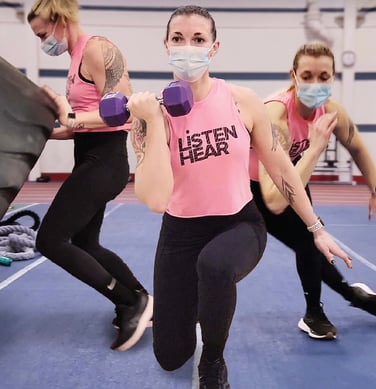
 With the world now instantly accessible through technology, it’s easy to understand why a growing number of people expect things to be done in a shorter amount of time. Like many others, I’m a big fan of things that are fast and effective, and that includes my workouts. High-intensity circuit training does just that by providing an effective and convenient way to increase exercise results in less time.
Whether you’re a career-driven adult or hardworking student, you’re probably a time-conscious person, so it may not be realistic to devote half of your week to aerobic and strength training separately. To really hammer this home, let’s do the math:
ACSM’s standard guidelines for aerobic training recommend 75–150 minutes a week of exercise, depending on the intensity. Let’s say you do 30 minutes of moderately intense cardio 4 days per week. That’s 120 minutes. Now let’s add strength training. Typically done 2–3 days each week, strength training should hit each major muscle group in 2–4 sets with 8–12 repetitions per set. Depending on the muscle group, this could take you 45–90 minutes. Average that out to about 60 minutes, 3 days a week. That’s 180 minutes. 180 + 120 = 300 minutes of time spent in the gym. 300! That’s as impractical as it is exhausting. Honestly, I’m tired just from doing the math on that.
With HICT, you’re combining both traditional training methods into one complete, high-energy workout that you’ll leave with a muscle and endorphin pump. Plus, you’ll be in and out of the door in less than an hour. What more could you ask for?
Benefits of High-Intensity Circuit Training
The concept of high-intensity circuit training is simple. By increasing the intensity of exercises that elevate the heart rate and limiting rest time, HICT can prompt greater gains in a shorter amount of time. In several studies, it’s been proven that the benefits of this type of training surpass those of the traditional protocols of aerobic and strength training. Let’s start with fat loss.
If you’re looking to lose excess body fat, tone up, or lean out, this type of training is the ticket. The strength training component accelerates the amount of fat burned during the workout. When this is paired with little rest between sets, the aerobic and metabolic benefits skyrocket, with results lasting up to 72 hours after the session. Even more interesting, the combination of high-intensity aerobic activity and resistance training may have a greater impact on subcutaneous fat loss. This is the type of fat that is troublesome for some people around their waistline, hips, and other areas.
Another significant benefit is the fact that HICT elicits the same if not greater gains in VO2 max, or peak oxygen uptake, when compared to traditional steady-state cardiovascular exercise. With the exercise volume substantially lower, high-intensity circuit training easily stands up to its traditional counterpart in improving cardiopulmonary health.
Other benefits of HICT include
- Improved strength across all major muscle groups
- Increased stability and movement efficiency
- Lowered stress levels
- Improved mental health
- Increased adaptability to regressions and progressions of exercises
- Saving time during the week that would have otherwise been spent on traditional programs
Sample HICT Program
Strength exercises for this type of program should be in an order of opposing muscle groups. For example, an upper-body station would be followed by a lower-body station. This allows the individual to have alternating rest and work throughout the circuit. On the same note, a highly intense aerobic exercise should be followed by an exercise with a low to moderate intensity. An example of this would be burpees followed by a stationary plank. If this is executed correctly, you should successfully complete these exercises at fast and intense pace with minimal rest. A typical format for a HICT session is as follows:
- 9–12 exercise stations
- 15–20 repetitions or 30 seconds of work
- 30 seconds or less of rest time
- 2–3 sets/rounds
What’s Next?
Not all programs are created equal, and traditional workouts are still the most effective methods if you want to specifically improve your strength and power or aerobic endurance. However, if you are looking for a new and exciting type of workout that helps you burn fat and build muscle in a short amount of time, HICT is worth a try! Our newest class at NIFS, Triple Threat, uses this type of format across three different areas of fitness: cardio, strength, and power. Join in on the class and start your journey to better health!

This blog was written by Jessica Phelps, BS, ACE CPT, Health Coach. To learn more about the NIFS bloggers, click here.
Sources: https://www.acsm.org/docs/default-source/files-for-resource-library/high-intensity-interval-training.pdf
https://journals.lww.com/acsm-healthfitness/fulltext/2013/05000/high_intensity_circuit_training_using_body_weight_.5.aspx
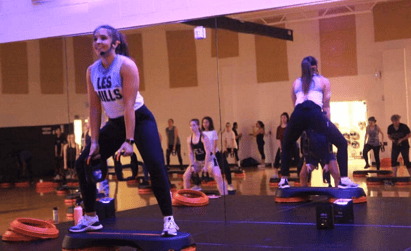 Picture this: It’s the last 10 minutes of your favorite group fitness class on the
 Group fitness classes are fitting for many people because the classes provide participants with predetermined workouts led by highly motivated instructors in a group setting. The niche of group fitness is constantly evolving. Classes in the category of group fitness look a lot different than they did 10 or 20 years ago. Not only do the classes look different, but they are more diverse than ever. Many participants use group fitness as supplementation for a typical workout at the gym because all you have to do is show up. Ease of participation coupled with the accountability of other members makes group fitness classes a unique environment.
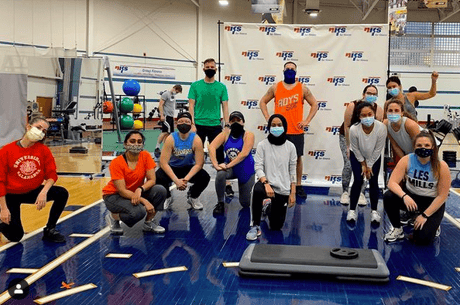 Group fitness
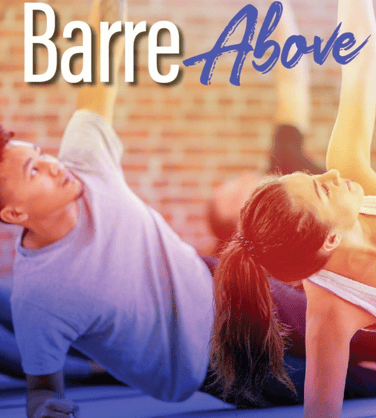 Are you looking for a workout to strengthen and tone muscles without increasing bulk, but have not found anything that you like doing? Have you always wanted to increase your cardiovascular endurance and metabolism but hate doing regular old boring cardio? Well I might have an answer for you…
 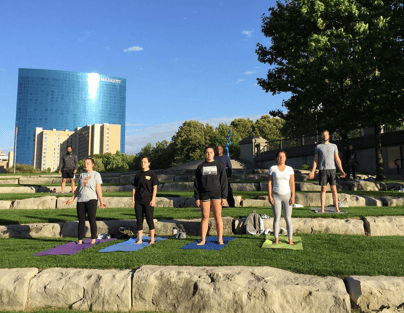 Do you want to be part of a community and hold yourself accountable while working out? Group fitness classes just might have what you are looking for!
 Les Mills® BODYPUMP™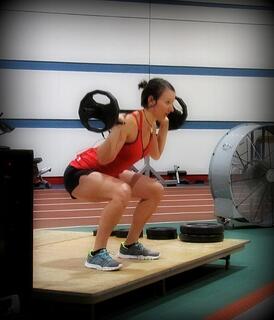
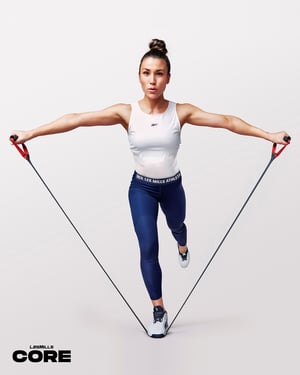 The “core” is a fitness buzzword that has rung in people’s ears for some time now. If you have been in the gym in the past 10–15 years, you have heard about the importance of a strong core in performance and for activities of daily living. And it’s so true: a weak center can lead to many issues throughout the entire body, mainly low-back pain and tight hips. I am not reporting anything new here; a strong trunk is super, super important!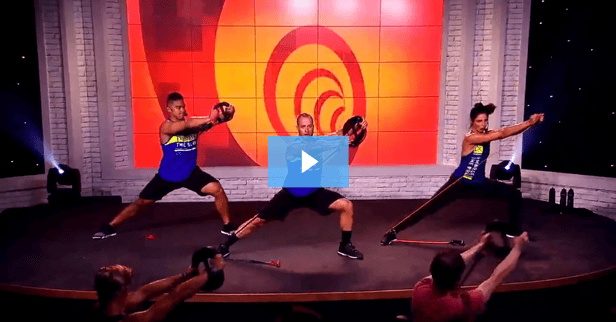
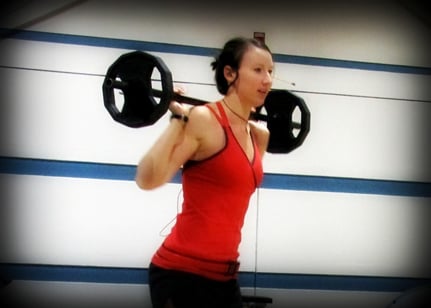 Group Fitness
 heard that exercise is good for health. The fitness industry has been growing significantly over the past decade. As of 2017, there were
 ![GettyImages-627455550-[Converted]-new](https://www.nifs.org/hs-fs/hubfs/GettyImages-627455550-%5BConverted%5D-new.jpg?width=402&name=GettyImages-627455550-%5BConverted%5D-new.jpg)