<img height="1" width="1" style="display:none" src="https://www.facebook.com/tr?id=424649934352787&amp;ev=PageView&amp;noscript=1">

NIFS Healthy Living Blog

Muscle Soreness Recovery Tips

When we are new to exercise or trying an exercise that is new to our body, it’s pretty common to feel SOME sort of muscular pain.
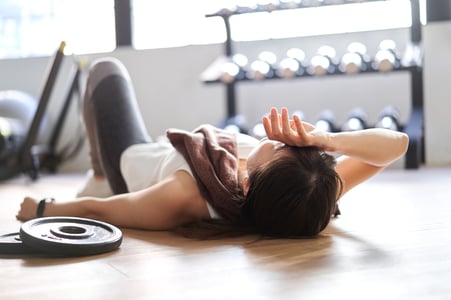
GettyImages-1309541926I think most of us can agree that a little muscle soreness after a fantastic workout is a fun way to remember that things are changing and that we are getting stronger. I think we can also agree (and most have experienced it) that there is a certain degree of soreness that kind of feels like “everything hurts so badly you can’t stand up or lift your arms,” which isn’t quite as motivating. Along with this you may feel irritable, fatigued, and really hungry. Sounds fun, right?

Not to worry! For each type of muscular soreness there is an amazing  recovery solution.

Why Do My Muscles Get Sore in the First Place?

The muscle soreness that you feel 24 to 48 hours after the workout is called Delayed Onset Muscle Soreness (DOMS), and it is actually caused by tiny micro-tears in the muscle and surrounding tissue. Say WHAT? Tears in the muscle? Sounds pretty terrible, right? But actually those little tears in the muscle are necessary to make things stronger.

So What Should I Do About Muscle Soreness?

To alleviate mild muscle soreness, a little movement is actually best! Try walking or some yoga. While it’s good to move after a workout to take away some of that pain, this is a pretty fine line and it’s most important to truly listen to and trust your body and give it rest when needed.

Here are five ways to take care of your muscles and reduce muscle soreness:

  1. Take it slow. Gradually progress the intensity, frequency, and duration of your workouts.
  2. Foam roll. Not sure what this is? It’s a way of stretching and basically giving your muscles and fascia a great massage. Check out our handy guide on how to foam roll!
  3. Get a massage. You’re going to love this one! Foam rolling is great, but if you have the time and funding for a therapeutic massage, it’s well worth the investment. It helps your body heal itself.
  4. Practice yoga or do some light stretching. Avoid a fast-paced or intense practice and choose something slower such as Yin or Hatha yoga.
  5. Ice the muscles. Placing an icepack on a specific area may help reduce muscle soreness in a very localized area. Make sure not to leave the icepack on for very long, though, as it may cause tissue death.

It all comes down to listening to your body and not being afraid to take a day or two to let your body heal. Soreness, injury, and illness are a time to nurture yourself and give your body the rest it needs. Take the rest, and pay attention to how much stronger you feel in your next workout!

This blog was written by Tara Deal Rochford, Registered Dietitian, contributing writer, and author of healthy living blog Treble in the Kitchen. Meet our other NIFS bloggers.

Like what you've just read? Click here to subscribe to our blog!

Topics: yoga injury prevention muscles stretching pain recovery

Three Group Fitness Classes to Try NOW!

NIFS offers a wide variety of group fitness classes every day of the week that are innovative, fun, and make sweating a bit more enjoyable. Whether you are a group fitness “junkie” or just trying out the whole group fitness thing for the first time, here are three group fitness classes you should put on your list to check out:

1. Cycle/RPM

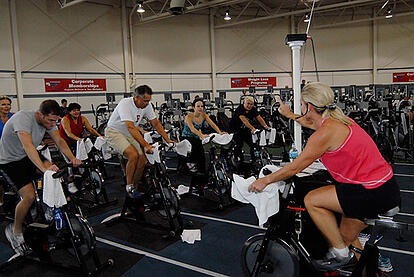
cycleThis heart-pumping cardio class will get you fit while sweating to the beat of powerful music. In the middle of summer, it’s often too hot or humid to safely ride your bike outdoors, while in the winter it can be too icy and cold. Indoor cycling is a great alternative. For a high-intensity workout, cycling is low-impact. Each class focuses on a combination of interval training, speed work, and hill climbs to keep you healthy, fit, and happy.

2. LES MILLS CORE

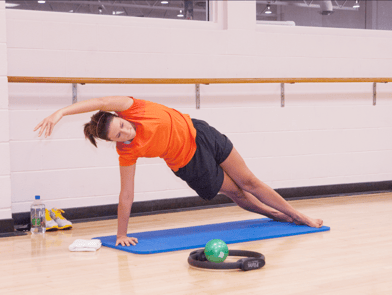
The LES MILLS CORE workout is just 30 minutes and focuses on the core (the abs, hips, butt, shoulders, and back). That means whether you are looking for a quick and effective workout or are trying to improve your performance in your other workouts, this is the group fitness class for you. While this can be an intense and challenging class, our instructors are excellent at providing exercise modifications that allow everyone in the class to be successful!

3. Yoga

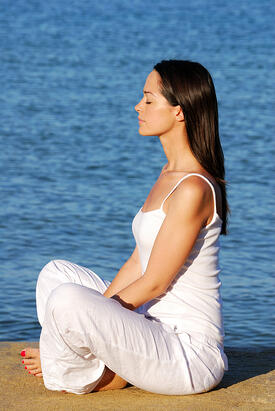
We all know that stress doesn’t do anything good for our health, and one way to balance out the many stresses of life is to hit the mat and take a yoga class. The controlled stretching and breathing practiced in a yoga class allows the body to relax, which can lower your blood DSC_0280pressure, repair overworked muscles, and give the mind a needed break from the hustle and bustle of a regular day. Not flexible? Not a problem. Our instructors understand that everyone comes into class with his or her own “baggage” and will make necessary adjustments and provide options so that everyone can have a calming and rejuvenating yoga practice.

With numerous monthly group fitness classes at NIFS there is something for everyone. Get started and try a free class on us!

Like what you've just read? Click here to subscribe to our blog!

This blog was written by Tara Deal Rochford, Les Mills® certified BODYPUMP®, and CXWORX® instructor. Author of Treble in the Kitchen.
Topics: NIFS yoga group fitness cycling core Les Mills biking

A Deep-Breathing Exercise for Stress Management

Do you ever stop to pay attention to your breath? Observe it now. Is it shallow? Is your inhale longer than your exhale? When we are stressed, we breathe more shallowly. When we relax, our breath deepens. What follows is a simple breathing technique that can help you lower your heart rate and manage your stress.

breathing for relaxation

Get into Position

Before you begin, check your posture. Often a slumped posture makes it more difficult to breathe deeply. Sit at the edge of a chair so that you can tilt your pelvis forward to bring the natural curve into your low back. Place both feet on the floor about five or six inches apart. Bring your head back so that it is in line with your spinal column.

Doing the Deep-Breathing Exercise

This exercise is a three-part breath used often in yoga classes. Follow these steps:

  1. Place one hand on your belly and one hand on your ribcage. Observe your breath and state of mind.
  2. Now, begin to deepen your breath so that you feel your belly pushing out.
  3. Next, feel your ribcage expand.
  4. Finally, feel your collar bone lift up toward your chin. As you exhale, your collar bone lowers, your rib cage compresses, and your belly flattens.
  5. Try counting the inhale and exhale to make sure they are the same length. We tend to breathe more deeply on the inhale than the exhale.
  6. Breathe like this for a few minutes.
  7. Now, rest your hands on your lap. Again check in with your state of mind and your breath.

 Other Benefits of Deep Breathing

According to scientific research, deep breathing not only lowers stress and blood pressure but can also affect the brain, the immune system, and digestion. You should be able to feel the effects of this practice as it triggers your parasympathetic nervous system or relaxation response. To learn more about how breathing affects your mind, body, and spirit, click here.

Practice this breathing technique at one of our many Yoga classes at NIFS! Try a class for free today by requesting a Free Class Pass here!

Blog written by Laura Haehl, Yoga Instructor at NIFS. Meet our NIFS bloggers.


Topics: stress yoga health

Thomas’ Corner: Yoga Is for Muscleheads, Too

yoga and muscles go togetherGive me a rack of dumbbells, some benches, a squat rack, and two hours and I’m in heaven. For some reason, this could be it, every day for the rest of my life and I would be fine. Then again, after roughly 15 years of pounding the weights, certain everyday tasks that require little things like flexibility and balance, which in our youth are taken for granted, become noticeably more and more challenging.

For the record, yoga is not going to make you less of an uber-athlete. In fact, practicing yoga daily can help improve day-to-day functionality, from getting up off the floor to scratching your back. In all seriousness, yoga can benefit even the most fit bodybuilders, weekend warriors, athletes of all ages, and average Joes and jams.

For those muscleheads who would rather die than be caught dead in a yoga studio, there are literally thousands of yoga instructional videos to experience in the comforts of your own cave.

MUSCLEHEADS REJOICE! And evolve.

Topics: Thomas' Corner yoga