
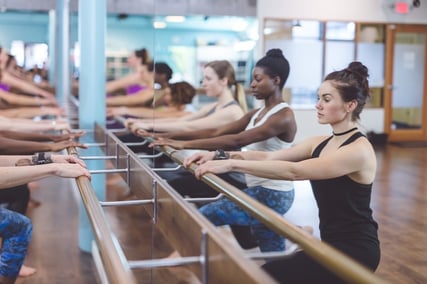
 Creating healthy habits is a challenge for most people. Doesn't sitting at a bar with a glass of wine sound much easier than going to the gym and taking a barre class after work? In the moment, YES; but which is more beneficial for your health and longevity?
NIFS is passionate about educating gym-goers to create healthy habits, and our staff is here to help members achieve that. NIFS loves having Barre Fusion in our group fitness schedule (now online at home), and love motivating others to take this class to feel all the benefits.
So What Is This Workout?
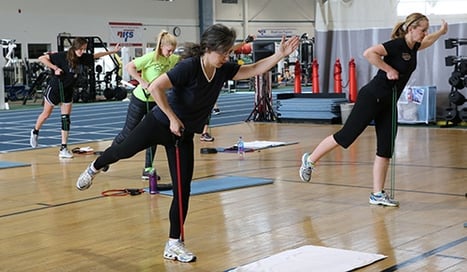
Barre Fusion classes are getting a lot of hype these days for providing amazing results—not just physically, but also mentally. This workout is designed to strengthen and tone all areas of the body while also providing length in a balanced format through breath. The class aids in small movements to target the stabilizing muscles in the body, which are often untrained in a standard workout. Strengthening these muscles is proven to benefit with core strength and balance as well as prevent injury.
The pace of the class is quicker than a yoga class, creating a cardiovascular aspect through quick transitions but still focusing on the elements of flexibility and breathing that you'd find in a yoga class. By training the body in this format, you are also improving your mindfulness, which will lead to wanting to live a life filled with more healthy habits.
Lisa Williams, avid Group Fitness attendee, says, "This is one of my new favorite all-over workouts! I absolutely love it! With the small movements we do, you can feel a burn in your muscles that you know are getting stronger each class. It also helps tone, as I have already noticed a change in my outfits from it! I also like the variety of the class. Although the flow is the same, you don’t continually do the same exercises. I never leave the class feeling like I didn’t get an amazing workout! I suggest all to try it!"
What Is a Habit?
A habit is a routine or pattern you adapt to. Some habits have negative effects; and some have positive effects. It's often easy to read about what we should be doing, but actually getting out of our comfort zone to create a new habit is a challenge.
So How Do You Change Habits?
Create new ones, but ease into it. Stopping anything cold turkey can often just lead to reverting back to that habit. Finding a healthy habit you enjoy and slowly incorporating it into your life is key. For example, do you enjoy going to a bar after work for the atmosphere of the music and people? Maybe start by swapping "the bar" one day a week for "barre." Coming to a group Barre Fusion class will create an atmosphere of music and people, but in a healthy format. Not only that, the calories and sugar often found in drinking are proven to cause health problems, while working out is proven to lead to healthy results.
So the choice is yours! Join NIFS for a healthy option, and try a group fitness class for free! To check out the Group Fitness schedule and all NIFS has to offer, click here.

This blog was written by Brittany Ignas, B.S. in Kinesiology, 200 Hour Yoga Alliance Certified, Stott Pilates Certified, and Fitness Coordinator. To find out more about the NIFS bloggers, click here.
 Powerlifters
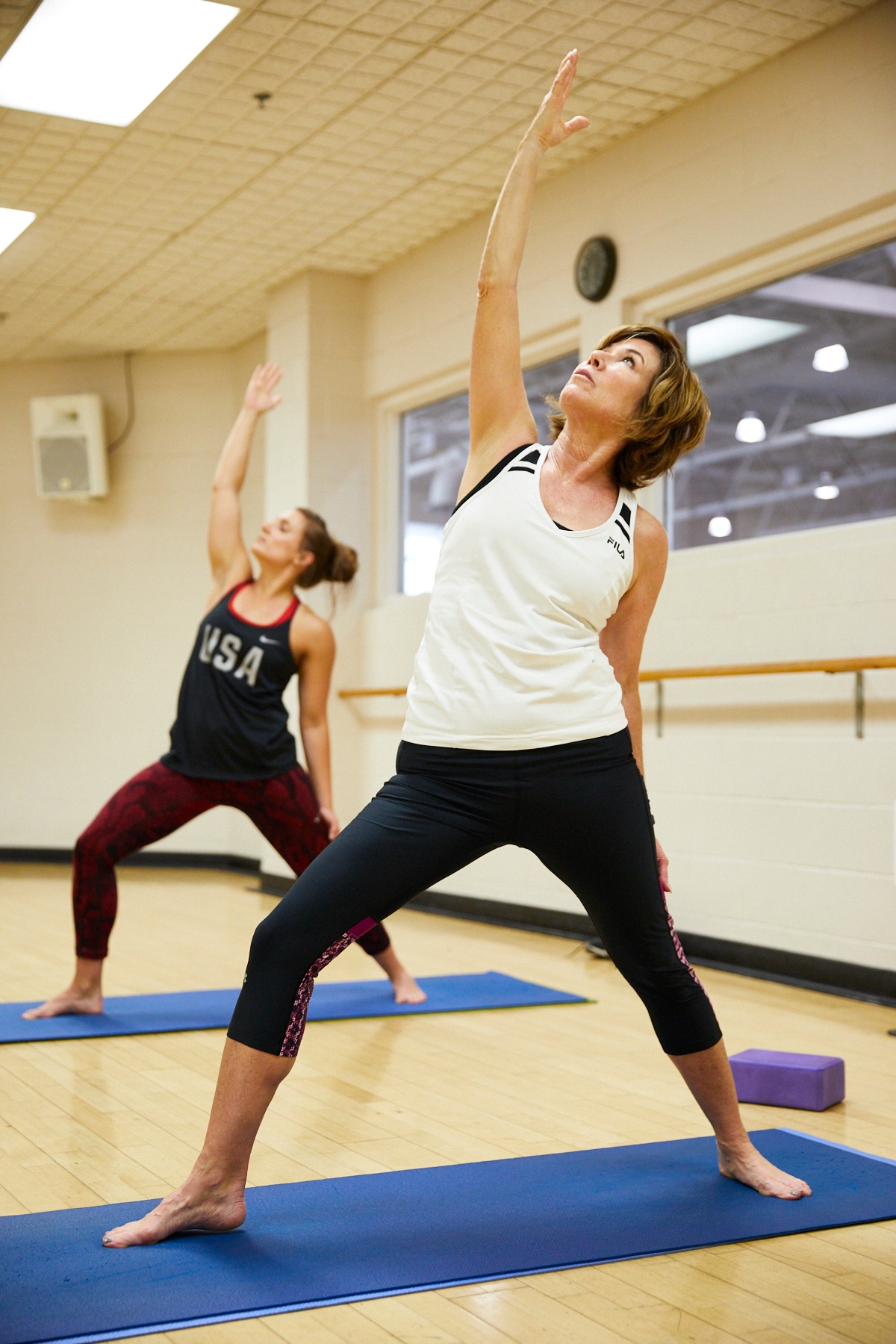
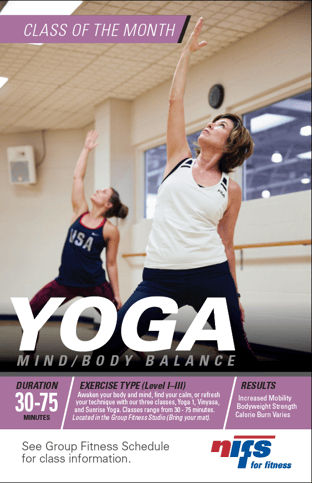
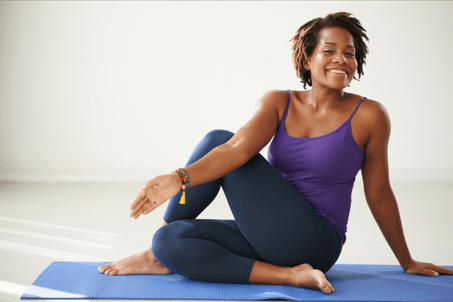 Many of us know that yoga serves as a form of physical activity that increases flexibility for participants. Yoga focuses on putting the individuals in body poses that elongate muscles from head to toe. While this is very true, and I encourage anyone looking to improve their flexibility to incorporate yoga into their weekly workout routine, yoga has so much more to offer than just improvements in flexibility. In fact, the original context of yoga had very little to do with improving flexibility at all.
 If you take a few minutes to google the various types of fitness training out there, you will come up with a list of about 10 different ones, and then 10 more different variations of each of those. And each year more and more “fitness trends” come out, making it quite confusing for the consumer as to what to choose and where to start. It can be confusing and even frustrating choosing what is right for you and your body.
  This type of training is specific to each individual and their personal zones. You can read more
 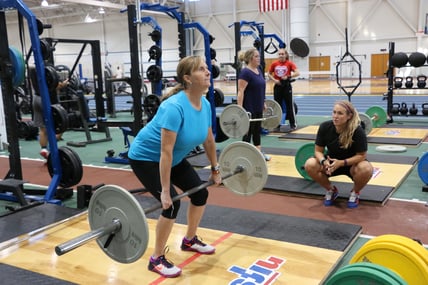 Strength training typically is done with heavy weight but can be done with lighter ones as well. This style of training is directly associated with Newton’s law: mass x acceleration = force.
  Continuing with the Group Fitness Class of the Month series, December is upon us and we are highlighting a new class. Hopefully you had the opportunity in November to do a
  PiYo at NIFS
 Greetings, NIFS friends. We have passed the midway point in the calendar year 2016, and I hope that you have been successful in meeting some of your yearly goals as well as making new ones. During this time of year, we find outdoor and recreational exercise more readily available and appealing, understandably, and because of this, there is time for the occasional spare moment for yours truly to ponder (by ponder, I mean BLOG!).
  I recently attended an event that was pretty far outside my usual activity base. I consider myself a lifetime mover and a lifetime learner, but I have to admit this event had me a bit concerned about my success rate, comfort level, and quite honestly my enjoyment. After all, I was supposed to be on vacation. The event I am referring to is a rather large one called
  Prior to this trip to
  I am a huge believer that if there is a will, there is a way, and to always find ways to get things done. Just like the tree in the picture growing on top of a rock, it found a way to get tall and strong even though it is out of its usual environment of growing from the ground. IT FOUND A WAY. You can always find a way to eat right, exercise, get enough sleep, decrease stress; you just have to reach and work for it. There is a way; find it. This tree did, and so can you.
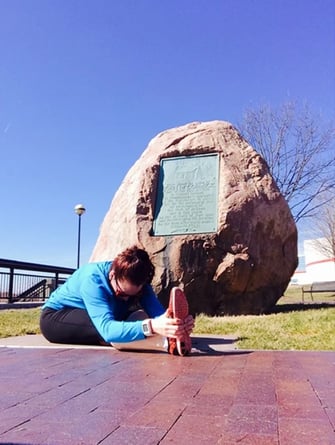 We know it is encouraged by fitness professionals, and included at the end of group exercise classes, but I want to ask you, personally: how many times after a workout do you actually take the time to cool down?
  There are so many things in life that can affect different aspects of the human body, and stress is one of the biggest! During a stressful time in life, the body can undergo several physiological changes that can be detrimental to your overall health. Though sometimes we cannot avoid certain stressors that fall into our path of life, there are some things that can be done to help you cope during those times.
  Okay, so you may have been hearing the word “PiYo®” circulating these last few months within the world of group fitness. For those of you who feel like you do not completely know what it means or what the class entails, fear not. I guarantee you are not the only one with questions, and as a certified PiYo instructor, I would love to share a few reasons why I teach it, and the benefits that can come from practicing it.
 Surprisingly, for many of us (myself included), just using our own bodyweight for certain exercises can be challenging enough. From moves like triceps pushups, to lunges, to side planks, 140+ pounds begins to feel really heavy really quick! PiYo® takes many of these simple-to-learn yet challenging moves and combines them with aspects such as “time under tension” and dynamic pulses to keep the body moving the whole time.