
“How can I better utilize the landmine attachment?” This is a question we hear regularly, but are sometimes limited by our own fitness exercise library. The landmine is actually quite versatile and functional in nature. Here I explore the Landmine and some of the many exercises that link several facets of fitness into one unique experience. From functional movements to powerlifting accompaniment, the Landmine is sure to boost your workout with new approaches to old exercises.
What Is a Landmine Attachment?
According to opexfit.com, “The landmine attachment is a piece of gym equipment invented by Bert Sorin of Sorinex. It’s an adapter that attaches to a weightlifting rack that holds a barbell in one end, leaving the other end free for loading and moving.”
Upper-body Exercises with the Landmine Attachment
For these exercises, you will need a 45lb Olympic bar, a Landmine attachment, and any additional weights to add (for increased difficulty). I suggest beginning with just a bar (remember, it does weigh 45lb!).
- Two-handed Shoulder Press: With two hands, press the bar overhead.
- One handed Bent-Over Row: With one hand, hinging at the waist, grab the bar and row upward.
Lower-body Exercises with the Landmine Attachment
- Sumo Squat: With a wider than normal foot placement, hold the bar in two hands with arms extended. Do a squat pattern.
- Single-leg RDL: While standing on one foot, bar in one hand, hinge at the waist, and then return to standing
Core Exercises with the Landmine Attachment
- Trunk Twist: Standing in athletic position, make a “windshield wiper” while holding the bar overhead.
- Half-kneeling Trunk Twist: This is the same as the trunk twist, except now you are in a half-kneeling position.
- Half-kneeling Press: From the half-kneeling position, press upward (not unlike a shoulder press), press the weight up and slightly past the top position, achieving anti-rotational stability.
As you can see, the Landmine is a great, multifaceted tool for us to enjoy not only functional fitness, but also massive muscle “gainz”. All kidding aside, please explore the Landmine and its numerous features. Be creative and try new exercises. If you are getting stumped and need a fresh routine, look no further than a NIFS Health Fitness Instructor. We can help with all of your fitness needs including setting goals, benchmark fitness testing, exercise programming, and more! See you at NIFS!

This blog was written by Thomas Livengood, NIFS Health Fitness Instructor and Personal Trainer. To learn more about the NIFS bloggers, click here.
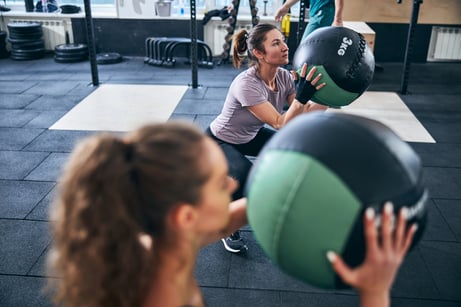 The month of October, also known as ROCKTOBER or SQUATOBER and famous for Halloween, is here. I thought I would put together two workouts—a fun workout, Pumpkin Partners, and a challenging workout, The Hell Bridge—that everyone can enjoy this October! Both are great for outdoor training in cooler weather
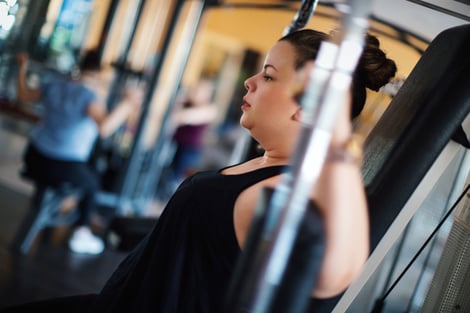 Science News (August 9, 2021) reported a study released by the University of Kentucky College of Medicine and College of Health Sciences that adds to the growing evidence that resistance training has unique benefits for fat loss.
  Collagen is the most plentiful protein in the body and the primary structural component of connective tissues found in your bones, cartilage, tendons, ligaments and skin, aiding in their elasticity and strength. Our bodies naturally produce collagen; however, its production declines as we age, especially when paired with poor diet, excess alcohol use, lack of exercise, excess sun exposure, or use of tobacco products. The degradation of collagen and collagen production
 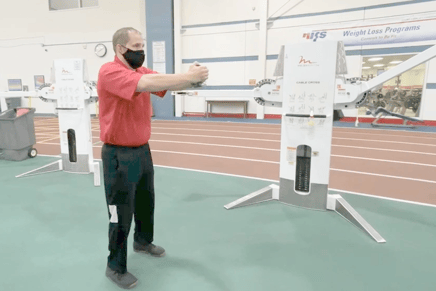 We all know that core stability and strength is an important factor in exercise, athletics, and even daily living. Being able to properly brace and stiffen the core is an important skill in preventing lower-back injuries when attempting certain movement patterns that occur every day. The abdominal crunch, which people often think of as a core exercise, is actually not a movement we see in our day-to-day lives. Try and think of a time you have had to mimic the abdominal crunch under a heavy load: it simply does not occur.
 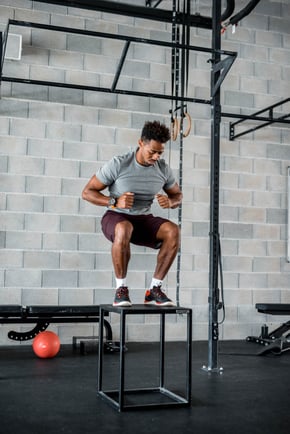 When watching elite athletes during competition, there are many athletic traits and features that we novices or amateurs marvel at. We think to ourselves, “If I did something like that, I wouldn’t walk for a week!” Seeing an NFL running back or wide receiver make a cut at full speed, a baseball player hitting a 400-foot home run, or a powerlifter deadlifting the weight of a Volkswagen Beetle are feats that just leave you in awe.
  It is estimated that there are almost 48 million cases of foodborne illness/food poisoning in the United States each year (source:
  According to the