
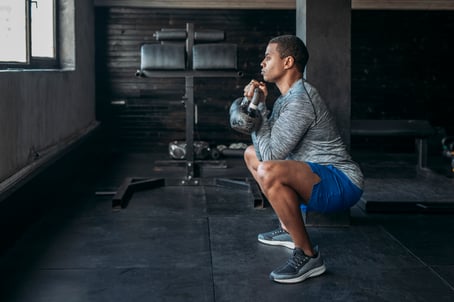
I enjoy all forms of exercise, but like many, I want the most bang for my buck when I’m exercising. Sure, I am always on the lookout for the new and best exercises that would not only kick my behind, but also have benefits all around. However, I always trend back to the “king of the gym”: an exercise that I do without fail—SQUAT
The Squat Reigns Supreme
Squats are often referred to as the “king of the gym” exercise, and for a good reason. When done correctly, squats utilize essentially every muscle in the body. If you want to get stronger, get bigger, or lose weight, squats will help. Although they aren’t a must in order to build your lower body, they are probably the most efficient exercise. Whether it’s building a stronger core, back, and legs; increasing bone density; or burning fat, squats are the best bang for your buck due to the engagement of many muscle groups activated at once.
But this post isn’t about just about squatting. In fact, in this four-part series, I want to show you that there are plenty of different alternatives to the “king of the gym.” We don’t always have the luxury of a barbell and rack or endless equipment resources from the gym. Perhaps you train from home or are on the road at a hotel. Either way, No worries!
Squat Alternatives Using Other Gym Equipment
First up are five effective squat alternatives you can do with access to gym equipment other than the traditional barbell back squat. Are there more than five? Yes, but these are my favorites. When I have an injury, or I’m bored, or all the racks in the gym are being used, I like to substitute these five exercises in place of squats. These five moves show alternatives to squatting that you can do efficiently in the gym when a barbell and rack aren’t available and still achieve similar or better gains.
As you can see, an effective squatting workout doesn’t have to be limited to the “king of the gym.” If you don’t have a squat rack available, there are a variety of different squatting alternatives you can use instead.
More in the Series
In part 2 of this series, learn how to use bodyweight and light equipment like resistance bands to functionally train your lower body. In part 3 of the series, I focus on body weight only, and in part 4 I set up some different routines you can do in a hotel when you’re on the road. Regardless of your fitness goals, some form or fashion of squats can and should be added to your fitness routines.

This blog was written by Michael Blume, MS, SCCC; Athletic Performance Coach. To learn more about the NIFS bloggers, click here.



 Bring in the summer with some fun ideas to get your fitness goals accomplished. Completing both circuits will help you get a jump-start on your fitness goals going into this summer. This workout can be done outside or in the gym.
 What Do Your Kidneys Do?
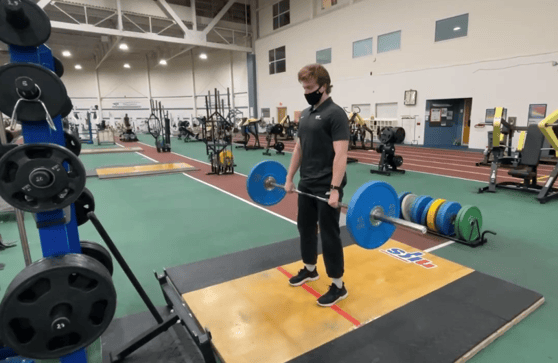 As a young trainer, I struggled to find my training style. I spent the first few months trying to make my clients happy, trying to make every session as hard as I could with no real connection between workouts. Our training had no direction; they were individual workouts according to what my clients wanted to work on that day. More times than not, this turned into working out one muscle group for the entire 30 minutes. I did a good job at working one muscle group, but that did not benefit them in the long term. As I grew in my education and as a trainer, I learned that there was a better approach to training: the full-body training split
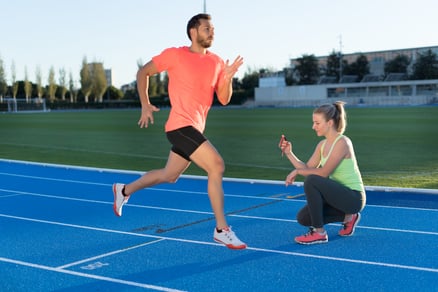 In a world where people want results in an instant and take drastic measures to achieve those results as fast as possible, developing strength, power and athleticism in a long-term aspect is often overlooked. For any fitness-related result or outcome, improvements take time. Fat loss, overall strength and/or power in any particular lift, speed, and agility are all seeds that needed to be watered for a while before noticeable and permanent changes are evident.
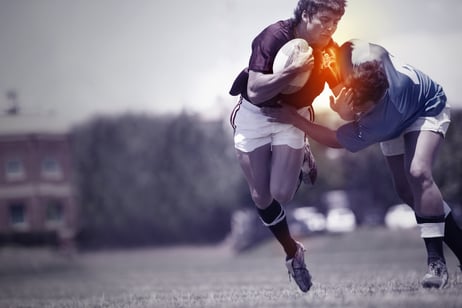 Sports careers, whether you are junior varsity or a hall of fame professional, all come to an end at some point. Often, these endeavors are marred with setbacks due to injuries ranging far and wide and sometimes spanning years. During competition and in the spirit of the moment, athletes sometimes push their bodies and minds beyond what was thought possible, resulting in amazing feats—but also potential injuries.
 Did you know the human body is composed of about 50 to 60 percent water? Throughout the day, your body uses and loses fluid by way of natural body processes such as sweating, breathing, creating saliva, making and excreting urine, and having bowel movements. Losing more water than you consume can quickly lead to dehydration, which typically presents as excess thirst, headache, dizziness, weakness, digestion problems, and/or nausea. These symptoms typically resolve once you rehydrate your body.