<img height="1" width="1" style="display:none" src="https://www.facebook.com/tr?id=424649934352787&amp;ev=PageView&amp;noscript=1">

NIFS Healthy Living Blog

Humble Pie: A Fitness Pro Struggles with a New Workout Program

Screen Shot 2021-06-03 at 2.36.33 PM

Stop me if this sounds familiar: “I am terrible at this new workout program. I don’t feel that I am doing it right, and I think I am just going to quit and go back to the familiar.” If you have thought this to yourself, you are not alone. Many people who have started a program have felt this way and have wanted to give up, but I won’t let them give up. I recently found myself on the other side of this process. As a fitness professional it is not easy to accept that you need help moving, and that you can’t do a certain movement or exercise.

Getting Help from a Movement Specialist

I visited a movement specialist to remedy an ongoing shoulder ailment and a newly acquired knee issue. I had to seek an expert because what I was doing just was not getting it done. I was tired of being in pain and not being able to move the way I have grown accustomed to. So I needed some help. I was assessed, and given a program that I was confident would get me back to getting after it in the gym.

I worked with a fitness coach to go over my newfound program and learn how to reset, realign, and fix my body back into shape. But it was not as simple as I thought it would be going in. I felt very confident about my physical abilities, but boy was I mistaken. I KNOW what it feels like to struggle with movement issues and following a program I am not familiar with and feel terrible at. I did not fare very well this day, the first day of a new workout program, and was very frustrated.

Wanting to Go Back to the Old Way

The next week I flew solo with the program to practice and work on the movements, only to build on my frustration and feelings of wanting to go back to the old way of doing things. But it was the old way of doing things that got me in the jam I am in today. Needless to say, I was quite humbled by my inability to pull off what was being asked of me. Now, I am a pretty big believer that a slice of humble pie from time to time is a good thing; it keeps you on your toes and makes you better than you were the day before. But my humility quickly turned to feelings of

  • Denial: There is no way I can’t do this; they must be telling me wrong.
  • Inadequacy: If I can’t do these movements, what else am I failing?
  • Embarrassment: I don't want to be seen by others as struggling.
  • Frustration (who am I kidding; I was ticked off): Am I ever going to get better?

Have you ever felt this way when starting a new workout program, job, or lifestyle change? Well, you are not alone! Those are hard emotions to overcome, and they are REAL! I think often during this process that if this is how I (someone who loves to move) feel, these types of feelings can be very high in someone who is just starting out or is at a low fitness level. I truly feel for this individual, and would love to pass on a message to them:

Don’t give up, because the goal is at your reach. But you have to do just that: REACH.

Step Out of Your Comfort Zone, and Get Support

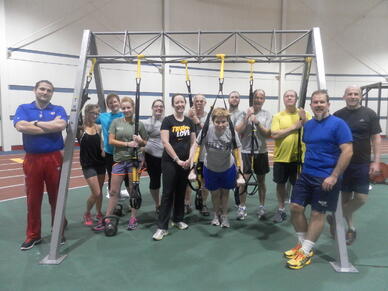
Step out of your comfort zone to propel your progress and get closer to where you ultimately want to be. Seek out others who are experiencing some of the same things and join them in the gym or in a group training session and work together through the hard times. Failing is a staple of life. It’s how you react to it that will determine your path. Will you lie down and accept defeat, or get up and spit in its face? It’s your choice.

I am happy to report that I have continued with the program and have had great gains and am nearly pain free. I am just getting started, though; there's a long road ahead. But it is a road I no longer dread traveling, and humble pie can be a tasty reminder that struggle equals success!

Schedule a Free Fitness Assessment and step out of your exercising comfort zone.

Tony Maloney Personal Trainer. Find out more about the NIFS Bloggers.

Topics: fitness center workouts group training nifs staff muscles attitude

Fit & Forty+ (Fabulous) Series—Foam Rolling and Increasing Your Range of Motion

Fit & Forty+ (Fabulous) Series—Foam Rolling and Increasing Your Range of Motion

by NIFS Personal Trainer Kris Simpsondescribe the image

As you reach your 40s, your body becomes less flexible, from sitting too much. Your body gets softer, from loss of muscle mass. Your weight creeps up, and your bone density drops. YIKES. Getting old stinks. But hold on, ladies: We can fight back!

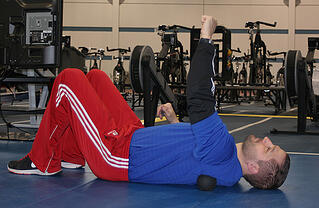
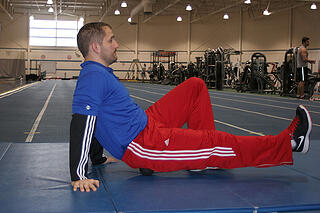
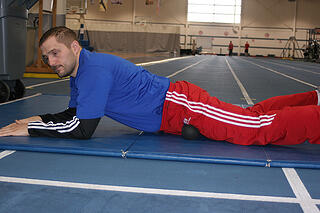
Our video today shows you how to increase your range of motion (ROM) and move better. We introduce you to the foam roller, which is becoming a popular way for people to break down adhesions and sore muscles to get the muscles to fully function. The roller is a great way to start your workout.

If you can move better, the next part—adding strength—will be more effective. Here at NIFS, we can do a Functional Movement Screening (FMS) to determine your imbalances and give you exercises to help you move better.

If you want to schedule an FMS screening click here to contacted by a NIFS staff member.

In the next segment, we look into your diet with help from Angie Scheetz, our staff dietitian. We will give you challenges to improve your diet—plus a circuit to burn some serious calories!

If you missed the first blog in this series go back and read and watch our video on Getting Started.

This blog series was written by Kris Simpson BS, ACSM-PT, HFS, personal trainer at NIFS. If you have questions about something in this series or would like to schedule an appointment with Kris please contact her at 317-274-3432 or email. To read more about Kris and NIFS bloggers click here.

Topics: NIFS exercise fitness muscles range of motion flexibility

The Functional Movement Screen (FMS) at NIFS

Over the last several weeks a lot of you may have gottenFMS logo
a small taste of our new movement screen. The Functional Movement Screen (FMS) will be our new way to assess movement-pattern quality. Movement training is somewhat new and looks at fundamental movements and motor control rather than isolated joint movements. Its purpose is to find dysfunctions so that they can be rectified and your chance for injury decreases.

The FMS Movement Tests

The FMS is made up of seven movement tests that can be divided into three sections. There are two tests that measure mobility, two tests that measure stability, and three tests that measure function. All of these tests coincide with each other so that we don’t miss anything. If you can FMS screeningmove pretty well at one test, it will eventually find a restriction or asymmetry/imbalance at some point if you have any. Our job is to identify any weaknesses, limitations, imbalances, or asymmetries so that we can immediately prescribe you a corrective strategy to reduce your chance for injury and increase fitness results.

Increasing Fitness Results and Reducing Injuries

As a staff, we are always looking for ways to improve our members’ safety and training, and our effectiveness to get results. Having a reliable way to assess movement allows us to program specifically for your needs and really zero in on what you need to achieve the best results. One of the reasons people hit plateaus is because their movement restricts how much they are able to do. So the FMS helps build a functional platform so that you can first move well and then move often. Essentially, if you try and move often first before you move well, your chance for injury goes up and your chances of seeing major results go down.

Scoring the Functional Movement Screen

Each test is graded from 0 to 3. A 0 indicates that there is pain during that specific movement. A score of 1 indicates that there is a dysfunction and the chance of injury greatly increases. A score of 2 is acceptable, and a 3 is considered optimal movement. A scoring system helps know whether the program we are prescribing is working and shows you specific results. The bottom line is if you are moving better, the chances of you getting injured are going down and your ability to get results is going up.

Modifying Training Based on FMS Scores

Lastly, if there is a dysfunction present, it is our job to put you in the best possible position to succeed and to stay injury free. This means that we will modify your training to correct your dysfunction as quickly as possible so that you can get back to the things that you are used to doing, but doing them more efficiently. If you are tired of not seeing results, the path that you continually take isn’t working.

Let us help you by taking you through the FMS, taking a step back from your misguided approach, and working on the small things that will help you achieve big results. Learn more about the FMS at NIFS, and sign up today!

This blog was written by Josh Jones, MS, CSCS, USAW, FMS. Meet our NIFS bloggers.

Topics: fitness center functional training shoulders NIFS programs injury prevention muscles range of motion

Fit & Forty+ (Fabulous) Series—Getting Started

Fit & Forty+ (Fabulous) Series—Getting Started

by NIFS Personal Trainer Kris Simpsondescribe the image

Who Says That 40+ Women Can't Be Fit?

This four-part blog series looks at what happens to women as we get into our fourth decade. As you see the scale creep higher and the clothes fit tighter, you know something must be done—now!

I will include both blogs and videos, giving you information and showing you ways to become FIT and FABULOUS into your 40's and beyond. Look for each part in the series to be posted weekly each Thursday. Subscribe to our blog so you don't miss an installment!

So What's Changing?

When we hit the big 4-0 the loss of muscle and decrease in metabolism seem to go hand in hand. Of course this varies for each person but some sources claim that your metabolism can decrease by up to 5% every 10 years once you hit 40. That means you have to eat fewer and fewer calories every year just to maintain the same weight.
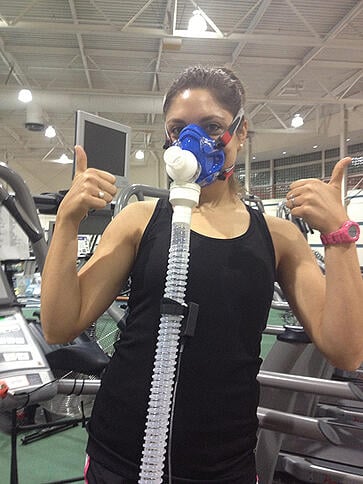
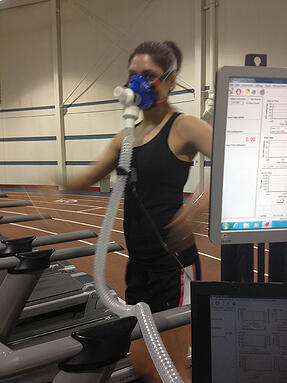
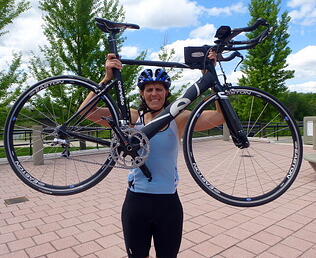
As you edge closer to 40, you face the realization that workouts are not something you do or don’t do; they become what you need to do. You are starting to get into your routine: family, work, and social commitments, which invade your me time. You need to carve out some time for you, but it does not need to be long hours on the treadmill.

Getting Started the Right Way

(Before starting any workout program, get a checkup from your doctor.)

Just some basics here. Get good gear: shoes, sports bra, and comfortable, breathable shorts and top. The key is your shoes; your feet need to have support for the work you will be doing. The biggest mistake I see with new clients is old, broken down, poor-fitting shoes. If you are going to be running, get running shoes. If walking, get walking shoes. If you are doing strength and interval workouts, get a shoe that allows for side movements (like a court shoe). For most who have worn high heels or tight, ill-fitting dress shoes in the name of looking fabulous, the minimal (or barefoot) shoes will not give you enough support and could lead to injuries.

Also, don’t pay top prices for shoes. Look through the clearance section and buy some that you like the look of (this is a great motivator), that feel great on your feet walking around the store (bring workout socks), and are within your budget.

Sports bras are just a necessary evil, so buy a good one! If you have a difficult time with sizes and support level, look into online companies.

Shorts and tops should be made from breathable and comfortable material to help you move through the workout without getting in the way. Plus you can get designs and colors that can encourage you to get moving. These items can be bought off the clearance racks as well.

Start with Measurements To Track Your Progress

Getting fit is a process. Changing poor habits to better ones, at times, can seem long and slow. Remember you did not gain the extra 20, 30, 40lbs in a week so you won’t lose it that fast either. By taking measurements you can gain encouragement by results, even if the scale doesn’t show it.

Watch my video now on the right way to take measurements. This is an important step in getting started so don't skip it! Tracking your progress will help you see the changes and will also keep you movitated when you need it most.


The changes you start making will need to be life-long. If you can make small modifications, it will lead you to a healthier and happier you. I look forward to challenging you in this series to be your best at 40 and beyond!

This blog series was written by Kris Simpson BS, ACSM-PT, HFS, personal trainer at NIFS. If you have questions about something in this series or would like to schedule an appointment with Kris please contact her at 317-274-3432 or email. To read more about Kris and NIFS bloggers click here.

Topics: fitness staying active motivation goal setting running walking equipment

Finding Balance in Your Life

So I have a question for you: How is your “balance”? I’m not referring to your single-leg stand on the BOSU. I’m referring to the balance in your life. The juggling act of all the responsibilities and the people we are responsible for and to can be as if we upgraded from simple juggling balls to flaming knives.Work life balance

Sometimes I think of that line in the movie Fight Club, when Brad Pitt’s character says to Ed Norton, “Things you own, end up owning you.” For me, it is my career that at times owns me, and tends to monopolize my focus and energy. The balance among work, rest, play, and spiritual wellness is a crucial one, and it does take some juggling at times to ensure that proper balance.

Legendary coach Dan John puts it best that if you have to work more (say, your busy time of the year), you must plan to rest more, play more, and spend more time developing spiritually (this could be religion, alone time, meditation, etc.). As you expand each facet of your life to ensure the proper balance, you too should expand. It just makes sense, doesn’t it? If you work more to complete an important project at work and increase your rest time revolving around solid sleep patterns, you will increase the benefits of great sleep. Expanding work and rest will then lead to more play time, resulting in better moods and perception.

Lastly, expanding the preceding three facets of your life will result in you spending more time expanding your spirituality. Now this is different for everybody. For me, it is alone time where I develop both personally and professionally. Or it is a long walk with my wife, Teri, and our Snorkie dog named Traveler. What is it for you? I feel to be the best “YOU” that you can be, all other facets of your life must lead you to a strong and centered spiritual sense that must involve a close relationship with the ones you love the most.

I came across a survey years ago, and if it has stuck with me for this long it is probably worth repeating. The survey polled 100 senior citizens about what they would do differently if they could do it all over again. Here were their top 3 answers:

  1. Laugh more
  2. Spend more time with loved ones
  3. Take more risks

As you look at your current balancing act, would those three be on your list later in life? Sometimes you need reminding of what is truly important in your lives. THIS IS YOUR REMINDER! Spend time with the people you love and who love you, find a way to laugh out loud every day, and have the courage to take that risk you have been fearful to take. Create the true balance in your life. You won’t regret it.

Tony Maloney is the Fitness Center Manager and leads Group Training Sunday through Thursday. Follow Tony on Facebook at ELITE. Meet our NIFS bloggers.

Topics: NIFS staying active healthy habits fitness center motivation work/life balance sleep

Slim It to Win It Program Returns to NIFS for 2014

Slim It logo

It's time to get ready for the fourth annual NIFS Slim It to Win It program! For those of you who have never participated in Slim It before, or those of you who have loved it so much in the past that you keep coming back, 2014 is your year to use this program to help reach your fat-loss goals, like so many others:

“I was told I had a pre-diabetic condition. The first year I participated in the "Slim It" program I lost 15 pounds and dropped 5 points in the BOD POD. This year I lost another 5 points.”*

***

“Christmas vacation I went a little overboard. I decided it was time to get back to it and get into shape.”

***

“I finally fit into pants I have not worn for 2 years. I also never take naps anymore. It is quite amazing what eating right and working out will do for your self-esteem.”*

***

Slim-It is a 10-week group training program and competition geared toward fat loss. The top team, top male, and top female winners receive a 3 month FREE membership to NIFS!

What Slim It to Win It Includes

The program includes the following:

  • 20 group training sessions at NIFS with a Health Fitness
    Specialist geared toward weight loss
  • Team relay during week five of training
  • Grand Finale with food, fitness, and awards
  • Weekly newsletter with helpful success tips
  • Program t-shirt

A pre- and post- BOD POD test is required for each participant. Along with your pre BOD POD, you will be given a three-day food log to complete prior to your first week of training. Your coach will submit your food log to the Registered Dietician, who will give you some general feedback and tips for success. Along with this, she will contact you once during the duration of the program to check on your progress and answer any of your questions!

Important Dates

Visit the service desk between January 27 and February 6 to sign up for the program this year. There will be eight teams with a maximum of 15 people per team. Spots will fill up fast, so be sure to sign up early! Team training sessions will be twice a week beginning February 10 and ending April 18.

Don’t miss this opportunity to enjoy a fun fitness atmosphere with a group of individuals with the same goals as your own!

Visit the NIFS website for more information about all of the upcoming NIFS programs for 2014. We look forward to having you as a part of another successful program this year!

*Weight loss claims and/or individual results vary and are not guaranteed.

This blog was written by Stephanie Kaiser, NIFS Health Fitness Specialist and coordinator of the Slim It to Win It program. Meet our bloggers.

Topics: nutrition motivation weight loss group training NIFS programs weight management

Make 2014 Your Year to Complete Your First Half-Marathon!

In the past decade, the half-marathon distance has grown at an extraordinary rate, almost tripling in the number of participants across the country. Although in the past few years the growth has began to slow some from the preceding rapid rate, it is the most popular road race distance for runners and walkers to complete, with 43 half-marathon distance races consuming the top 100 largest races in the country in 2012. Included in that list as the highest attended half-marathon for 2012, the Indianapolis OneAmerica 500 Festival Mini-Marathon continues to be a go-to event for runners and walkers of all abilities.marathon

A few reasons that I believe so many people set a goal of training and completing a half-marathon is that the idea of running a half-marathon is a manageable health and fitness goal from a time commitment and physical capability standpoint. Along with this, it is an excellent challenge for those looking to improve fitness, manage weight, or just accomplish something out of their ordinary routine.

Tips for Running Your First Half-Marathon

Here are a few tips that I suggest for first-time half-marathon participants:

  • Find a beginner's training plan! Starting with no base can still result in success when you follow a plan. First-time half-marathon runners should be sure to start out with lower mileage and gradually work into longer runs. This will help with confidence level initially and help prevent injuries that can occur if you start running too much too soon.
  • Visit a store that can fit you for the proper pair of shoes to run in before you begin the training program. Figuring out the right pair of shoes is very important and should be done before you start a training program.
  • Eat and hydrate appropriately prior to and following each training session. This will have a great impact on how you feel during all of your runs throughout the week.
  • Finally, have fun with training for the race! If you are motivated and feed off of others, find a group of people you enjoy being around to train with.

Join the NIFS Mini-Marathon Training Programmini marathon training

Now is the time to check the half-marathon off of your bucket list and join the hundreds of thousands of people who complete half-marathons every year! The NIFS Mini-Marathon Training Program was created to offer NIFS members and local residents a training program geared toward completing the spring half-marathons. Program participants are given a training plan to follow, which prepares them to complete the Mini, the Geist Half Marathon, the Carmel Half Marathon, or a combination of the races for those looking to complete multiple races in the spring.

Each Wednesday night for the duration of the 14-week program, runners and walkers of all abilities meet with their designated pace group to complete their long run for the week. Volunteer group leaders ensure that the participants are staying on pace and are completing the designated distance for the night. The distance of the long run progresses as the weeks go on, capping out at a 12-mile long run two training sessions prior to the Mini, which leaves participants prepared to conquer the 13.1. Following each training session, recovery snacks are provided to the participants.

Click here to register for the 2014 NIFS Mini-Marathon Training Program. Starting from scratch and not sure if you are ready to complete a half-marathon? Try our 4-week training program to build your base!

This blog was written by Stephanie Kaiser, NIFS Health Fitness Specialist and co-coordinator of the NIFS Mini-Marathon Training Program. Meet our bloggers.

Topics: NIFS fitness center running group training mini marathon half marathon race challenge

2013 NIFS Programs: A Look Back at Our Year

It is hard to believe that we are wrapping up another year at NIFS! As instructors looking back over the last year, we like to think that the variety of fitness opportunities that we have offered has provided individuals with the tools needed to move forward toward reaching and surpassing their health and fitness goals. Along with the variety of group fitness classes, personal training, group training opportunities, and fitness assessments and personalized exercise programs, we offer additional special programming throughout the year to keep our members on track and motivated!

Mini-Marathon Training ProgramMini Marathon 2014

Every year, One America 500 Festival Mini-Marathon and other spring half-marathon participants look to NIFS for their training program. NIFS offers a unique program providing pace group leaders for each training group, ranging from a 7-minute run pace, to a run-walk group, to the 16-minute walk group. You will find a group of individuals ready to train for the same goal as you within your group each Wednesday night of the program when you meet for the long run. Participants also receive a snack after they finish their run. With nearly 325 participants and leaders last year, the program proved to be a success and resulted in many happy participants crossing the finish line reaching their goals in the 2013 spring half-marathons.

Slim It logoSlim-It-To-Win-It

Kicking off at the right time, just after the New Year’s resolution rush has worn off and the thick of winter has settled in, NIFS rolls out the Slim-It-To-Win-It 10-week fat-loss team training program, which has proved to be a great motivator for the members to stay on track with their weight-loss goals. This year proved to be a tight competition, with 11 different teams competing for the team title. The aBENger’s claimed the title, losing an average of 2.35% body fat!


Triathlon Training Program
Tri Training logo

As the only program in the city that has been training for the Go Girl Triathlon since the very first race, NIFS spent much of the summer training women of varying abilities to complete the sprint triathlon in August at Eagle Creek Park. Twenty-five very happy women completed the race that day! The program met at NIFS, the IU Natatorium, and Eagle Creek Park on Tuesday nights to complete a weekly group workout with coaches and concluded with a post-workout snack thanks to program sponsor First Watch Daytime Cafe.

Summer Showdown

Always promising to be an excellent fitness challenge, Summer Showdown never disappoints as a challenging test for those looking for an extra push to beat the heat in the height of summer. This past year, participants completed a partner 100 workout at the beginning of the program. After 6 weeks of training two days a week with a team and coach with workouts geared toward improving performance of the challenge, the partners completed the same workout to conclude the program.

Staff Rowing Challenge

A little friendly competition never hurts anyone; it also proves to be very motivating when looking at fitness! That is how we view the annual staff rowing challenge. From November 25 to December 24, members row as many meters as they can for their team. The team that rows the most meters and the team that rows the most meters per person gets bragging rights as team champions. We are currently wrapping up this program, but it has proven to be successful as a motivating fitness competition again this year.

Maintain Not GainMaintainGainLogo

Also currently occurring as a holiday incentive program, Maintain Not Gain proves to be a popular program year in and year out as it encourages fitness and weight maintenance throughout the holiday season. The program includes weekly motivational emails, group workouts, and incentive prizes for those who maintain or lose weight upon completion of the program. With 208 participants completing the 2012–2013 programs, the group lost a total of 208 pounds over the holidays!

Les Mills Launches

Over the past year, the Les Mills classes have become increasingly popular in the fitness center. In January, April, July, and October, Les Mills launches took place in the fitness center to introduce new releases with the goal of injecting energy in the facility and to pump up the members!

NIFS Barbell Club

New this year, Josh Jones headed up the NIFS barbell club in October. The program is great for anyone who is serious about wanting to improve their power-lifting abilities. This session focused on the clean and the snatch. Participants learned the correct way to complete the exercises and saw drastic improvements in their ability to lift like the pros!

Start 2014 off right by getting involved in one of NIFS specialized programs! Mini Marathon training starts Jan 22nd! Get Registered today!

This blog was written by Stephanie Kaiser, Health Fitness Specialist at NIFS. Meet our other NIFS bloggers.

Topics: NIFS fitness center goal setting weight loss group fitness group training mini marathon half marathon NIFS programs challenge Summer Showdown weight management Les Mills

Indoor Cycling Is a Good, Fun Winter Workout

There is nothing like hopping on a bike and riding nowhere. If this sounds dull and boring to you, you have never ridden with me. I teach RPM®, the Les Mills Indoor Cycling Program. Cycling is a great way to balance your workout and helps build leg strength and cardio fitness. With the weather turning cold, this is the time to try indoor cycling. Honestly, it can be terribly boring when done on your own, but a group class always makes it better and the workout factor is not one to be missed!

A Lower-Impact WorkoutCycling 2022_2

My love/hate relationship with running is what brought me to indoor cycling. I love the feeling of the burning in my lungs and the pride of finishing in a sprint up the driveway, but my ankles and shins are not always fans of the inevitable high-impact movements associated with running. A few years ago I was fighting injuries from running and my doctor recommended I ride a bike as an alternative workout. This worked really well until it got cold. That is how I ended up in my first RPM® class.

Honestly, I was dreading the thought of doing it. The concept of sitting on an uncomfortable seat in spandex going nowhere was less than appealing. But I dragged myself there and am so glad I did! I found I could achieve the same physical feeling of running without all of the high impact. High-impact activities have their own benefits and I enjoy them; I just need balance in my workout, and RPM® gives that to me and can provide it for you as well.

Join the Fun of Indoor Cycling

RPM cycleDuring these cold months, do yourself a favor and try out a Cycle or RPM® class. The worst part is getting used to the seat. But after that, all you will notice is the strength building in the legs and the cardio party in your heart. Put that all together with epic music and you’ve got one heck of a workout. Outdoor riders, you may find that you miss the scenery, but the instructors are all pretty entertaining in their own ways, so you won’t be bored. We may not be physically relocating, but we are moving forward with our fitness level. Take a class regularly and you may find your outdoor rides and runs are a little easier next summer! I know mine always are.

Check out the Group Fitness Schedule and pick a class time. Come a little early so the instructor can get you set up on the bike properly. As with any group fitness class, try the class three to five times before deciding if it is for you. Have fun and ride it like you stole it!

Not a member yet? Request a FREE CLASS PASS!

This blog is written by Tasha Nichols, Group fitness instructor, Les Mills National Trainer and Presenter.

Topics: winter fitness cardio group training cycling Les Mills

Accommodating Resistance: The Benefits of Using Bands and Chains

NIFS has recently updated the weight room, including seven new half racks. Each rack has lower band pegs, and almost all of the racks have chains on the hooks at the top of the rack. Several people have asked why you would ever need the band pegs or chains to do your everyday squat or bench. In this post, I cover what accommodating resistance is and the benefits of using this form of chainstraining.

The Force-Velocity Curve

Before going into what the chains and bands do, I first have to set the groundwork and explain what the force-velocity curve is. As you see below, when force (weight lifted) increases, velocity (bar speed) decreases. So at the top where force is high and velocity is low, it is considered maximal strength. As you work down the graph, strength-speed is next. In the middle of the graph, you see power (the rate of force development, or RFD). As you continue down the graph, it becomes speed-strength and finishes with speed, where force is at its lowest and velocity is at its highest.

The reason this is important is that chains and bands give you the ability to develop explosive strength. So instead of benching with high weight and slow velocity (maximal strength), or low weight with fast velocity (speed), you can work in the middle of the graph and accelerate the bar in both the lowering and raising phases of the movement. Without the bands and chains, you have to decelerate the bar about halfway through the raising phase of a bench press, or the bar will fly out of your hands. Bands and chains ensure that you drive the bar as hard as you can, generating a high rate of force through the full range of motion (more on this below). The bottom line: Using bands and chains increases your rate of force development (RFD) and forces you to not let up after you get past your sticking point.

How Bands and Chains Workbands

Bands and chains do an excellent job of matching your leverage. The bar is lightest when your leverage is at its weakest, and the bar gradually increases in weight as leverage improves. Let’s break this down even further. You are getting ready to bench with 200 pounds on the bar. You add chains that each weigh 30 pounds. So now the bar total is 260 pounds. However, at the start position, half of the chains are lying on the ground, bringing you to a total of 230 pounds. As you bring the weight down to your chest, the bar gets lighter because more of the chains are lying on the ground. So when the bar is at your chest, you bring the weight down to the 200 pounds that you started with. As you press the weight up, more of the chains come off the floor, gradually increasing the bar total back to the 230 pounds at the top. This idea forces you to drive the bar out into full extension without letting up.

The Benefits of Accommodating Resistance

Bands and chains train acceleration and rate of force development, which is great for the development of power. If you are an athlete, the key to improved sport performance is producing more force in less time. This results when an athlete can absorb more force eccentrically (lowering phase), allowing you to apply higher levels of force concentrically (rising phase) in less time. Sport performance is about which athlete can absorb more force, enabling the athlete to produce more power. The biggest improvements that you will see by using this method are increased power, speed, and explosive strength.

Whether or not you are an athlete, using this method is definitely a game changer if your goal is to move a lot of weight and be explosive. I hope this post answers your questions on whether this type of training is right for you. If you are interested in trying this, be sure to ask a coach to make sure the setup is right, and always have a spotter to ensure safety.

This blog was written by Josh Jones, MS, CSCS, USAW, NIFS Athletic Department Trainer and creator of the NIFS Barbell Club. For more information contact Josh by email. Learn more about the NIFS bloggers.

Topics: fitness center equipment resistance weight lifting weightlifting