<img height="1" width="1" style="display:none" src="https://www.facebook.com/tr?id=424649934352787&amp;ev=PageView&amp;noscript=1">

NIFS Healthy Living Blog

NIFS 25th Anniversary: Charter Member Rick Hurst

Rick 18


Charter member Rick Hurst talks about his favorite activities at NIFS and what has kept him coming back for 25 years. Click here to watch his video.


Topics: NIFS exercise fitness cardio staying active fitness center workouts anniversary

NIFS 25th Anniversary: Charter Member Jeff Powers

Jeff Powers 11

Jeff Powers has been a NIFS member for 25 years. What keeps him coming back to NIFS and motivated to keep working out?  Click here to watch his video.

Ready to give NIFS a try? We offer a 14-day free trial membership. No commitment and no strings attached. Click here to get started today!

Topics: NIFS fitness fitness center group fitness anniverary member

NIFS 25th Anniversary: What Keeps Charter Member Pat Marshall Motivated

NIFS Indianapolis is celebrating our 25th anniversary throughout the month of November by highlighting some of our Charter Members that have been around since the beginning. These members have participated in countless group fitness classes, training programs, have lifted more weight over the years than we can keep track of and have logged many miles on our cardio equipment.  NIFS 25 logo

We want to give a HUGE thanks to these members who have really been with us through it all. To do that, we are highlighting these charter members by learning more about their stories and what keeps them coming back to NIFS.

First up, we have Pat Marshall, who became a loyal NIFS member on November 14, 1988.  Thanks for all of your hard work and dedication Pat!

What keeps you motivated to have a healthy lifestyle?

  • I have a history of diabetes on my mother’s side and a history of heart disease on my father’s side. I also think weight control is extremely important.

What is your favorite program/favorite instructor/favorite piece of equipment?

  • I love Body Pump and Cycle
  • The Ellipticals
  • The Spin bikes
  • The indoor track

How has your fitness routine changed throughout the years?

When I first joined NIFS I did so because of the indoor track. I liked to use that for my walking.  Then NIFS got the new Elliptical machines and stair master so I started using those more.  Then the group fitness was added in so I started attending classes.  Now I seem to be going back more to the cycle.

Anything else you would like to add?

NIFS is a top notch facility! It’s very clean—the locker rooms and fitness center offer a lot of variety of classes.

The timing of the classes is really good because people can do it before work or after work.

The location is great as well.

Basically the keep up over the years has been great, as well as addition of new equipment.

I also love the hours that you open early and stay open late.

This blog was written by Tara Rochford, NIFS Membership Manager, Group Fitness Instructor and author of Treble in the Kitchen. Meet all of our NIFS Bloggers.


Topics: NIFS fitness fitness center group fitness anniverary Les Mills

Quick and Easy Ways to Improve Performance: Taking a Deload Week

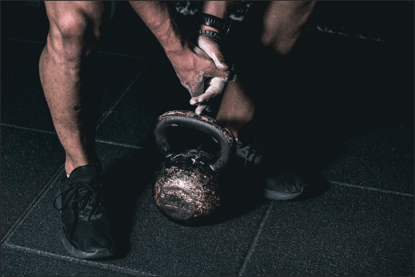
Just so that we are clear, deloading is when you reduce the volume, intensity, or frequency of training for a specified length of time. For many athletes, thinking of taking a deload week can sometimes be difficult. They are either in a groove that they don’t want to mess up, or the fear of losing too much strength or momentum can outweigh their decision to lighten up for a week. The reality of it is that they could come back the following week refreshed and more motivated than ever to reach their performance goals.

When utilizing a deload week, it canweight lifter
sometimes be difficult to understand when to take advantage of it and how to modify your training so that you can come back fully recovered. Your training age, strength levels, and injury history will determine how often you need to take one. The higher your training age, the stronger you are and the more weight that you can lift. If you tend to be injured a lot, a deload week is more important if you want to be successful. 

The three weeks hard, one week deload idea is something that I have added to my programs and have gotten great results from, as well. I use a four-week block system. Depending on where they are at (think off-season or in-season) will dictate if they deload at the fourth week or the eighth week.

Here I outline some general guidelines so that you can take your training and performance to the next level.

Reduce Training Volume

My first recommendation is to drop the total training volume to 60 to 70 percent of what was originally planned. To make things easy, if you had 10 total sets planned, you would only do six to seven total sets for the training session.

Reduce Training Intensity

My second recommendation is to drop the intensity to 60 to 70 percent. So here you would calculate your one-rep max (RM) and work up to only 60 to 70 percent of that 1RM. Let’s say that your bench press is 200 pounds. Then the highest weight that you would lift for the day would be anywhere from 120 to 140lbs. You can reduce both volume and intensity if you are really feeling under-recovered. In this example, if you had 4 x 5 at 80 percent of 200, you would do the following: 

70% of 4 sets = 2.8
(so you would round up and do 3 sets instead of 4 sets)
Instead of doing 80% of 200, which is 160, you would complete 70% of 200, which is 140.
The athlete now would do 3 x 5 at 140 instead of 4 x 5 at 160.

Take Some Days Off or Reduce Training Frequencyfitness calendar

The other option is to take a couple of days off or reduce the training frequency. So if you normally train five times per week, maybe come in for three days that week while dropping your volume and intensity to 60 to 70 percent. On the days off, you could incorporate some active recovery, which includes some cardiac output training (keep heart rate between 120 and 150) to help stimulate recovery, or even a mobility circuit. Again, if you are feeling very under-recovered, it might be best to take the day off completely.

Recovery

The biggest benefit from taking a deload week is to give your body a chance to fully recover so that you can stay healthy and come back refreshed and eager to train even harder. The recovery process is just as important as the training process. If you can’t recover properly, that is going to set you up for injuries. 

If you take only one thing from this post, let this be your warning: Don’t wait for something bad to happen that forces you to take time off. Incorporate a deload week as part of your training program so that you can stay healthy longer. Hopefully this post gave you good insight about how to deload properly, stay healthy for a long time, and improve overall performance.

This blog was written by by Josh Jones, MS, CSCS, USAW. Learn more about the NIFS bloggers.

Topics: fitness center workouts injury prevention muscles strength safety

Fitness Horror Stories

We have all had it happen….Pushed ourselves so hard in a workout we had trouble sitting down for days afterward, forgotten an important article of clothing for post-workout and had to go to work in smelly gym clothes, and the list goes on.

Because we have all had a moment of “horror” at the gym, in honor of Halloween we thought it would be fun to reach out to our members and staff to compile a list of the most frightening scenarios that have actually happened to us at the gym.

What's my fitness horror story?  
After a 13 day hiatus from all BODYPUMP™ due to my honeymoon I thought I would be fine jumping right back into class with the normal weight on my barbell.  My new husband and I were active on the trip as we went hiking nearly every day and walked everywhere, but I we didn’t do any weight lifting.  I felt fine during the BODYPUMP™ class, but boy was I in poor shape the 4 DAYS after!  That is the MOST sore my entire body has ever been!

Halloween

Now for some more frightening fitness stories from members and NIFS staff:

“I decided to run a half marathon without a single day of training and ran the entire distance in under 2:30. I could not walk for 2 weeks!!! Literally!!”

“During my first triathlon I made the mistake of only bringing one water bottle to the race. Within the first few minutes of the bike I dropped it and had no water for the rest of my ride leaving me extremely dehydrated for the run!” –Stephanie Kaiser, NIFS staff

“I trained hard for a trail marathon, my first marathon, eat right, got rest, was ready to go except……near mile 4 my foot/ankle twisted and I broke my 5th (outside) metatarsal, I had broken that foot when I was younger so I knew immediately, BUT I trained hard not just to run for 45 min.  I tightened my shoe, hit all the ice cold creeks I could to “ice” the foot, and finished the marathon in just over 5 hours. Thanks to my friend Sarah I got thru (and she could drive me home).” Kris Simpson, NIFS staff

“Over a year ago I attended my third CrossFit class in where I performed the workout “Angie”. Less than a week later, and one week before my 30th birthday, I was in the ER being treated for Rhabdomyolosis a condition in which the muscle breaks down so much it enters the blood stream and can cause kidney failure among other consequences. Luckily my kidneys weren’t damage but I did “enjoy” a hefty hospital bill.  From time to time I still deal with pain in my arms and  the anxiety that I might have it again!” Penny Pohlmann NIFS Corporate Fitness Staff

“Do members that workout in their underwear count?  I mean, I find it pretty horrific.”

“I joined a fun game of ultimate Frisbee while volunteering at a children’s summer camp. Unable to hold back my competitiveness, I tumbled over 3 children while sprinting and diving for the Frisbee. Needless to say, I didn’t catch the Frisbee and I fractured my ankle in the process!”

“I decided to try out a move I saw on “Biggest Loser” where you jump up onto an upside-down BOSU. I had pretty solid landings for the first few I tried, so I started to get cocky, and then fell off and twisted my knee. I wasn’t able to do cardio for about 2 weeks!” Michelle Meadows, NIFS Corporate Fitness staff

“In September 2009 I attended my very first spinning class. It was a great class, though I had no idea how to do most of the things we did, and indeed it was the very first time I had ever been on anything that resembled a bike in any way. I was 50 years old at the time and could barely walk up a flight of stairs, I was about 60 pounds heavier than I am currently. I DID make it to the end of the 60 minute class though my eyes were focused on the clock. As painful as the class was, the real pain was to come the next day, and for the 3 following days. It took my body close to a week to recover from that very first spinning class, though I was already hooked and went back :)”

“I trained like crazy for the ½ Flying Pig Marathon in Cincinnati. OH.  I did a great job preparing for the hills on treadmills because we had a very cold, wet and snowy winter.  Little did I know, you can’t really simulate going DOWN hills on a treadmill. It took 3-4 miles to climb this huge hill, but we were down to sea-level within 1 mile.  Needless to say, my quads were burning so bad that I had to us the handicapped restroom at work all week because I couldn’t get up from the seat without a handle…fun-fun!!  LOL!” Anne Murphy, NIFS Corporate Fitness staff

“A member was running a marathon, and at about mile 10 or so, nature #2 called. To make matters worse, this part of the course was through a residential community. Being an avid runner, they found a large neighborhood sign and took care of business. Funny enough, they went on to finish the race with a near PR.”

“I was teaching a group fitness class at a corporate site, and in the middle of class my shorts ripped at the seam while doing squats. Not wanting to disrupt class, I carefully angled my exercises and finished the last half.” Doug Trefun, NIFS Corporate Fitness staff

“I have to put inserts in my running shoes, and doing so I take out the padded insert that comes with the shoe.  I went to a triathlon with my shoes packed in my bag and wore flip flops to the race.  I took the shoes out at the race site and noticed the insoles were not in the shoes.  There were in my shoes at my sister’s where I stayed.  I had to wear the shoes with no insole and it felt like I was barefoot! After 4.5 miles my foot hurt and I was later diagnosed with a stress fracture.”  Kris Simpson, NIFS staff

“I was performing step-ups on stairs, without shoes.  I landed wrong and broke my foot.  I couldn’t do lower body exercises for over six months!”

“Like forgetting your shower towel and only discovering after your work out and when you are supposed to be at work in 45 min.? (Also,  I was carpooling with Mike and was dropped off,  so going home to shower wasn’t an option)  AHHHH the horror…. Drying off with the hand towels provided by Wellpoint at the sink is less then idea…. BUT I got a work out in!“
 
“I did water aerobics at Gold’s Gym and I thought this would be the easiest workout in the world, well I was fooled. I was the youngest person in the pull and slowest. We had to do a figure eight running up to the top of the pool and all the older (elder) classmates were on their way back to the other side and I was still near the starting point. I felt like I was in a dream running as fast as I could but not moving anywhere. I was totally exhausted after that one hour of water aerobics. “


“I went to an offsite exercise class and was trying to challenge myself.  When it was time to do this one particular drill over half the class left out to walk laps outside because it was hard for some to do. Well, I decided to do it and it ended with me running into the wall and in the emergency room with a broken finger. Needless to say that finger will never be the same.”

“When in Denver I decided to start getting fit I walked to work did ok going to work it was 12 miles, going home I was almost crawling by the time I got there my feel and knees were dying, I am over weight, I was limping the next 4 or 5 days and had blisters on the balls of my feet. ouch.”

Now it’s your turn:
What is one of YOUR fitness horror stories? Share it here!

This blog was written by Tara Rochford, NIFS Membership Manager, Group Fitness Instructor and author of Treble in the Kitchen. Meet all of our NIFS Bloggers.

Topics: NIFS exercise fitness group fitness nifs staff safety

Thomas’ Corner: No Pain, No Gain?

thomas

“No Pain, No Gain.” This motto has been forever linked to wellness and fitness. We know that without a little struggle, there will be no progress, but is it really necessary to “bring the pain?”

We do know that when we workout, we create muscle soreness. This is, in part, due to overload of the muscle during exercise or even creating very small tears in the muscle fiber. There is good news though! Your body will repair these muscle tears and become even stronger, allowing you to better handle the workloads of your future workouts.

A concern does arise, however, if significant and repeated tissue tearing is happening frequently; a severe injury or tissue damage could take place. (See this article for more on the hazards of overtraining.) To prevent this from happening, you can start one of several pre-workout rituals, including foam rolling and dynamic stretching. A post-workout stretching is also equally important followed by good nutrition and adequate rest.

Creating a plan of action with a fitness specialist or personal trainer will help you develop a workout that is appropriate for your goals! Yes there may still be some pain at times but it's the gain you'll remember.

Evolve and rejoice,

Thomas

This blog was written by Thomas Livengood, Health Fitness Specialist at NIFS. To find out more about the NIFS bloggers click here.

Topics: fitness center Thomas' Corner workouts injury prevention overtraining stretching

Why You Need Pilates in Your Fitness Regimen

Okay, I know what you are thinking. I have conversations about Pilates almost daily with skeptical fitness enthusiasts, and so often people feel that Pilates is not worth their time. I sympathize; before I tried Pilates I thought that I had things covered with weightlifting, core work, yoga, and cardiovascular training. Why would I need to add anything to my already busy schedule?Pilates

When I took my first Pilates class, I realized that I was wrong. I could barely finish any of the exercises and for several days after I was so sore that I thought I had broken a rib. I almost did not go back because I was embarrassed by how poorly I had done. I could not believe how weak, inflexible, and uncoordinated I was. Later I learned that the muscles targeted in Pilates exercises should be used in other forms of training, but that people are not always taught how to use them when they exercise. Since including Pilates in my regimen, my strength and skill has improved in all of my workouts!

The Workout Benefits of Pilates

So, why should you consider Pilates? Pilates enhances everything you do. The Pilates Method Alliance states that Pilates improves posture, coordination and balance, flexibility, and strength in every muscle group. It helps to align the body and adjust imbalances from sports. The system even increases lung capacity, circulation, joint health, and bone density. From marathon runners to baseball players, athletes in every sport benefit from Pilates.

I love that, once you are confident enough to do so, you can take Pilates with you anywhere and do it any time. It is easy to incorporate the movements and principles into your workout regimen, and you don’t have to do many repetitions for the work to be effective. Even a few exercises a day will benefit you greatly!

Pilates at NIFS

Interested in trying Pilates? Check out our online Pilates Fusion class through the NIFS at-home page.

This blog was written by Morgan Sanders-Jackson a group fitness instructor at NIFS. Meet our other NIFS bloggers.

Topics: NIFS group fitness group training balance flexibility strength core Pilates

How to Live a Healthy Lifestyle in College

With NIFS being located on the campus of IUPUI, it is hard not to notice the campus’s schedule and all of the students bustling between classes. Several students stop into our fitness center for advice so they can avoid the “freshman 15” or get their healthy habits back on track.

Now that school is in full swing and you have your classes and routine figured out, it is a good time to take a look at your healthy habits or areas that could use a little tweaking in the health department. I know how tough being in college can be, but it doesn’t mean that all healthy decisions have to fall to the wayside. This is a crucial time in your life when new routines are developed, so why not develop healthy habits that you will have for life?

College is a time when you go through many changes all at once, so it’s important to not only focus on putting healthy foods in your body, but also to be healthy physically, mentally, and socially, too! Not to worry; it may be challenging at times dealing with so many new things all at once, but I promise you will make it through.

You may be a new college student, in your third or fourth year of college, preparing to go to college, or helping a loved one get ready for his or her college experience. Whatever the case, these tips will help keep anyone college-bound healthy, balanced, and happy!

1. Create a Routineplanner

Every person functions differently. Some people are planners and some people thrive on spontaneity. Whatever the case, your body needs a little bit of routine. Make sure that you are orderly with things you do each day. For example, keeping your keys, ID cards, and notebooks in the same place each day will save you the stress of searching and scrambling last minute to find these items before each class. This extra time will also allow for more “free time” when you can do spontaneous and fun things to keep your mental and social health balanced.

2. Begin with Breakfastpeanut oats

Breakfast is the meal that boosts your blood sugar and metabolism, and can set the tone for the entire day. Skipping breakfast can lead to moodiness, low blood sugar, and overeating later in the day. Remember that you don't have to eat "breakfast" for breakfast. If you want leftovers from the night before, go for it! The important thing is to include complex carbohydrates, lean protein, and healthy fat to increase your focus, metabolism, and energy. If you don’t want to eat in the dining hall, an easy dorm room breakfast is hot oats cooked in the community microwave topped with a dollop of nut butter and a side of fruit that you grabbed from the dining hall the night before.

3. Hydrate

Keep in mind that the calories in your drinks count toward your daily calories, too. If you are feeling thirsty, you are already dehydrated, and often thirst can be mistaken for hunger. Choose water when you can, and keep a fun water bottle or cup with you at all times to encourage drinking throughout the entire day.

4. Schedule Physical Activity and Make it FUN!group fitnees

Don’t like going to the gym? You don’t have to! Since I work at NIFS you probably think I am crazy for saying that! The thing is, your body doesn’t know whether you are running inside on a treadmill or playing a game of soccer. What your body does know is it was meant to move, so schedule some fun active time in your day just like a class or appointment. Sign up for an intramural sport, try a group fitness class, join a running group, volunteer at the animal shelter to walk dogs, sign up for a dance class, and get creative! Find something you love and do it.

5. Be Prepared

Although it may be hard to pack an entire healthy meal when living in a dorm, packing a snack can be easy! Some fruits and vegetables require little to no preparation (such as apples, oranges, peaches, cherry tomatoes, and snap peas) and can be thrown into your school bag for an easy energy booster. This can lift your mood and sharpen your focus to help prevent the afternoon blues and help increase your productivity while studying. Having water and emergency snacks on hand will also make it less likely for you to reach for fast food as a regular option.

6. Indulge!cookies

In moderation, it's okay to eat your favorite treat every once in a while. Things like ice cream, fast food, chocolate, or a special coffee drink are perfectly fine to enjoy...sometimes. It's not what you do every once in a while, it's what you do every day that makes a difference.

At NIFS we are here to help, and we couldn’t be more conveniently located for students in central Indianapolis.

We offer fun group fitness classes that are included in your membership. We have a Registered Dietitian on staff who can help you create a meal plan that will work with your campus lifestyle. And our Health and Fitness Specialists will create a workout plan for you for free.

If you have questions about student membership or any of the programs that we have available to help you live a healthy campus lifestyle please e-mail membership at membership@nifs.org.

This blog was written by Tara Deal Rochford, NIFS Membership Manager and a group fitness instructor. Author of Treble in the Kitchen.Meet our other NIFS bloggers.

Topics: NIFS exercise nutrition staying active healthy habits group fitness healthy eating snacks outdoors

7 Quick Tips to Get Moving at Work

Are you one of the many Americans who are glued to a desk throughout the day? On top of that, do you have other responsibilities outside of your work hours that limit the amount of time that you can spend exercising throughout the week? Here are some ways that you can become more active at work. Remember, 30 minutes of physical activity five days a week can make a huge difference in your long-term health!

1. Bike or Walk to Work932463446_bike

If you can ride a bike or walk to work each day, you can add a significant amount of physical activity minutes to your week. If you have a bike path or walking trail near your home that leads to your work, this is an excellent option. Many do not have this luxury or live too far away, but that doesn’t mean it is completely out of the question. If you have a longer commute, you can drive to a path and park nearby and bike or walk the remainder of the trip. This is a great solution for those who work in busy cities.

2. Take the Stairs

Even if you are stuck at a desk the majority of the day, you can get in some quick cardio bursts if you have a set of stairs in your building. Anytime you have the opportunity to switch to a different floor, utilize the stairs instead of the elevators. For example, instead of using the restroom that is a few steps from your office, take the stairs to a restroom on a different level to sneak in some extra steps. (You can even go up and down a few extra times while you are up!) 

3. Walk on Your Lunch Break

Squeeze in a few extra minutes on your lunch break by taking a stroll around the block or through the hallways. If your time is limited, do not underestimate the value of a short 10-minute walk. The small additions of physical activity throughout your day add up fast! Some companies even offer incentive programs at work for walking so be sure to join in!

4. Walk During Meetings and Brainstorms

When possible, have meetings while walking. This can be especially beneficial during brainstorms. Instead of sitting for 20 minutes with a colleague discussing the next task, walk!

5. Desk Exercises

When you feel like you have brain block or just need to pause for a few minutes from what you are doing, complete a few exercises right at your desk! Try alternating between incline push-ups on your desk and body-weight squats for 3 sets, 10 to 15 reps for each exercise, for a quick burst of energy. All you need is your own body weight and your desk!

6. Sit on a Stability BallWorking while on stability ball

Not all companies will allow this, but if yours does you should definitely take advantage of it! Sitting on a stability ball throughout the day improves posture, strengthens the core, and is an excellent piece of equipment for a few quick desk exercises throughout the day. A regular stability ball will work, but balance ball chairs are excellent and provide additional ergonomic benefits.

7. Stand Up

Simply stand up at your desk when possible! Standing burns more calories than sitting and allows for your body to stretch from the seated position. Oftentimes we need to be seated to complete a job task, but you can easily stand during a phone call or while you are reading a long document. If you want to add an extra burst of cardio along with this, try marching in place to increase your heart rate.

Have specific questions on ways to incorporate more physical activity into your day? Sign up for a free fitness assessment with one of our expert trainers!

This blog was written by Stephanie Kaiser, ACSM certified Health Fitness Specialist. Meet our bloggers.

Topics: staying active walking employee health exercise at work

Running Apparel and Equipment: Some Tips for New Runners

Fall is a great time to get out and run. For those new to running, entering a sporting-goods store can result in a high-priced swipe of the credit card upon exiting. If you do not know the difference between your running apparel needs and wants before you go shopping, you are likely to end up in this situation.Running apparel

Let’s talk about what I consider to be the top three most important purchase categories that you will need when starting a running program.

Proper Running Shoes

The most important thing that you will need before starting a running program is a good pair of shoes. This is the single best investment you can make upfront to start a training program on the right foot. I highly suggest purchasing your first pair of running shoes from a running apparel store such as the Runner’s Forum. They have staff on hand that have been trained to determine which type of shoe is best for you to train in based on your running mechanics. They will watch you run, analyze your mechanics, and ensure that you are getting into a shoe that is right for your stride, which can prevent injuries that result from wearing improper shoes.

You should expect to spend between $70 and $130 on a good pair of running shoes. This is the one area that I truly believe is a critical investment.

Proper Running Clothing

It goes without saying that having clothing for running is a must, but you do not necessarily need to spend a ton of money to get what you need. Companies such as Nike and Under Armour put out excellent running apparel that is high quality, functional, and stylish, but with the big-name brands generally comes a high price. On the other hand, stores such as Target  carry similar items for about half of the price and these products will do just fine for your training if you are not willing to pay top dollar.

Be sure you are equipped with the right clothing for the season you are training in. For warm-weather training you will want light, loose-fitting, moisture-wicking, and breathable clothing. Sunscreen and hats are also recommended to avoid sun damage. When it is cold, you will want to wear a few layers:

  • The first layer should wick moisture away from the body.
  • The second should insulate to keep you warm.
  • A third water-resistant layer can be added to keep your first two layers dry when needed.

Winter hats and gloves should also be a part of your winter wardrobe to avoid frostbite. Additionally, women should be sure to purchase a sports bra that they feel comfortable in and that provides them with adequate support.

A Runner's Watch

Having a watch is very important; however, the brand is not as important. You can spend anywhere between $10 and hundreds of dollars based on all of the bells and whistles that it has. Personally, I prefer the Timex Ironman Triathlon watch because I can store various workout splits on it and keep track of my intervals during a workout. This watch costs around $40, but it does not give you distances or current running pace like the GPS Garmin watches do. I will say that the GPS watches can be an excellent tool for the beginner who does not have a gauge on their pacing, but these watches tend to be very pricy.

When gearing up, be sensible with your spending based on your budget and your needs, but be sure to consider the tips I've discussed. The roads are always open and they do not discriminate based on who you are or what you are wearing. You can walk out your door onto the road wearing upwards of $500 invested in your shoes, clothing, and watch, but that is not going to determine how successful you will be in reaching your running and fitness goals. You are responsible for that!

Our Mini Marathon Training Program starts up in January, but it's never too early to register! Click here for online registration and information.

This blog was written by Stephanie Kaiser, NIFS Certified Health Fitness Specialist. Meet our bloggers.

Topics: NIFS winter fitness running equipment