
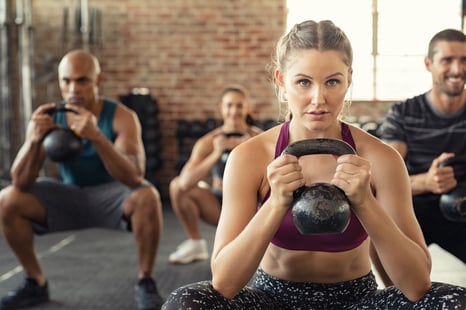
 Functional training is an excellent approach for longevity and maintaining a healthy lifestyle and functioning body because it emphasizes movements that mimic activities of daily living, enhance flexibility, and improve overall mobility. In this blog, you will learn about the different functional exercises that can contribute to your longevity, along with their benefits and daily function.
- Squats: Squats, part of the big three essential power lifts, are an ideal functional movement because they mimic the motion of sitting down and standing up repeatedly on a day-to-day basis. The benefits include strengthening the lower body (quadriceps, hamstrings, and glutes) and promoting improvement in ankle and hip mobility.
- Lunges: Lunges are used primarily to replicate the function of climbing stairs, stepping onto or over something, and catching oneself from falling forward or backward. The benefits include strengthening the legs, hips, and glutes, and improving balance and stability.
- Deadlifts: Deadlifts, as another part of the big three essential power lifts, are an ideal functional exercise because they simulate picking things up from the ground safely. This exercise targets the posterior chain, including the lower body, glutes, and hamstrings, which are all activated especially when lifting a heavy object.
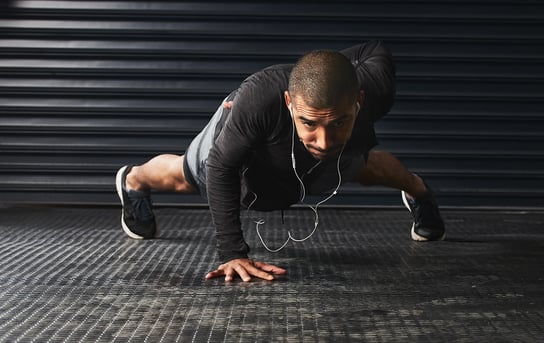
- Push-ups: Push-ups are one of the most essential and common movements needed for the ability to lift our body from the ground or external obstacle. This exercise targets muscles of the chest, shoulders, and triceps, thus promoting upper-body function and strengthening.
- Pull-ups (or lat pulldowns): Pull-ups are another essential and common movement for the ability to lift oneself, like climbing a wall. A good alternative exercise is lat pulldowns, which simulate the same function.
One key piece of advice I would offer is to focus on proper form and start with the most appropriate intensity that is necessary for you and your fitness journey. Consistency is key, and as with any exercise program, it’s advisable to ask questions. Always consult the trainers and Health Fitness Specialists at NIFS. We would love to help you improve your form, give you exercise prescriptions, and make your fitness journey as comfortable as possible.
This blog was written by Deveon Martin, NIFS Health Fitness Specialist. To read more about the NIFS bloggers, click here.
 Happy New Year! As we embark on a journey to transform our lives through physical fitness, mental well-being, and a balanced lifestyle by exploring the components of a holistic approach to health that will help you achieve your fitness goals and lead a fulfilling life.
 Roughly how many hours of sleep would you say that you average per night? Six hours? Ten hours? Now think about your fitness goals and the results you want to see from exercising. Are you where you would like to be, or are you on pace to get to where you would like to be? You can be doing everything correctly from the exercises that you perform, nutrition and supplementation, stress reduction, whatever it may be, and you aren’t quite getting the results you’re looking for.
  If you’re like me and absolutely love listening to music and discovering new artists, genres, etc., then I could bet that you most likely listen to music while you exercise. Combining music and workouts has become a common practice among fitness enthusiasts because it can provide a boost of motivation and energy for when you’re testing your one-rep max or just taking a brisk walk outdoors. However, in this blog I will discuss the potential drawbacks of listening to music during a workout/training session and, hopefully, it will make you think about how music (or no music) plays a role in your training.
.jpg?width=537&height=358&name=GettyImages-1187356524(1).jpg) In an athlete’s world, every fraction of a second and inch of athletic performance are significant for them to play at their best on and off the field. However, being an athlete means consistently searching for innovative ways to elevate your game. This is where fascia training enters the conversation as one of the many ways of improving one’s athletic performance. Fascia training is an emerging topic that holds the promise of unlocking your untapped potential and improving your performance.
In an athlete’s world, every fraction of a second and inch of athletic performance are significant for them to play at their best on and off the field. However, being an athlete means consistently searching for innovative ways to elevate your game. This is where fascia training enters the conversation as one of the many ways of improving one’s athletic performance. Fascia training is an emerging topic that holds the promise of unlocking your untapped potential and improving your performance. 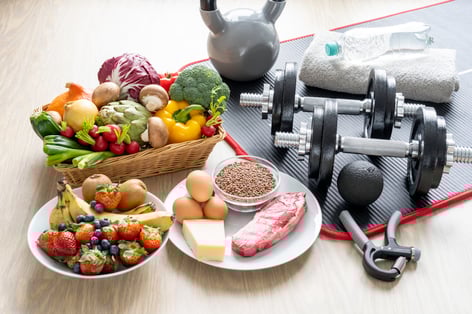 If you’ve been into fitness for a while, you likely know how important it is to fuel and replenish your body before and after exercise with the proper nutrition. However, you might be uncertain and confused about why, when, and what to eat and drink to optimize your workouts.
  Set Clear Goals: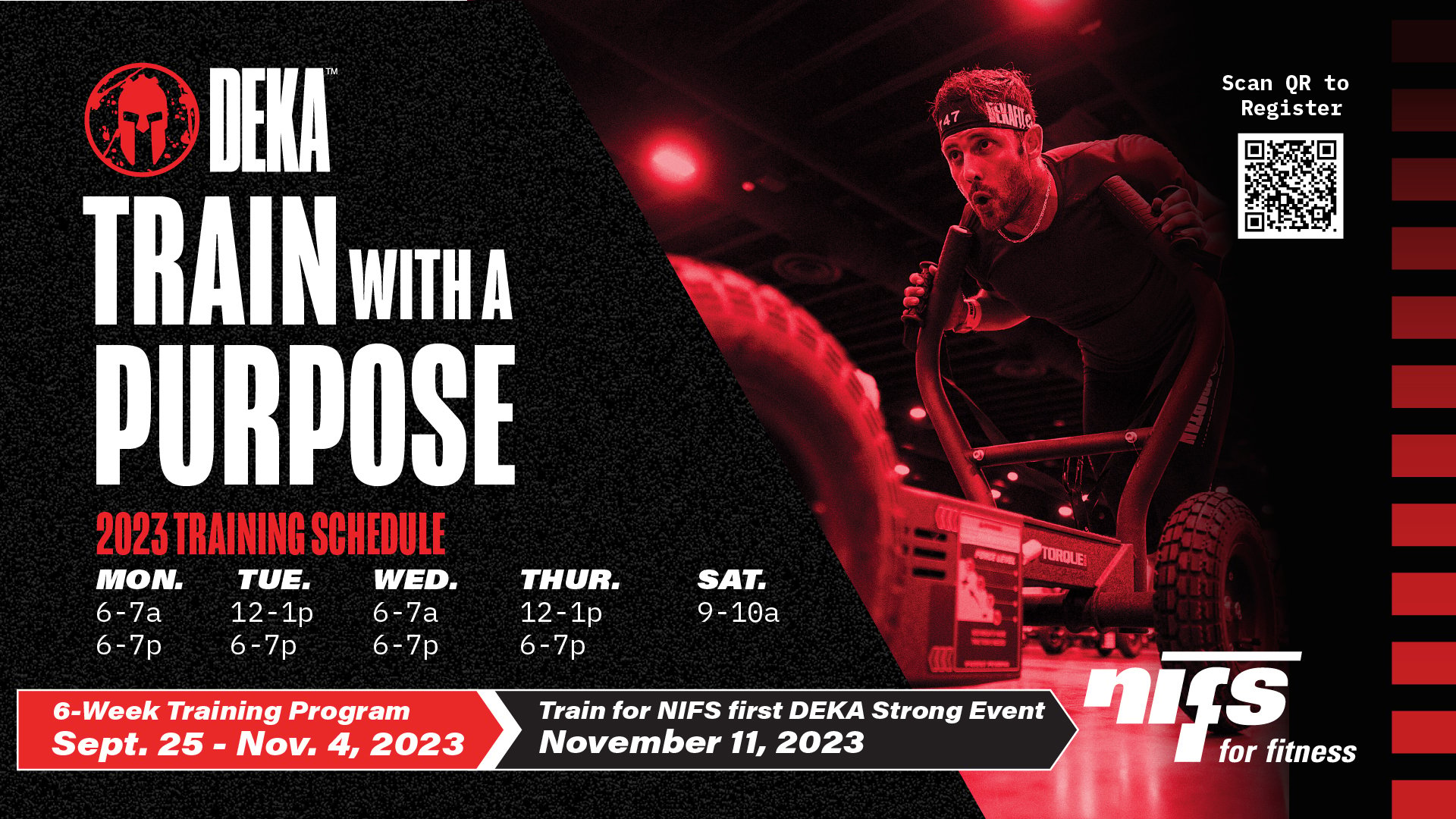
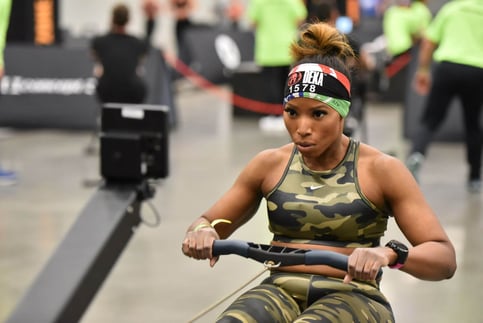 NIFS is excited to become a DEKA affiliate and bring DEKA group training and a new DEKA Strong event to NIFS this fall. You might be familiar with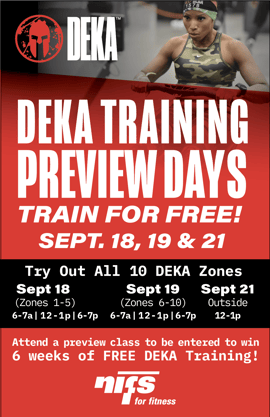


 Grilled Zucchini Hummus Wrap
  Chicken and Cucumber Lettuce Wraps with a Simple Peanut Sauce
  In
In