
<img height="1" width="1" style="display:none" src="https://www.facebook.com/tr?id=424649934352787&amp;ev=PageView&amp;noscript=1">

NIFS Healthy Living Blog

Finding Your Lifetime Activity: Staying Active Should Be Fun

GettyImages-184973240We exercise many ways every day, many times unknowingly. Sometimes this is because we actually enjoy doing it and it doesn’t seem like work to us. As the old saying goes, “time flies when you’re having fun.” One requirement for a lifetime activity, though, is that it most often needs to be something you can do from the time you stop wearing diapers until the time you start wearing diapers again. The ideas I like to explore can include fitness, but also non-exercise–based activities.

Is Tackle Football a Lifetime Sport?

Rarely, if ever, do you hear about a 60-plus person excelling at tackle football, yet it is still one of the most celebrated and promoted sports in the world. That sport in particular has plenty of fitness-related benefits, ranging from strength training to teamwork; but on the flip side, not many people play tackle football outside of peewee football after they graduate from high school.

You might argue that there are people who play in college and professionally, or that there are adult flag football leagues. But the reality is that the percentage of participation is relatively low. This poses an issue, so you need to strive for activities that provide exercise for the long haul.

Some Appropriate Sports and Activities

Many sports can be considered lifetime activities. These include tennis (or any variation: badminton, table tennis, racquetball, and so on), golf, and swimming. 5K races and mini-marathons are also in this category and are well attended by all age groups, with many older competitors able to complete and compete among others in their age group.

The question may arise, “What if I don’t care for sports? What am I going to do?” You might already have it covered if you participate in any of these activities:

  • Gardening (bending, squatting, etc.)
  • Walking pets (both can get benefits)
  • Playing with the kids or grandkids (bike riding or sharing a nice afternoon playing toss)

There are many ways to track the estimated calories burned for these types of exercises through the www.myfitnesspal.com website. Take one weekend and track every step you take with a pedometer and note all activity. You might surprise yourself with how much you actually do.

Help Kids Get More Active

Circling back to the original idea of pushing lifetime activities, it only makes sense to start early with children. Educate youth about health and fitness and why it’s important to give attention to lifetime activities and planning for a healthy and full life of fitness.

There Is No Age Limit on Healthy Living

Beyond the kids, you’re never too old to aspire to being healthier. Meeting with a fitness coach can provide a spark: they can help you assess where you are starting, what your strengths are, and possible avenues for participation you might never have known existed.

Finally, if you are looking outside of fitness and sports, don’t search too hard because you might have already found something that you can benefit from without realizing it. As personal trainer, author, and entrepreneur Martin Rooney says, “Doing something is better than doing nothing.” You can take it one day at a time and tell yourself that doing something is better than nothing at all. If you believe you can become a better you every day, one day you will.

Like what you've just read? Click here to subscribe to our blog!

This blog was written by Thomas Livengood, NIFS Health Fitness Instructor and Personal Trainer. To read more about the other NIFS bloggers, click here.
Topics: staying active Thomas' Corner calories sports technology lifetime activities lifetime sports

Are You Ready for Fitness Change? Meet the NIFS Trainers Who Can Help

BarreChange is scary. Getting in a comfort zone, routine, or pattern is easy. But why is change for success so trendy nowadays? This applies to all areas of life. Change your diet habits and you start to “magically" lose weight. Change your workout routine and you start to “magically" see results. Change your spending habits and you start to “magically” save more. Change your mind and commit, and you realize change isn't scary; it’s successful.

Use Change to Make Changes

I have worked at many fitness studios and gyms, tried many fitness trends and challenges, and been given crap when I tell clients we are doing something different today. But then I explain why and it changes their minds. I'm a firm believer in giving it a chance. You can try something new, and if it doesn't work or you don't like it, we can always change it back to what it was. 

I started at NIFS not realizing how much they change the workouts to keep creating beneficial results. I was prepped to manage a typical gym where trainers just keep making you pick up the same weights, do the same motions, and make you do something you “hate” to make it seem like the workout was hard and make bank off that concept. The NIFS program changes weekly. You’re set on a four-week plan, but the staff varies your workout routine in that time by changing your sets, reps, and weights. Then by week 5, there is a new plan, new changes, new results, and new continued growth.

Here are some examples of the experiences and results you can get from working with various members of the NIFS staff:

  • Take a small group training class from Mike or Alex, guiding you through this process with motivation to make it easy.
  • Take a Barre class with Rachel and she uses the same concept with a gentle tone, breath cueing, and education as to why your muscles might start shaking in temporary discomfort the way they do: because they are changing; because they are growing stronger!
  • Try a program challenge with Jessie, and you’ll see that the success stories of members we put up on the Brag Board who are excited to share their accomplishments are truly amazing. It's because they weren't bored doing the same thing weekly. The variety created results, change, strength, and an awesome brag-worthy story.
  • Weight loss is another common goal for members, and we have a program specifically for that with Lindsey. Did you know that more than 50 percent of her day is spent with members who are accomplishing weight-loss success with her guidance? She plans fun meet-ups and gatherings so her clients don't lose track of their goals with the common "weekends don't count" excuse. 
  • Thomas might arguably have the hardest job out there. "My TV channel isn't working,” or "This machine is broken,” are just a few things I have heard members say to him. Within 24 hours, I bet it has been fixed. Because Thomas cares about the members’ happiness—whether that's watching their favorite show or working out on their favorite machine—he is the handyman of the team. Feedback is his cue to grab the toolbox and take action.

Teamwork Does Make the Dream Work

With a wide variety of options, there is always something for everyone. As a team, we don't let change hold us back. We teach our clients that change creates results. We all practice change daily and are never doing the same thing at our desks, but we’re creating programs, events, or requests that will change a member’s experience to be the most beneficial. So are you ready to change your mind, change up your routine, and achieve your goals? There are endless options. Find a place to start and follow through. We are here for you! 

Like what you've just read? Click here to subscribe to our blog!

This blog was written by Brittany Ignas, BS in Kinesiology, 200 Hour Yoga Alliance Certified, Stott Pilates Certified, and Fitness Coordinator. To find out more about the NIFS bloggers, click here.

Topics: fitness center weight loss nifs staff making changes barre small group training teamwork

It's a Marathon, Not a Sprint: Running Shouldn’t Be Painful

GettyImages-958722754Running a marathon can be a very positive, rewarding experience or a very painful, negative one. THE CHOICE IS YOURS!

How I Got Started with Marathons

I began running as a feel-good stress release in 2009, but never knew that stress release would turn into my stressor. After my mom was diagnosed with breast cancer, I turned to running at times to just get away from my daily life for a few moments and enjoy some fresh air and a good sweat. I loved this workout a few times a week.

In 2016, I was ready to set a goal. I signed up for my first half marathon, but forgot to sign up for a training plan to go with it. As my mind was set to long distances to achieve my goal, I began running more and more. Before I even completed my half marathon, I realized I was ready to do a full marathon, so I signed up spontaneously to run 26.2 miles and completed my first marathon in Washington, D.C., in February 2016. Two months later, I crossed the finish line of a half marathon, which was my original goal.

If you were to ask me how I felt about my experience, I'd honestly tell you: painful, awful, and sore. Thankfully I didn't get any injures, but like most runners, I ran a lot and neglected cross training, because I preferred the “runner's high.”

Why I Quit

I continued this training process through 2016, and by the end of that year I was done and burnt out. My body was depleted of important nutrients, my muscles were constantly sore from neglecting proper recovery, and I never knew how much mental tension I had been putting myself through by pushing my body to get what I thought was "faster and stronger."

In 2017, my running for hours had now turned into recovering for hours. I picked up a consistent yoga practice, started meditation classes, was visiting a doctor to replenish my depleted body, focused on strength with pilates and circuit training classes, and was only doing low-impact cardio. 

How I Got Back into Running—the Right Way

As I began stressing out my body less, my passion for running was still in the back of my mind. In 2018, I began running long distances again, but with newly gained knowledge of proper fuel, proper recovery, and proper cross training. It's so weird waking up not sore after a long run, or enjoying friends and family instead of wanting to sleep all the time due to fatigue, and I love it!

Practicing mindfulness is so important when setting a big goal. In society, we often want to get to the reward faster instead of enjoying the process in the present. Attempting to run a half or full marathon does not have to be a painful experience. Running a half or full marathon does not have to result in injury and burnout. The choice is yours!

Tips for Running

  • Follow your training plan. As endurance picks up, so does your ego as a runner. When you get a short run, just do it and enjoy it! There will be plenty of long runs you can save your energy for to reduce burnout and achieve success.
  • Warm up. Our bodies are not meant to go from 0 to 100 percent effort for extended periods of time, which is a common mistake by runners that leads to injury. Spend time prepping your muscles and your mind for success. If you remember that your goal is to get to the finish line, you'll remember to warm up so you can get there pain free.
  • Cool down. Just as we aren't supposed to go from 0 to 100, 100 to 0 is just as harmful. Allow yourself time to deep-breathe and restore your muscles. When running for distance, the blood starts to pool toward your legs. Doing yoga or total-body corrective exercises and stretching will help reduce injury by properly recirculating blood to aid in healing muscles.
  • Cross train. Running is a cardio-based exercise that requires strength. If you only run, you are often getting weaker because you are burning off the muscles that will support you. Adding two to three strength-only days is crucial for not just the muscles’ health, but also the health of your joints and bones.
  • Know your limit. Be okay with accepting that you accomplished something amazing! If it's a hot day and your plan is to run 5 miles, but you can go only 3, that’s okay! Over-stressing the body can lead to many health consequences. Loving your body’s health as first priority will keep you injury free and a well-oiled machine.

So, don’t be afraid if your goal is to run a half or full marathon. Train with the people who have experienced the not-fun, painful part of running and want it to be filled with fun based on knowledge and past experience. The choice is yours to set your goals. The choice is yours to listen and follow your coach to achieve those goals.

Screen Shot 2018-07-11 at 2.45.21 PMNIFS Fall Marathon Training Program prepares you for the Monumental Marathon on November 3, 2018 by providing you with a 12-week training program and weekly long runs with a training coach. Training starts August 15th-November 3rd. Wednesdays 6am OR 6pm and Saturdays at 7am. Find out more and get registered today!

Like what you've just read? Click here to subscribe to our blog!

This blog was written by Brittany Ignas, BS in Kinesiology, 200 Hour Yoga Alliance Certified, Stott Pilates Certified, and Fitness Coordinator. To find out more about the NIFS bloggers, click here.

Topics: goal setting running marathon training half marathon injuries pain mindfulness

Fair Food Finds: Healthy Eating While Having Fun at the Fair

GettyImages-886128934It only comes around once a year, so why not just indulge, right? Well, some of your favorite fair foods might only be consumed once per year, but if you aren’t increasing your exercise, too, the extra weight gained can stick around for longer.

Top 6 State Fair Foods—and How to Burn Them Off

Here are some of the more popular fair food items and how far you will need to walk to burn off the calories.

  1. Elephant ear: Average is 310 calories and 15 grams of fat—3 miles
  2. Funnel cake (6”): 276 calories and 14 grams of fat—3 miles
  3. Lemon shakeup: 254 calories: 2½ miles
  4. Deep-fried everything: Fried Snickers, 444 calories and 29 grams of fat; fried Twinkie, 420 calories and 34 grams of fat—either would take 4.5 miles. One Oreo, 98 calories—1 mile
  5. Corn on the cob: 250 calories and 12 grams of fat—2½ miles
  6. Corn dog: 200 calories and 10 grams of fat—2 miles

Fair Food Fixes: Better Nutrition Choices

There are some easy ways to save some of these calories or burn them off. Try these tips:

  • Think your drink—grab bottled water, sugar-free lemon shakeups, unsweetened tea, or diet sodas to drink instead of empty calories from other beverages.
  • Don’t arrive starving, which can lead to you wanting to purchase everything in sight. Have a balanced snack before you head to the fair.
  • Share with friends and family so you can try smaller portions of more foods.
  • Sit down and eat versus walking and grazing. This can help you feel fuller faster and more satisfied.
  • Wear comfy shoes to maximize your walking! Park farther away and avoid taking the shuttles or train services.
  • Check out all booths and choose your absolute favorite…you’ll eat less and walk more.

As with holidays, vacations, and other events that come around infrequently, the goal is to enjoy the day and then get back to balanced eating at the next meal. All foods can be a part of a balanced diet as long as it is done in moderation. Be sure to plan healthier meals and snacks leading up to and surrounding the higher-fat choices that will be available at the fair!

Like what you've just read? Click here to subscribe to our blog!

This blog was written by Angie Mitchell, RD, Wellness Coordinator. To find out more about the NIFS bloggers, click here.

Topics: nutrition walking healthy eating calories summer fair food

This Is 40: Fitness Checks for Active Aging Workouts

IMG_1729I celebrated my 40th birthday almost a year ago but postponed writing the “I’m 40 now” blog until now, mainly because it is a bit played out. But more importantly, I wanted to see what this 40 thing was all about before writing about it.

My 40th year on this planet started off great, spending that 18th of August completing 40 holes of golf with the wizard Alex Soller and a few other NIFS characters. It was a very memorable day, one that helped make me feel that 40 truly is just a number and I am still very capable of fitness feats. So I leaped into my 40th year like I have so many previously, with grit and an attitude that nothing will slow me down. I love to move around and I love to challenge myself, and I looked forward to what the year had in store for me.

Do You Really Start to Fall Apart When You Hit 40?

However, Father Time soon showed up with a message that a few adjustments must be considered if I was to continue to stay as active as I like to—nay, need to—be. It was crazy how it seemed so many things were going wrong physically, or it took so much longer to recover, or my drive to train hard lessened. I was reminded of Rocky’s last conversation with Apollo before the Drago fight, where Stallone attempted to talk Apollo out of the fight, stressing that they have changed and were no longer able to do what they used to.

I had always dismissed the messages from men my senior saying, “just you wait; things will change”; but it was becoming more and more apparent that those guys were right. I am not so naive that I would run obstacle course races and hit PRs in the gym left and right and at the level I was used to; I just didn’t expect so many reminders that I am not who I once was physically.

Check Yourself: Five Steps for Adjusting Workouts as You Age

Have you ever heard the saying “Father Time is undefeated”? Sometimes it’s a pretty tough pill to swallow, but here are a few system checks that I have made, which you can use to keep moving as the years keep coming.

  • Screen Shot 2017-12-05 at 11.57.34 AMCheck your expectations/mindset. Although it can be hard to handle at times (believe me), physical abilities are going to change and it is important to evaluate and adjust your expectations. This will help when you are faced with a physical challenge that you might have formerly handled pretty easily, to determine whether you should attempt it or live to fight another day. Your mindset is your story; now it’s just the next chapter. Negative self-talk about what you used to be able to do will not help in moving forward positively. I have found it helpful to manage the minimums and find that new normal. This will keep you safe both physically and mentally.

  • Check your warm-up. Maybe the days of performing a few stretches and jumping jacks and then hitting heavy back squats are gone, and that is okay. Taking a few more minutes to warm up properly, including mobility and core stability drills followed by dynamic stretching exercises, is key in avoiding big-time soreness and injury.
  • Check your focus. My focus has changed a little from conquering any fitness challenge I can get my hands on to doing things that would allow me to continue to do things. I am no longer a competitive athlete nor am I all that interested in how much I bench press. What I am most interested in is staying active and being able to move around. Because of that, my focus has shifted a bit and my training has as well to accommodate it. Check your focus to make sure your training is providing what you need. If you are still chasing a strength goal or PR in a half-marathon, go get it, but do it safely. If your focus is like me and you want to be a great mover, fit and healthy, your training should be centered around that. NIFS can help with that!
  • Check your workload. I am a staunch supporter of the ACSM’s guidelines for physical activity: getting 150 minutes of moderate-intensity exercise per week and 60 minutes of vigorous-intensity exercise; you pretty much need to move every day for at least 30 minutes. That shouldn’t change, but check your intensity and exercise selection for those training sessions to determine whether the workload matches what you checked from above. Also, you should consider the total time being active for the day and not just your training session. Training hard for 60 minutes followed by 8 hours of sitting can be just as bad as not training at all. Focus on staying active throughout the day by taking the stairs, parking farther away, or playing with the kids when you get home.
  • Check your recovery. This has been the most impactful area for me entering my fourth decade: how I am approaching my recovery. I have always been pretty solid with my recovery strategies, but I’ve really had to up my game these past few years. One game changer: ICE! I never really used ice in the past, but now I ice almost every night, especially after a back injury that put me on the couch for a week. Regular massages and other soft-tissue treatments are strategies I highly recommend for recovery. But if I were to put a thumb on what has helped me the most for recovery, I have stopped trying to pack so much into a training session or a day, period. Take time to reflect and relax from the daily stressors, whatever that looks like to you. Enjoy fitness and moving every day, rest and recover properly, and you can keep moving for a lifetime!

As I said before, and it’s worth mentioning again, for me it has been about finding a new normal and managing the minimums. It’s so important that you wrap your mind around what your normal is and what makes you happy. It might not come with blue ribbons anymore, but every day is an event. Go out there and win the day!

Like what you've just read? Click here to subscribe to our blog!

This blog was written by Tony Maloney, ACSM Certified Exercise Physiologist and Fitness Center Manager. To find out more about the NIFS bloggers, click here.

Topics: workouts recovery mindset warmup active aging over 40

Maintain Health and Fitness at Back-to-School Time

Screen Shot 2018-07-31 at 11.10.45 AMWe’re not quite there yet, but it’s just around the corner. Soon the days will start to become shorter and the supermarket aisles will be full of school supplies. That routine you had down for summer is about to change because it’s back-to-school time!

If you’re like most people, you’re not quite ready to say goodbye to the relaxing days of summer and the late nights when you knew you didn’t have to be up early. For some it means your kids are going back to school, or you’re a student and your own classes might be starting, or as a teacher your new set of students will be coming in.

Getting Back to the School Year Routine

With the approach of the new school year comes the need to ease back into a routine that helps not only your children succeed, but you as well. Having to change a routine can be tough in any circumstances. When our routines change from “fun and relaxing” to “less fun and somewhat stressful,” it can be even tougher to pull it off.

The best way to ease back into the new school year is to get into a routine before school even starts. Getting a head start on a new schedule and new responsibilities will allow you and your kids to adjust before school actually starts and the pace really picks up.

Areas to Focus on for Back-to-School Prep

  • Sleep schedule. Almost without realizing it, we tend to slip into a different sleep pattern during summer, with the late nights that make for later wake times. This is probably due to several factors, the biggest being that the days are longer and going to bed when it’s light outside can be difficult. When school starts, however, it’s important to be on a different sleep schedule, making it easier to get up and not rush around in the morning. One trick that I typically try is a few days before school starts, pushing bedtime and wake time back 15 minutes each day. It is a smooth transition and will help with a school-friendly sleep schedule.
  • The daily schedule. We’ve all grown accustomed to a low-pressure schedule this summer. However, when school starts, having a schedule is critical. There are only so many hours each day to be able to fit in school, homework, extracurricular commitments, church, and chores. Creating a schedule will make it all seem less chaotic.
  • Fitness. It goes without saying that not only do we as adults need to move, but our children need to move as well. Literally. Kids sitting for long hours in the classroom, and parents sitting at the office, hinders our ability to concentrate and also lowers energy levels. Take the time to lead by example and include physical fitness activities that the whole family can enjoy. We always used to say “Let’s go outside and burn off all that energy to get you ready for bed!” Not only will grades likely improve, but there will be less stress and you’ll be able to handle the pressure that school brings.
  • Breakfast. Another important reason to get into a routine before school starts is to ensure that nobody skips breakfast. Picture this: You’re not used to having to wake up early, you sleep through your alarm. Now you’re rushing to get ready for work and school, and there’s no time for breakfast. Studies show that children who eat a nutritious breakfast function better. They do better in school, and have higher concentration and energy levels. The same goes for adults regarding our concentration and energy for work.

Back-to-school prep doesn’t have to be difficult; it just takes a little planning. School and work can be tough enough. Make it easier on yourself and your family to establish a routine before it starts!

Like what you've just read? Click here to subscribe to our blog!

This blog was written by Ashley Duncan, Weight Loss Coordinator. To find out more about the NIFS bloggers, click here.

Topics: breakfast sleep school scheduling sitting

Overhydration: Is it Possible to Drink Too Much Water?

GettyImages-915780152One thing that I’m sure you have heard is the importance of drinking enough fluids. So if some is good for you, shouldn’t it make sense that more is better?

I have heard many tales of people chugging bottles of water right when they wake up to get it out of the way. Or carrying around a gallon jug of water to keep track of the amount they are getting. It’s nice to have a goal in mind of how many ounces to drink each day; unfortunately that number is different for everyone. Since individuals have different sweat rates, workout routines, diets, height, and weight, each person requires a different fluid goal. Read below to see how to know whether you are getting enough water for your body, and some of the dangers of drinking too much.

Check Your Hydration

The best way to know whether you are getting the proper amount of water or fluid per day is to check the color of your urine:

  • If it’s pale yellow, that’s a good sign.
  • If it’s dark yellow, you need to drink up.
  • If it’s clear, you are overhydrated.

Water Intake Guidelines

Thirst should always be your guide to staying hydrated. If you must count ounces, the Institute of Medicine recommends 78–100 ounces of water per day, or 9–13 cups. Obviously, this can change based on the individual, the activity, and the weather. Something else to keep in mind is that a lot of the foods that you eat are high in water content and can add to your hydration status. Fruits and vegetables are loaded with water. Milk, coffee, tea, and juices also count.

What Happens When You Drink Too Much Water?

Overhydration can lead to water intoxication, which is when the body’s electrolytes such as salt and potassium become diluted. Hyponatremia is when the body’s sodium levels get too low. This is the main concern of overhydration. Athletes are the population most at risk of being overhydrated, especially those who participate in long or intense workouts or endurance events.

The good news is that this is extremely rare and you would need to drink many gallons of water for this to happen. The amount you drink at one time could be more of an issue. Your kidneys can process around half a liter per hour. So chugging liters and liters at a time is when the danger could occur. Symptoms of hyponatremia are similar to heatstroke and exhaustion. A headache, exhaustion, feeling lethargic, vomiting, diarrhea, and nausea are all warning signs. If you don’t get help quickly, it can be serious and even deadly.

The best way to prevent hyponatremia is to make sure you aren’t drinking more than you sweat out. Use thirst and the color of urine as a guide. And for those doing endurance events, be sure to have sports drinks that have sodium and other electrolytes and not just plain water.

Like what you've just read? Click here to subscribe to our blog!

This blog was written by Angie Mitchell, RD, Wellness Coordinator. To find out more about the NIFS bloggers, click here.

Topics: hydration water overhydration

Changing Lives: Getting Kids to Participate in Fitness and Wellness

GettyImages-521611274Running, skipping, hopping, bounding, throwing, and crawling are all activities children around the world enjoy and are necessities for proper movement development. Most sports and lifetime fitness activities require one or more of these basic motor skills. Developing basic motor skills sometimes is not our main priority when it comes to our children’s upbringing. In our lifetime, the focus on physical education has somewhat declined due to various reasons, with one reason being a deemphasis on playground time and even family-time physical activity. Beyond physical fitness, there are many other benefits that one can get from being more active, especially at a young age.

Many Kids Don’t Get Enough Activity

Not shocking, but definitely sobering, is the knowledge that only 1 in 3 children is physically active every day, 1 in 3 children is obese, and 70 percent of people become obese as adults. With an increase in our children’s electronics usage (phone, computer, television, and so on), things are starting to look quite concerning. Looking at this from a fitness professional’s point of view, I feel that health and wellness is the most important thing you have, making this issue the highest of priorities.

Accountability and Being a Role Model

How can we help our children overcome the unwanted effects of unhealthy living and gain all the benefits of fitness and wellness? Some of the responsibility is going to be on the shoulders of the adults in charge of the child. Being a good role model is not only good for the child, but also for the adult. Being conscious of what you are eating and how much exercise you are getting every day is a great start. There are many activity trackers and websites such as www.myfitnesspal.com that can help with accountability. You can even link to others in your family to see what they are doing and create a supportive network without even leaving the nest.

Finding the Right Sport or Activity

Not every child will gravitate toward a specific sport or activity, and it may take several tries to find what works for them. If team sports like soccer or basketball don’t work, try something that is more individual like swimming, wrestling, or tennis. If traditional sports are not the answer, look at other activities such as martial arts, rock climbing, or ballet. If economics is an obstacle, going to a park, tossing the ball around, and playing tag are all easy and inexpensive games for kids that promote exercise, motor skill development, and social interaction. Ultimately, having a role model who cares about their wellness can have a profound impact on the child’s image of fitness.

It's a Big Responsibility, but NIFS Can Help

Although that may sound like a huge responsibility, we owe it to our youth to prioritize fitness and wellness in an effort to slow the trends we are seeing around the globe. Check out your local parks and other options for fitness and reach out to fitness professionals, your child’s physical education teachers, and coaches for help.

NIFS can help too! Contact Monica Bopp at NIFS for more information about organizing a field trip for your school. Field trips at NIFS are fun and educational and cater to all ages. Keep your focus on what matters: our future.

Like what you've just read? Click here to subscribe to our blog!

This blog was written by Thomas Livengood, NIFS Health Fitness Instructor and Personal Trainer. To read more about the NIFS bloggers, click here.

Topics: staying active Thomas' Corner accountability kids wellness fitness for kids role models

Commonsense Weight Loss: Diet Personalities Gone Wrong

GettyImages-971392106There are many diet personalities out there. If you are one of these, it could be the reason you are having trouble losing weight or maintaining weight loss.
Starvin’ Marvin: Always Hungry

Starvin’ Marvin follows strict calorie guidelines. He doesn't get the calories and fuel his body needs to accomplish the routine tasks of his day. He is often tired and always hungry. When he works out, Marvin's body does not have sufficient fuel, so he isn’t able to put in as much effort as he would like.

Solution: Losing weight requires either eating fewer calories or burning off excess calories through physical activity. So one good first step for Starvin’ Marvin is to find out how many calories his body requires for weight loss. Choose My Plate is an excellent resource to help determine the correct calories for your height, weight, and activity factor. No one should ever consume less than 1,200 calories per day.

Negative Nancy: The Wrong Attitude for Weight Loss

Restriction, starvation, elimination, bland, boring…all of these are words that Nancy uses to describe her diet, yet she is constantly starting a new one. Anything that has this much dread attached to it is not something that she can or should be doing for the long haul.

Solution: Negative Nancy needs to start incorporating positive words into her healthy new eating plan: Balanced plate, Moderation with sweets and high-fat foods, Flavorful spices to jazz up vegetables, Variety with food groups, and Satisfying meals.

Rigid Ricky: Doesn’t Believe He Can Be Flexible and Still Lose Weight

Nobody’s perfect. This simple phrase is exactly why diets don’t work.

Solution: Ricky would be much happier and healthier if he took a simple approach to his eating. He should spend 80 percent of his time eating right—consuming multiple servings of fruits and vegetables, whole grains, lean protein, and low-fat dairy—and following a safe and healthy workout plan. The other 20 percent of Rigid Ricky’s life can be filled with “extras” such as a cookie or piece of cake, a day off from exercising, and maybe even an alcoholic beverage of his choice. If he allows himself to not be as rigid with his plan, his chances of succeeding will increase dramatically.

Unsupported Ulysses: Hasn’t Discovered the Value of Accountability

Losing weight can be difficult, and making lifestyle changes is all the more difficult when those around you are not there to support and help you make changes.

Solution: Ulysses needs a support system that can help him stick to his goals and hold him accountable to them. He needs a "buddy" to give him a push when he is feeling low and to keep him from feeling alone in his journey. A support system should encourage and praise Ulysses for the hard work he is putting in and the changes he is making. Try healthy new foods and recipes and physical activities with your buddy, or even train for an event together. Having a Supportive Sally around can make his weight-loss mission much more enjoyable.

Resentful Rita: Deprives Herself and Is Unhappy About It

When we think of “diets,” we think of giving up our favorite foods. This only leads to feeling deprived and carrying negative feelings toward “healthy foods” and feeling guilty about eating “unhealthy foods.” Rita will become angry that she “can’t” have the foods she wants, which then leads to resentment. Deprivation of her favorite foods may lead to overeating or yo-yo dieting.

Solution: Rita needs to RELAX! No food is off limits; all foods can fit.

Like what you've just read? Click here to subscribe to our blog!

This blog was written by Angie Mitchell, RD, Wellness Coordinator. To find out more about the NIFS bloggers, click here.

Topics: NIFS weight loss attitude weight management wellness diets

Meet Metabolism Head On: Burn More Calories and Speed Up Weight Loss

Have you looked at yourself in the mirror, maybe a few pounds heavier, lacking youthful energy, and just tired, and said, “What in the world happened to me?” Maybe this is all too familiar, but, unless you have found the fountain of youth, you might have been searching for answers to questions mankind has been asking forever.

A lot of how your body ages has to do with not only wear and tear, but also nutrition, wellness, sleep, and genetics. Focusing on your metabolism, which is derived from and influenced by these factors and everything from the food you eat to how much you sleep, to how active you are, could be the gateway to figuring out what you can do to reach your goals and, more importantly, happiness.

What Causes Slow Metabolism?

Your metabolism is simply a chemical process in which your body converts things you eat into energy. What causes a slow metabolism? For starters, you must understand that metabolism is different for everyone depending on size (larger people burn more calories than smaller people), gender (females tend to carry less muscle mass than men do, leading to lower metabolic rates), and age (as we age, muscle density decreases, leading to lower metabolic rates). Your metabolism will decrease when there is less muscle present in the body. A fit 180-pound person may burn 1,800 calories, while a couch-potato 180-pound person might burn only 1,400 calories in a 24-hour period (according to mayoclinic.org).

How Can You Increase Your Metabolism?

GettyImages-533648617 new

What can you do to improve your metabolism today and in the future? The most basic answers are exercise more and eat healthier, but here are some more ideas that you might not have thought of that can help boost your metabolism.

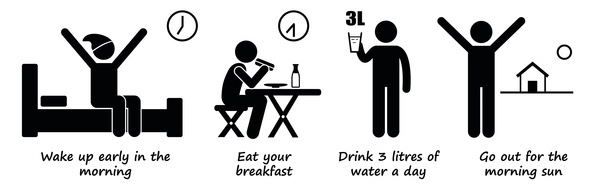
  • Eat breakfast every day. Eating breakfast will boost your metabolism by firing up the body processes earlier in the day. Not only does your body need fuel to power through until lunchtime, while you are digesting the food, more calories are being burned than if you hadn’t eaten anything at all.
  • Get more sleep. Going to bed earlier and getting the right amount of sleep will allow your body to regenerate properly. After a taxing day at work or in the gym, your body will only fully recover if it is given the proper rest needed to regrow. The fully rested body will be able to go 100 percent at the next training session and will be able to surpass previous achievements. (Bonus: While sleeping, it is hard to eat your dessert.)
  • Drink more water. Our bodies are largely made of water to begin with, but without proper hydration, some body functions and processes do not happen as they should. It has been said that drinking ice-cold water can also help increase your metabolism because your body expends heat/energy to warm itself once the cool water is in your stomach.

As you can see, these suggestions are not groundbreaking or out of touch with reality. Many people today neglect themselves and do not get these basic needs met, which is part of the reason they are not happy with the way they look and feel. If you are one of them, assess your current situation. Are you getting enough sleep, good enough nutrition, plenty of water, and plenty of exercise? If not, you might need to refocus your goals so that you can create the balance necessary to improve your metabolism.

NIFS can help! You can meet with a Health Fitness Specialist at NIFS to talk about your goals and schedule an appointment for a BOD POD and/or Resting Metabolic Rate test. This will help you set a benchmark and also set realistic goals for yourself. Be the best you can be as you meet your metabolism head on!

Like what you've just read? Click here to subscribe to our blog!

This blog was written by Thomas Livengood, NIFS Health Fitness Instructor and Personal Trainer. To read more about the NIFS bloggers, click here.

Topics: weight loss calories metabolism goals slow metabolism