<img height="1" width="1" style="display:none" src="https://www.facebook.com/tr?id=424649934352787&amp;ev=PageView&amp;noscript=1">

NIFS Healthy Living Blog

Eat Better, Work Better? Nutrition and Productivity

grainsWe have all heard the phrase that an apple a day keeps the doctor away, but who knew that eating a balanced diet would also make you more productive at work? A study conducted by Brigham Young University and published in Population Health Management Journal, found that 19,000 employees from three large companies with unhealthy diets, were 66 percent less productive than those who ate whole grains, fruits, and vegetables.

So, how can you be a more productive employee? Try these three simple ways to eat a more balanced diet. Then get ready to impress your boss!

Whole-Grain Goodness

Swap out your old rice, pasta, bread, and cereal for grains that are higher in fiber and are less processed. Brown and wild rice are excellent alternatives to white rice. Whole-wheat pasta, couscous, quinoa, millet, and oats are more whole-grain options to incorporate into your diet. When it comes to breads and cereal, check the label. Choose options that have at least 3 grams of fiber per serving. Check out the Whole Grains Council website for more information.

Fabulous Fruits

Most people need three pieces of fruit per day to meet their individual requirements. This can easily be done by incorporating a fruit into your morning cereal or oatmeal, grabbing a piece of fruit for a quick and portable snack, or having a bowl of sweet fruit after dinner for dessert. The vitamins, minerals, antioxidants, and fiber in fruit are all great reasons to include them in your diet.

Vary Your Veggiesveggies

One of the most challenging food groups to get into your diet, but also one of the best ones for you, is vegetables. It can be difficult to meet that 4 to 5 recommended servings per day, so how can you get these in to help balance your diet? One thing is to make sure that you are spreading them out throughout the day by including a vegetable serving at lunch and snack time. At lunch, grab portable veggies such as baby carrots, cherry tomatoes, mini bell peppers, and sugar-snap peas to add some variety and crunch along with your typical sandwich. Or nibble on veggies with a hummus dip for an afternoon snack. Make it a goal to try one new and different vegetable each week!

Kale has become a popular vegetable choice these days, primarily because of its health benefits. It is an excellent source of antioxidant vitamins A, C, and K -- and sulphur-containing phytonutrients. Here are some recipes for enjoying it.

If you are interested in having your questions answered during a personal nutrition consultation, please contact Melanie Roberts at mroberts@nifs.org or (317) 274-3432, ext 217. Learn more about Nutrition and Wellness services at NIFS.

This blog was written by Angie Sheetz, Registered Dietitian. Read more about the NIFS bloggers.

Like what you've just read? Click here to subscribe to our blog!

Topics: nutrition healthy eating employee health workplace wellness productivity

Shave Time Off Your Tri by Training for Triathlon Transitions

Transitioning has been called the fourth discipline in Kris-new-1triathlon. When you finished your first race and looked at the breakdown of the times for each event, you probably noticed the T1 and T2 times. T1 is the time it took you to go from swimming to the bike, and T2 is the time it took you to go from the bike to the run. Like the swimming, biking, and running training, the transitions should be trained as well. But don’t think you need to spend hours perfecting getting from one event to the next. A good transition can simply be added to the other brick training sessions.

Before the race you need to check where you will be exiting the water and follow this to your bike. You can mark your transition spot with chalk on the ground, with a balloon, or with a bright towel. The transition area looks different when everyone is out on the course. Many athletes have wandered transition areas looking for their gear. Also look at the course from where you will be headed at the end of the bike to your transition spot. You will rack your bike and put your gear down on the side of the bike you will mount from.

Practicing the Swim-to-Bike Transition (T1)

The swim-to-bike transition is often the most difficult transition to practice because of the logistic of getting to the water (pool or lake) and then keeping your bike close to make this practice possible. Instead, you could just practice getting your bike gear on after stepping your feet in water. Putting on socks is often the toughest part of this as you deal with balancing while tired and getting the sock on without getting sand on the sock. Many people will sit on the ground or bring a big bucket to sit on.78810088

During a race I try to dry my feet with the end of my transition towel (placed before the race) or have a small towel to dry the tops of my feet while standing on my transition towel. You do want to make sure not to have any rocks, sand, etc. on your feet as those may cause a blister.

You must have your helmet on and buckled before you get out of transition, so do this first or directly after getting your shoes on. This is also a good time to get a drink of water and have a gel or other nutrition so you don’t have to try to ride and eat.

Once you get off your bike, you will run your bike back into your transition area. Rack your bike as close to where you took it off as possible. This is a rule, but it also helps you be courteous to your fellow triathletes who are racking after you.

If you change your shoes, have the laces open and ready to slip your feet into quickly (baby power can help with this).

Grab hats, sunglasses, and race belts and put those on as you run out of transition. Again, you could get a drink or nutrition if you need it. The gels or chews can be pinned on your race belt to have along the course.

Practicing the Bike-to-Run Transition (T2)179659833

The bike-to-run transition is easy to set up and a nice way to do some race preps the day or two before a race. Follow these steps:

  1. Set your bike against a wall or car, WITH THE SIDE YOU WANT TO GET ON YOUR BIKE FACING OUT.
  2. Place your shoes, helmet, hat, race belts, sunglasses, etc. near the bike.
  3. Figure out in what order you will put on your bike gear and practice it. Put on your helmet, socks, shoes, etc.
  4. Grab your bike and RUN, HOLDING THE BIKE WITH THE OUTSIDE HAND (no need to run with two hands on the stem) to your marked start point
  5. Get on your bike.
  6. Ride a short distance (less than a mile).
  7. Get off your bike at your marked spot and run your bike back to your setup spot.
  8. Take off your helmet, change shoes (if necessary), grab anything you want for the run, and run a short distance, getting into a nice rhythm.
  9. Repeat as many times as you need to feel confident.

Putting in a little transition practice time during your regular workouts will help you cut your total time in your triathlon. As you are trying to beat your time from before, this will help more than you realize.

NIFS’ Tri-Training for Women triathlon training program has recently begun. Find the details here.

This blog was written by Kris Simpson BS, ACSM-PT, HFS, personal trainer at NIFS. To read more about Kris and NIFS bloggers click here.

Like what you've just read? Click here to subscribe to our blog!

Topics: running group training swimming triathlon cycling training

Do You Even Lift, Bro? Weightlifting for Beginners (Part 2 of 2)

Episode #2: Have a plan, ink the plan, and work the plan.

Tony-weightsIn the first episode of “Do You Even Lift, Bro?” I concluded with the notion of absolute strength as the foundation to fitness. The stronger you are, the more things you will be capable of across the fitness continuum. World-renowned coach Dan John explains this best for me with a bucket analogy: The bigger your bucket is (your absolute strength), the more room you have to put in things like mobility, power, speed, and endurance, among other things. To get stronger, you have to lift heavy things--bottom line.

So now I hope you all understand how important strength is, and the weight room is where you can really develop your strength. The key is having the proper progression in the program that will overload the system, causing adaption and ultimately strength in the major movement patterns that we live in. Now, I can talk about programming for 8 hours straight and still barely scratch the surface. My hope in this post is to give you a few super-important facets that should be a part of your weightlifting program. I’m going to work fast here, so try to keep up!

Master These Movements

Human movement can be broken down into six major movements. When planning your assault in the weight room, be sure to include these movements in your attack:

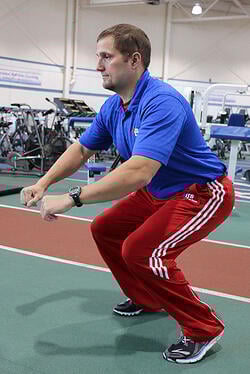
  • Squat: Bending at the knees and hips as if sitting down and standing up
  • Hinge: Bending at the hips to pick something up from the floor, like a Dead Lift
  • Push: Pushing weight away from your body either vertically or horizontally, like a push-up
  • Pull: Pulling weight toward the body, like a pull-up
  • Lunge: Lifting legs in a split stance
  • Rotary/Core: Spine stabilization and rotating

Pairing movements is one of the best ways to get the most out of your time in the weight room. To reduce residual fatigue, I recommend pairing movements that complement each other, such as a Squat with a Pulling movement. The Squat is an anterior (front) lower-body movement, while the Pulling exercise is a posterior (back) upper-body movement. Simply put, one can rest while the other is in motion, maximizing effort and making recovery time more efficient.

Plan in Four-Week Blocksweights

Again, I could spend hours discussing the different parameters of the “block system” of programming, but I’m not going to. All I want you to keep in mind when planning is to keep it to a month-long (four-week) cycle. After you have completed a workout four times, it’s time to reevaluate and progress. We can define progression as increasing the weight used in an exercise, increasing the number of reps, or adding something to the exercise that makes it more demanding. Changing all these things at once is not the best idea, but making some changes is key to providing the overload principle necessary in strength gain. You have to change it up!

Reps, Sets, and Weight Selection

I know I sound like a broken record, but there is so much that has be taken into account when discussing these three key aspects of your program. Goals, fitness level, and timeline just to name a few, are all things that need to be considered when designing your plan, and I can’t cover all these details in one small blog post. As a safe and beneficial rule of thumb, 2 to 3 sets at 6 to 8 reps of each movement will do the trick. The weight should be challenging enough to complete all reps, but not sacrifice the form of the movement. If you know your predicted 1RM (hyperlink to fitness assessment) of each movement (which you can find in a free assessment with an HFS here at NIFS), you can use percentages of that weight in your sets and reps. Use the “first and last” rule: the last rep should look like the first rep. I would also recommend starting at a lower weight for your first set, and increasing weight every subsequent set. Again, this is the overload concept that is the cornerstone of building strength.

I can’t stress enough the importance of having a plan and working that plan. Having a sound plan of attack will keep you on track, provide accountability, and show you where you were and where you are now. I urge you to seek out the advice of a qualified fitness professional when beginning or tweaking your strength-training program. I’m talking to the veteran lifter, too; you can always improve on something you are doing. Implementing the preceding strategies is a great first step.

If you are interested in setting up a personal fitness program with Tony click the button below:

Free Fitness Assessment

Tony Maloney is the Fitness Center Manager and leads group training Sunday through Thursday.

Topics: fitness center workouts weight lifting weightlifting strength

Do You Even Lift, Bro? Weightlifting for Beginners (Part 1 of 2)

Episode #1: 5 Game-Changing Tips for the Weight RoomTony-1

I spent a great deal of time in a weight room growing up, and still do. The “Iron Church,” “The Metal Shop,” and “House of Pain” were all names I used to reference a place where I saw so much growth in myself, both physically and mentally. I remember watching one of my brothers train to power lift with the U.S. team when I was pretty young, and couldn’t wait to get my hands on all the stuff. Flash forward a few years and I was the one on the training side preparing for high school athletics. Man, there was nothing like the weight room! The feel of it, the smells (not always pleasant, but part of the charm), and the clanking of metal on metal were all rushed to the senses, signifying that a lot of hard work was about to go down!

I learned so much during that period of my life when I was in the gym every day; I definitely thought I had everything figured out on how to get strong and stay injury free. As I got older and wiser (okay, older and after many mistakes), I needed to find a way to lift so that I could lift another day. As fitness evolves, we learn bigger and better ways to get the most out of every workout.

5 Game-Changing Tips for the Weight Room

In the first installment of this beginner’s guide, I would like to share with you 5 game-changing tips to rock the weight room like you never have before. In future episodes, I will dig a little deeper into each of these tips (along with a few extras) and outline a guide that will allow you to get the most out of it.

1. Have a plan, ink the plan, and work the plan.free

Going into a place full of things to do without a plan will usually result in meandering around and wasting time, extinguishing the metabolic fire. Get a workout log and write down your plan of attack for the week. This will keep you focused as well as give you a means to track your progress. I highly recommend consulting a fitness professional to help you set up your first program. 

2. Get a super friend.

The benefits of working out with one or more partners are substantial, emotionally, mentally, and physiologically. Find a likeminded individual and link up your training times to provide support for each other and accountability. And if you are using the room for what it is intended (to GET STRONGER), you will eventually need a spotter.

3. Pair exercises.

If you want to get the most out of your time, not only from the clock, but from your ability to get stronger and lose fat, you must pair exercises. You may know this as “super setting.” No matter what it is called, DO IT! I prefer to pair exercises in this fashion: Push/Pull/Upper/Lower. We will spend more time on this in later posts, but here is a basic example:

  • 1a. Front Squat
  • 1b. Chin-ups
  • 2a. Dead Lift
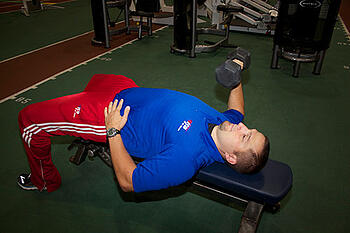
  • 2b. DB Bench Press

4. Work unilaterally.

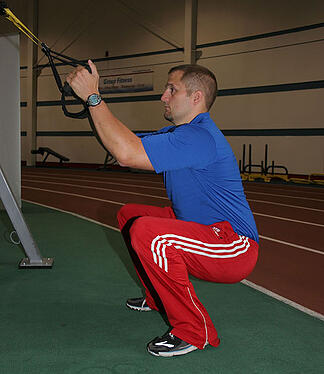
There are many fitness pros, me being one of them, who believe you are stronger unilaterally than you are bilaterally. I jokingly say that you have nothing to hang onto when you are working one side at a time. The core stability necessary to work unilaterally is also a huge benefit of working one side at a time. So next time you are planning to do a squat, try it on a single leg. You will love the feel and the results.

5. Utilize many different modes.

Many of us can get stuck using the same tools to perform the same exercises, and wonder why you continue to get the same results. Packing your workout with many different pieces of equipment and varying the movements themselves is similar to why your salads should have a bunch of color in them. It’s because different ingredients provide different nutrients, nutrients that we need. Lifting weights is the same thing; your body needs the different benefits that come from different movements using different pieces of equipment. Some refer to this as “muscle confusion”; I think that’s an industry term made up by those who like to dance around the living room and sell DVDs. I don’t really care what you call it; you just have to do it! Change up the movements and modes of training from time to time so you can taste all that a weight room has to offer and your body can enjoy the benefits of the different ingredients.

This is just the start of what will be a pretty handy guide to getting the most out of your weight room as you begin to lift weights. Keep your eyes open for the next episode, where I show you how to put together a program. Until then, I leave you with one more piece of advice to get you going. Absolute strength is the foundation to your fitness. The stronger you are, the more things you will be capable of across the fitness continuum. Bottom line: to get stronger, you have to lift heavy things. Do it right.

Tony Maloney is the Fitness Center Manager at NIFS in Indianapolis and leads group training on Sunday through Thursday.

Topics: fitness center injury prevention muscles training weight lifting strength core dumbbell personal training

Summer Health Tips and Fitness Ideas

Summer is finally finding its way back to Indiana! If you haven’t already, it is time to get outside and get moving! Indianapolis provides an abundance of outdoor activities that work well for promoting healthy lifestyles.

Indianapolis Attractions for Active Fun

Here are five ways for people to be active in Indianapolis this summer:

  1. ThinkstockPhotos-185469754web.jpg Indiana Pacers Bikeshare. With 250 bikes around the downtown area at your disposal, enjoy a day of physical activity and sightseeing in downtown Indianapolis by renting a bike and taking it for a spin on one of the local trails. I personally enjoy riding the Cultural Trail down to Fountain Square, among the many trail options available right downtown.
  2. Rent a kayak and enjoy some time out on the water while earning some physical activity points! Kayaking is an excellent form of exercise that can be learned easily at any age and enjoyed at varying levels of fitness. If you have never been kayaking before, do not be intimidated. Kayaks are available to rent around the city, including in Eagle Creek Park.
  3. Try a triathlon! Any age is a good age to try a triathlon for the first time. Here at NIFS we host a training program geared toward completing the Eagle Creek Sprint Triathlon for women both new and veteran to the sport. One of our participants was 68 years old when she completed her first triathlon with success!
  4. Take your kids or grandkids to the park and play. Being active with young children is great for everyone and is an excellent way for you to sneak in some physical activity. Consider that you may not be able to keep up with all of the moves that the kids are doing and stay within your capabilities while participating in the activities that they are doing.
  5. Consider training for a road race! You don’t have to be a top-notch runner to go out and try to run or walk your first 5K or marathon. NIFS is hosting a marathon training program geared toward completing the monumental marathon for those of you who have ever considered running a marathon. It is never too late to check that goal off your bucket list!

Health Tips to Keep in Mind

Being active in the outdoors during the summer adds another level of concern that you should keep in mind when selecting and preparing for your outdoor fitness activities.

  1. Drink plenty of water before, during, and after your time spent outdoors. With the heat and humidity that come along with the Indiana summer, your body will lose the water that it needs at a rapid pace. Drink-waterDehydration can lead to heat illnesses, so it is important to stay hydrated and drink water even if you do not feel like you are thirsty. Read more about this in our 5 Tips to Staying Hydrated While you Exercise this Summer blog.
  2. Be cautious of extreme temperatures and avoid being outside for extended periods of time during these times. Hot temperatures can be dangerous, even if you are not exercising, so save your outdoor physical activities for later in the evening or earlier in the morning when the temperature is cooler and the sun is not beating down on your back.
  3. Wearing clothing that is lightweight, light in color, loose fitting, and moisture wicking will help you to stay cooler in warmer conditions.
  4. Apply sunscreen when you know that you will be outside. Whether you are working in the yard, walking the dog, or playing a round of golf, the sun has the same impact, so apply sunscreen to prevent damage to your skin.

This blog was written by Stephanie Kaiser, Fitness Center Manager and Health Fitness Specialist. To find out more about the NIFS bloggers click here.

NIFS Fall Marathon Training Program is August 15th-November 3rd. Get Registered Today!


Topics: NIFS staying active fitness center triathlon NIFS programs summer hydration Indianapolis

5 Tips to Stay Hydrated While You Exercise This Summer

It is finally summertime! You are looking out of the window from your office and can hardly wait to get outside for your workout after work or on your lunch break. Unfortunately, summer comes along with hot and humid conditions that can have a terrible effect on your body if you have not properly hydrated.

476485117

It is important to consider the effects that the sun and warmer temperatures can have on your body and your performance, and to be sure to get appropriate hydration. The heat index chart, which shows where the combination of heat and humidity becomes dangerous, is a great resource in determining whether it is a good idea to go outside to exercise.

Here are five helpful tips to keep you hydrated and healthy as you exercise outdoors this summer.

  1. Avoid exercising outdoors during the hottest hours of the day (generally between 10 a.m. and 5 p.m.). This will make for a more comfortable training session and decrease your likelihood of becoming dehydrated.
  2. Carry water with you during your workout. Not only should you drink water in the few hours leading up to your workout, but you need to be drinking water during the workout as well. It is recommended to drink a cup of fluid every 15 minutes during your exercise session.
  3. Replace the fluid that you have lost. A good rule of thumb is to drink two cups of fluid for every pound that you lost due to water loss during the activity. If you have weight-loss goals, don’t be fooled into thinking that the weight you lost during the workout is a good thing. It is just water weight.
  4. Recognize if you are dehydrated. There are many symptoms that determine if you are becoming 153736610dehydrated, including feeling thirsty, tired, or dizzy; having a headache; and having dark-colored urine, to name a few. If you start to experience these side effects, you must rehydrate yourself before the situation becomes a medical emergency. Do not try to continue exercise if you feel you are becoming dehydrated!
  5. Be aware of hyponatremia! This occurs when you are consuming more fluid than you need during an activity, resulting in a low level of sodium in the bloodstream. Consuming a sports beverage rather than water during endurance activities can be beneficial to you if you experience this.

Like what you've just read? Click here to subscribe to our blog!

This blog was written by Stephanie Kaiser, Health Fitness Specialist. To find out more about the NIFS bloggers click here.

Topics: exercise summer hydration endurance outdoors safety

5 Core Exercises to Make You a Better Runner

GettyImages-1132747409Runners are generally good at doing the same thing over and over again, day in and day out: RUNNING! Oftentimes they will neglect doing some of the components of what runners refer to as “the little things” that pay huge dividends in overall performance and how you feel while running. The little things include sleeping enough, eating right, staying hydrated, maintaining flexibility, and core strength, and the list goes on. When there is limited time in the day to get in a quality run, the thought of cutting a run one or two miles short to do core and flexibility work is often quickly neglected.

Core strength and endurance is a critical component that should not be neglected by anyone, especially runners. Since running is a repetitive movement, the muscles in the body can become imbalanced when cross training, strength training, and core conditioning are not included in the training plan, which can lead to injury.

Here are 5 simple exercises that you can incorporate into your daily training plan with no additional equipment. All you need is 5 minutes!

  • Planks: plank-2Lay flat on your stomach and tuck your toes underneath. Raise yourself up onto your elbows and toes. Hold this position, maintaining a straight line between the top of your head and your tailbone. Do not let your hips sag down too low or press up too high.


  • Bird Dogs: Start in a tabletop position with your wrists beneath your shoulders, knees below the hips, and a flat back. At the same time, extend one arm out in front of you as you extend the opposite side leg behind you. Bring the elbow and knee together in the middle to complete the movement. Complete sets on both sides of the body.

bird-dog2bird-dog-1


Bridges: Lie flat on your back with your knees bent and feet flat on the floor. Bring your heels as close to your hips as you can without pain. Press your hips up as high as you can while keeping your feet in contact with the ground. Hold for a 2-count and return to the start position.

bridge-2


  • Hip Hikes: Standing tall in a neutral position with one foot flat on the ground on an elevated surface, drop the opposite side of the body below your pelvis on the side of your grounded foot. Activate the grounded leg’s glute to return back to the start position. Complete sets on both sides of the body.

Foot-dips

foot-dips-2


Try these 5 exercises before you go out for your next run. Start out completing just one set of each exercise. Hold the plank with good form as long as you can and build up to 1 minute. For the rest of the exercises, gradually build up to 3 sets of 10 to 12 repetitions. Once you get the hang of this, it will not take you any longer than five minutes to complete. This method will give you a great start to adding core exercises to your running routine.

Here's another core workout you can try.

Like what you've just read? Click here to subscribe to our blog!


This blog was written by Stephanie Kaiser, Health Fitness Specialist. To find out more about the NIFS bloggers click here.

Topics: running injury prevention training flexibility strength core exercises

NIFS Staff in Action: 2014 Summer Showdown Challenge Sneak Peek!

SS2We know what crosses through many of your minds in the middle of the workouts that we provide to you through HIT classes, Group Training, and special programs at NIFS: “I bet he/she doesn’t even do this stuff he/she is putting me through!” With that in mind, it would not be fair of us to expect you to complete our Summer Showdown Fitness Challenge without us testing it out first!

For the Summer Showdown this year, we are sticking with basic fundamental movements that almost everyone can complete with no trouble. The challenge comes into play when we ask that you select a level and complete as many rounds as you can in a given period of time.

Beginner: 10 minutes
Intermediate: 15 minutes
Advanced: 20 minutes

Here is what we have in store for you this year:SS4

Complete as Many Rounds as Possible

50m Suitcase Carry

10 KB Goblet Squats

10 KB Swings

10 TRX Rows

10 TRX Chest Presses

10 Slider Mountain Climbers

As a staff, we had a great time completing the workout! Now you can rest assured that we can relate to what you are going through. If you have never participated in the Summer Showdown, don’t be intimidated. This is your year to pick your level and complete the challenge to give you that extra push this summer!

If you are looking for a a great summer challenge participate in Summer Showdown from June 23-July 25! Sign-up  6/9-6/20 on the bulletin board located in the fitness center hallway.

This blog was written by Stephanie Kaiser, Fitness Center Manager and Health Fitness Specialist. To find out more about the NIFS bloggers click here.

Topics: group training nifs staff NIFS programs Summer Showdown summer HIT

What It’s Like to Be an Intern at NIFS

AU_XC_picFour years ago when I began applying for schools, if someone asked me what I wanted to be when I grew up, I would have laughed and said, “I have NO CLUE!” I was not sure where I wanted to go, who I wanted to be, or what type of job I could see myself in. All I knew was I wanted to be close to home. Growing up I was very family oriented, so I knew whatever college I chose needed to be close enough to come home on the weekends for family dinner.

I found the perfect one, Aurora University—small campus, small class size, with the added bonus of being only 30 minutes from home! Here I found my niche in the Fitness and Health Promotion major, understanding various levels of exercise prescription for diverse populations, and having the expertise to plan and implement prescribed exercise programs.

First_day_of_senior_yearWhen my senior year rolled around, I had one last program to complete before I could hold my diploma: a 16-week internship! Completely overwhelmed at the thought, seeing that the internships I did previously were barely a month long, I spent countless hours searching for a good fit. And after 3½ years of living at home as a college student, I was finally ready to be out on my own. I wanted to challenge myself and find something completely out of my element.

When I came across NIFS, competitive was a complete understatement. I knew I would really need to step up to get accepted as an intern. But all the long hours of resume and cover letter work really paid off. Coming to NIFS was the best decision I could have made at this point in my career. Sure, it was hard for me to pack up all my belongings and live in a city by myself, but the reward was well worth it.carmel_finish_with_family

Wanting to find out where else my major could take me besides the personal training/coaching realm, and having a love for healthy lifestyles, I worked in the Education Services department with Angie Scheetz, RD. I did not just feel like another intern, but an employee who had my own responsibilities and tasks to contribute to the department. I worked on anything from wellness presentations and nutrition consultations to Mini Marathon training. Working with Angie I learned more than I had ever expected and was able to see how maintaining a healthy lifestyle goes hand in hand with exercising.

NIFS was different from any other internship that I have ever experienced, because there was the option to investigate the various other departments. Through shadowing and volunteering, I was able to experience just how diverse each was. Seeing what each job entailed helped to point me in the direction I wanted to go and left me with a better idea for a future career.

Although I still have a long road ahead of me in the fitness and health world, working at NIFS as an intern was a great experience that truly applied my education. I could not have asked for a better end to my senior year.

This blog was written by Alyssa Furman, NIFS intern. To find out more about the NIFS bloggers click here.


Topics: NIFS nutrition mini marathon nifs staff education interns

Incorporating the Erg Rowing Machine into Your Exercise Routine

Tired of running, stair climbing, and cycling? If you are looking for a cardio workout that promises plenty of calorie burning, upper- and lower-body conditioning, all while being low impact, look no further than getting in some indoor rowing exercise.Rowing Machine

This exercise is not necessarily new (its origins date back nearly 2,000 years to ancient Greece) and not exclusive to outdoor rowing enthusiasts. For the average individual, rowing provides an excellent warm-up source, while the seasoned CrossFitter may use the rower as a cardio component in an elaborate superset. Regardless of your fitness level, the erg rowing machine is designed to give a low-impact, smooth exercise movement that provides training for outdoor rowers as well as an uncomplicated total-body exercise for the average Joe or Jane.

Steps for Learning Indoor Rowing

Indoor rowing technique can easily be taught in four convenient steps:

  1. The Catch: The starting point; legs are bent at the knees, arms are straight, and the back is flat.
  2. The Drive: The legs are extending and the handle is pulled toward the chest.
  3. The Finish: Legs are extended and the handle is at the chest.
  4. The Recovery: The sliding motion in which the body moves back to “the catch” position and performs another rep.

Like most exercise patterns, rowing requires practice and sometimes coaching to fully and safely get the most out of the movement.

For more detail, check out these instructional videos from the manufacturer of our rowing machines, Concept2.

NIFS staff is here to help and encourage you all the way! Please contact a NIFS Health Fitness Specialist with help on improving your rowing technique or incorporating the rowing machine into your current exercise program.

To get started or develope a new workout routine, contact us for a free fitness assessment!

New call-to-action

Evolve and rejoice,

This blog was written by Thomas Livengood, Health Fitness Specialist. To find out more about the NIFS bloggers click here.

Topics: exercise cardio calories rowing