 Pull-ups are a great muscle-building exercise. However, many of us struggle to even do one or enough reps to truly take advantage of the muscle-building rewards of this exercise. In this blog I explain why that is, tell you how to improve your pull-ups, and give you a full pull-up progression intended to take you from 0, 1, 2, 3… up to 10 pull-ups in a row or moreLet’s be honest, pull-ups are difficult. First off, whether you weigh 100 pounds or 350, that will be the weight you will have to overcome with each rep. Secondly, pull-ups engage more than just your back. You may or may not have a big back and bicep muscles but still can’t do more than one or two pull-ups. No matter how big the muscles in your back and biceps are, if you have weak links in the chain of movement, you will still be limited in your ability to do more pull-ups.
Change Your Training for Strength
The first step to improving your pull-ups is to change your training for strength improvements. Based on where you are at, I like to break it down into three groups:
- Group 1: 0–4 pull-ups
- Group 2: 5–7 pull-ups
- Group 3: 8, 9 and break through to 10
Group 1: 0–4 Pull-ups
If you are in the group 1 category, you currently can’t do a pull-up, or can’t do more than 4 in a row. You need to quickly build strength with a couple of exercises I like to do.
The first is inverted rows, which can be done under a bar in a rack or with the TRX Straps in the horizontal plane.
The second exercise is negative pull-ups to assist and train your body in a vertical plane. With negative pull-ups you will work on lowering (descending) for time, adding seconds to each rep as you progress. Make sure to fight the lowering in a full range of motion. Do not hold yourself in the up position and then just fall. Control the descent for the full range.
Group 2: 5–7 Pull-ups
Group 2 is further along and ready for pull-up progressions. This is when we will build up volume and work toward getting in 2–3 sets, with the goal of reaching toward 20–30 reps completed. We will add assisted pull-ups to allow for reducing the amount of resistance you need to overcome reps the higher volume. An easy way to do assisted pull-ups is to use a larger resistance band and loop it around the rack, giving you a platform to stand on while assisting your pull-ups.
Group 3: 8–10 Pull-ups
Group 3 is essentially going to repeat what group 2 is doing but adding weight to your pull-ups to help you break through to 10. Adding weight can be as easy as adding a weight belt with 5 pounds on it or putting a 5-pound dumbbell between your feet. When you are doing the banded assisted pull-ups, start to use smaller, thinner resistance bands to stand on.
All Groups: Work on Core, Scap Retractions
All three groups need to work on weak-link areas as well. First is core work; as I stated earlier, pull-ups are difficult and place concentrated demands on the core, also a known weak link. I like to use Planks and Hollow Rocks. Next, you need to work on scap retractions, and you can do small pulls to train it with scapular pull-ups and face pulls.
Shoulder Prehab
Start with prehab exercises. Prehab exercises should be used to bomb-proof your body and potentially prevent future injuries. The overall goal of prehab exercises is to increase durability in your physical activities with better-quality movements, which will improve performance and overall health. Here are two I like to start with. Pick one that works for you for today’s pull-up workout.
Option 1: Shoulder Prehab—Light Weights
x10 reps each
Standing: I, Y, T, W’s, Scap Taps
Lying: I, Y, T, W’s, Overhead Scap Taps
Option 2: Shoulder Prehab—Bands
x10 reps each
Standing: Band Pull-Aparts with Bent Elbows, Banded Figure 8's, Band Pull-aparts with Long Straight Arms
Banded Over & Backs
Half-Kneeling Lunge: Diagonal Pull-aparts with Long Straight Arms
The Pull-up Workouts
Now that you are warmed-up and have bomb-proofed your body, let’s begin the pull-up workout. Here’s the strategy to vastly improve your pull-ups. Reference your pull-up ability and progress accordingly from there. This is a full back workout performed once a week.
Group 1: 0–4 Pull-ups
Inverted Rows (under bar or TRX straps): 3–4 sets or 8–12 reps
Negative pull-ups: 3–5 sets or 3–5 reps ** FULL RANGE OF MOTION**
(Starting out 3x3 reps at 3s descents… progressing to 5x5 at 5s descents for each rep.)
Elbow or Push-up Plank: 3 sets of :30s–2mins
(Starting out with 3x sets at :30s… progressing to 2mins eventually)
Alternating your workouts with Scapular Pull-ups and Face Pulls: 3–4 sets or 8–12 reps with 2s holds
(Hanging from pull-up bar, squeeze scapular muscles, as if beginning the pull-up motion and hold for 2s for each rep. Next workout alternate with Face Pulls, keep elbows up and thumbs toward temples, again squeeze scapular muscle for 2s.)
Group 2: 5–7 Pull-ups
Pull-ups: Sets of 2–5 reps aim for 20–30 reps total.
Assisted Pull-ups w/larger resistance bands: Mirror how many sets/reps you accomplished with pull-ups previously. Shooting for the same.
Inverted Rows (under bar or TRX straps): 2–3 sets or 8–12 reps
Alternating your workouts with Elbow or Push-up Plank and Hollow Rocks: 3 Sets of :30s–2mins
Alternating your workouts with Scapular Pull-ups and Face Pulls: 2–3 sets or 10–15 reps with 2s holds
Group 3: 8–10+
Weighted Pull-ups: Sets of 2–5 reps, aim for 20–30 reps total.
(If you are just getting into group 3 and graduated up from group 2, start back over with reps and sets you began that group with; you are adding weight to your pull-ups now.)
Example, group 2
I started with 3x4 reps and progressed to 5x6 reps. Now do the same but with weight.
Assisted Pull-ups w/smaller resistance bands: Mirror how many sets/reps you accomplished with pull-ups previously. Shooting for the same +2 reps. Try to do a little bit more volume.
Inverted Rows (under bar or TRX straps): 2–3 sets or 8–12 reps
Alternating your workouts with Elbow or Push-up Plank and Hollow Rocks: 3 Sets of 1–2mins
Alternating your workouts with Scapular Pull-ups and Face Pulls: 3 Sets or 10–15 Reps with 2s holds
Use the Plan Once a Week
That’s it! Use the plan once a week to improve your pull-up potential. You will want to max out and test your pull-ups once a month to see if you are making progress and moving up groups to level up your strength gains.
As with any workout, to make gains, you must start somewhere, you must stay consistent, and you must work hard. Don’t be discouraged that you can’t do pull-ups yet. Stay the course and you will be blown away when you quickly increase your pull-up strength!

This blog was written by Michael Blume, MS, SCCC; Athletic Performance Coach. To learn more about the NIFS bloggers, click here.

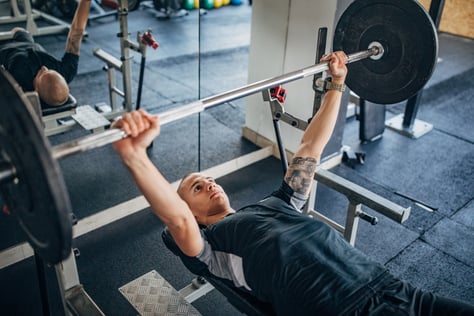 In a previous blog I discussed the importance of training within the movement categories. Those categories are upper body push and pull, squat, and hinge. To break it down even further within the categories, there are exercises that give you more bang for the buck than others. In this blog I differentiate between compound and isolation exercises. For those of you who are on a time crunch when you are in the gym, these exercises are crucial to get the most out of your training.
  Trying to figure out the best time to work out can be a difficult decision when attempting to balance a healthy lifestyle with work, a social life, and other hobbies. Let’s look at the various benefits of working out at certain times of the day compared to others.
  With the new school year upon us, it’s time to start thinking about “back to school” fitness. Summer was a time for adventure, vacation, trying new foods, and so much more. Although all that stuff is fun, it can get us out of a routine. As a newly graduated college student, I know how much a routine helped me stay on track for my classes. One thing I always included was exercise. Having consistent workouts is the first step toward a disciplined life.
  Alkaline vs. Acid
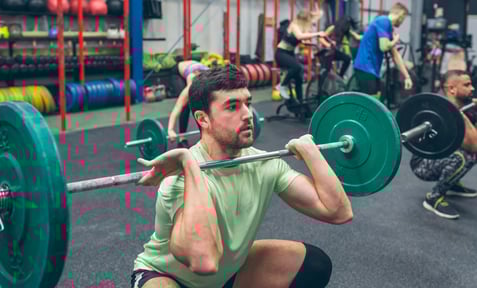 Olympic weightlifting is one of the oldest sports that is still around to this day in the Olympics. Over time the sport has evolved to what it is today, and there are more participants at the national-level events here in the US than ever before. With the help of
  Hormones have an especially important role in dealing with resistance training. The endocrine system is a collection of glands that produce hormones that regulate metabolism, growth and development, tissue function, sexual function, sleep, and mood. Some of these hormones are anabolic, which promote tissue building, and others are catabolic, which are used to degrade/break down cell protein. Ideally for muscle building, it is important to produce anabolic hormones while limiting the production of catabolic ones.



 I am often asked what is a good warm-up routine, and my answer typically consists of, “it depends.” A warm-up is typically done at the beginning of a training session and involves low-intensity movements to help get your body ready. The reason I tend to say “it depends” is that your goals, limitations, and what kind of training you have planned for a specific day will dictate your optimal warm-up.