
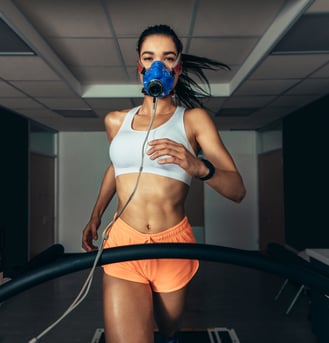
 VO2 max testing, or graded exercise testing, is a treadmill run or cycle to volitional fatigue—or pretty much going until you must stop. The test will tell us how many liters of oxygen you are able to take in and use for cellular respiration.
Physiologically, people use oxygen for a variety of things. The main purpose is for the oxygen to get into the cells’ mitochondria so that it can be used to generate adenosine triphosphate (ATP), which is the main energy source in the body. People use ATP to do pretty much everything: move our muscles, think, and even digest food. So the more oxygen you can take in and convert to energy, the longer and faster you can run due to this surplus of energy you are making at the cellular level.
What the Test Is Like
The test starts at a low speed and no incline on the treadmill. Then every so often the treadmill gets a little faster and a little higher. The increases are almost unnoticed and most start out walking. On the other hand, on the cycle, the resistance gets a little harder occasionally and the participant is expected to maintain the same rotations per minute (RPM). With both tests, the person is expected to go until they feel they must stop, when their workload is too great to maintain or their legs become too fatigued to continue.
What the Test Measures
While exercising, you will be hooked up to different devices to monitor your vitals such as a heart rate monitor and a ventilator of sorts. Some tests will also measure blood pressure and rate of perceived exertion. Trainers can use the information from these devices to generate a customized endurance program for you to push you to increase your VO2 max, and in turn, your overall endurance. VO2 max testing is a great way to know where you are currently at in your endurance training. It is comparable to doing repetition max testing on weights in strength training.
How the Results Can Shape Your Training
Trainers can utilize the data from a VO2 max test to make a program customized to your physiology. From a VO2 max test we can see what your heart rate maximum is exactly, and using these numbers we can get more accurate training zones for you. The ventilator gives a variety of useful data such as your aerobic threshold, or the point when you really start to breathe hard. This is the point where a person really starts to hate running, so knowing this point can help us stay below that more often, making the training more enjoyable while still receiving the benefits. Knowing different heart rate zones can help prevent overtraining and help push you to your fullest capacity, causing your body to adapt and consume more oxygen.
The measurements of blood pressure and perceived exertion are more common in a clinical setting to ensure normal responses to exercise, so they are not always necessary in healthy populations. The trainer can use rate of perceived exertion, however, to know how a person feels at certain running speeds. If someone feels that they are working very hard at a faster speed, the trainer may stay below that speed more often to make the runner more comfortable; and if a certain speed feels very easy, the trainer may ramp up the pace.
VO2 Max Testing at NIFS
Korr CardioCoach metabolic system VO2 max testing is offered here at the National Institute for Fitness and Sport. Connect with a trainer at the track desk if you have any interest or questions. VO2 max testing is a great way to gauge your endurance level going into marathon training, and a great way to pace yourself in a race by knowing where you are at physiologically at different workloads. Knowing your VO2 max as a runner is like how a powerlifter knows what the maximum amount of weight they can bench is. If you don’t have a benchmark going into a competition, you run the risk of over- or under-shooting and not performing as well. You don’t necessarily have to partake in a full VO2 max test if you are concerned about going to volitional fatigue. There are submaximal tests and estimation equations that can be utilized to get a rough estimate of your VO2 max. See a NIFS staff member with any questions you have pertaining to a VO2 max test or to schedule your test today.

This blog was written by Grant Lamkin, NIFS Health Fitness Specialist. To learn more about the NIFS bloggers, click here.
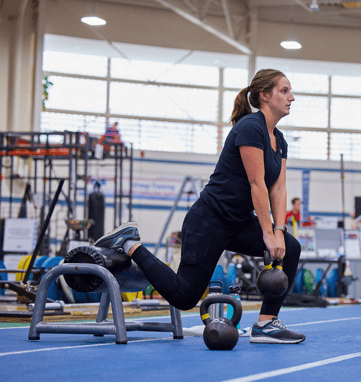 How many times have you or someone you know needed help because they were unable to open the pickle jar? Now, how many times have you heard someone get mad because the pickle jar was too easy to open. I’m guessing you haven’t. Nobody has ever complained about being too strong—a statement I like to tell people when they ask why they should start strength training. There are many benefits of strength training. As we age we lose the physical ability to carry out certain activities. Tasks that were once easy are now difficult to do alone or not at all. These are our activities of daily living.
 Did you know it is estimated that food loss and food waste account for more than 8 percent of total human-made greenhouse gas emissions, a leading driver of climate change? According to the US Department of Agriculture (USDA), it is estimated that 30–40 percent of the food supply (130 billion pounds of food) goes to waste each year. Additionally, the United Nations has
  Looking for a simple and fun way to plan your own workout? You can use a deck of playing cards to determine which exercises to do and how many reps. Here are the steps for planning this game-based workout.
 The “perfect” workout rarely happens. Every so often, you may have one of those training sessions where every block flows smoothly and programmed repetitions and sets are executed flawlessly. But for most days, there will be missed reps, you may feel more fatigued than you think you should, or the workout may not come together as you hoped it would. That is fine. Your goal should be to strive to be as close to perfect as possible, with the understanding that it may not always happen.
 Improving maximal aerobic capacity, aka VO2Max, as well as lactic threshold can have a huge impact on overall performance. You can improve
  Protein bars make a great snack when you’re short on time or don’t have a big appetite. However, these days there are so many different protein bars available to choose from that picking the right one can be difficult. Some protein bars are relatively healthy; however, many are just fancy candy bars with a lot of sugar and saturated fat, and only a few grams of protein. When picking a protein bar, here are the top five
 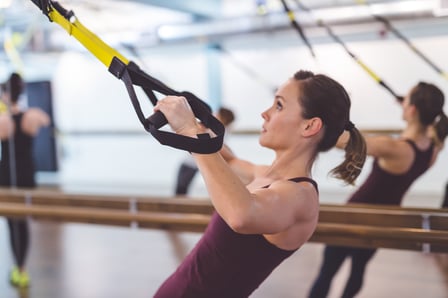 Have you ever started an exercise program and for whatever reason were not able to stick with it? There are many reasons that you may not be able to stick with an exercise program. It might be too hard, and you are not able to maintain the amount of work that is required. Maybe your workouts take too much time, and you are not able to fit it into your schedule. Or maybe you are not seeing the results you want. Whatever the reason that you were not able to find sustainability within your exercise program, there is always a solution. The best way I have found to find sustainability in exercise is to figure out your goals, then pick your programming, and lastly find consistency in your exercise.
 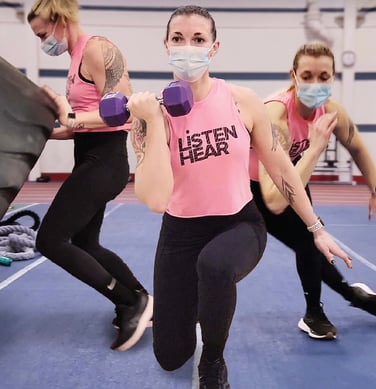 With the world now instantly accessible through technology, it’s easy to understand why a growing number of people expect things to be done in a shorter amount of time. Like many others, I’m a big fan of things that are fast and effective, and that includes my workouts. High-intensity circuit training does just that by providing an effective and convenient way to increase exercise results in less time.
  Sodium, potassium, magnesium, calcium, phosphate, and chloride are all electrolytes, or minerals that fulfill essential roles within the body. More specifically, sodium, chloride, and potassium work together to maintain fluid balance within the body, while magnesium and calcium promote optimal muscle function and aid in energy metabolism.