
<img height="1" width="1" style="display:none" src="https://www.facebook.com/tr?id=424649934352787&amp;ev=PageView&amp;noscript=1">

NIFS Healthy Living Blog

Summer Nutrition: Packing a Healthy Eating Picnic

ThinkstockPhotos-465173011.jpgDuring the summer, the days are stretching longer, the temperatures are rising, and the sun is shining brighter! It’s time to enjoy the outdoors. Whenever I visit bigger cities, I notice that their parks are packed with people enjoying picnics, which is one of my favorite things to do to explore and discover a new outdoor space. So let’s bring the picnic to our local parks! Surprise your significant other, take the family out for an afternoon in the park, or enjoy time with friends playing football or frisbee.

Equipment to Bring

When planning a picnic, make a list of items you will need, especially if this is your first time. Here are some items you may need to bring:

  • Plastic or paper plates
  • Can opener and corkscrew
  • Disposable eating utensils
  • Garbage bag
  • Reusable, heavy-duty serving pieces
  • Roll of paper towels
  • Disposable plastic cups
  • Salt and pepper
  • Paper or cloth napkins
  • Thermos for drinks or soups
  • Bread knife or sharp knife
  • Insect repellent
  • Wet napkins
  • Matches
  • First aid kit and sunscreen
  • Tablecloth
  • Small cutting board

Healthy and Delicious Picnic Food Options

Think healthy! Typical picnic fare—such as potato salads, greasy burgers, chips, and beer—can be high in calories and fat. You do not have to compromise your waistline when planning a picnic. Try some of the following tips to keep your meal tasty and light.

Appetizers:

  • Cut up veggies—carrots, celery, broccoli, and green and red pepper—and bring along a low-fat dip. Brightly colored veggies will maximize the amount of vitamins you get in your meal.
  • Good options for salty snacks include crackers topped with peanut butter, baked tortilla chips and salsa, and nuts and dried fruit mix.
  • Try a garden salad with vegetables, beans, and fruits, topped with nuts and an oil-and-vinegar dressing.
  • Avoid creamy pasta and potato salads. They are high in fat; and if left in the heat, can create an ideal medium for bacterial growth, which can cause food-borne illness.

Entrees:

  • Try pita sandwiches or wraps. Pair a protein source—turkey, chicken, lean ham, tuna or salmon—with lettuce leaves and vegetables such as chopped celery, peppers, onion, and shredded carrots.
  • Replace mayonnaise with mustard or drizzle with olive oil and vinegar dressing.
  • Salads topped with flaked tuna or salmon and oil and vinegar dressing.
  • If your picnic area has a barbecue grill, try grilled chicken breasts, lean hamburgers, turkey burgers, or veggie burgers. Opt for a whole-grain bun instead of white.
  • Grill vegetables on a skewer. Try red or green peppers, zucchini, mushrooms, and onion.
  • Corn on the cob is an excellent choice to add to an entree. For added flavor, use garlic or onion powder. Grill for a great taste.

Desserts:

  • Skipping out on the high-fat treats doesn’t mean you need to miss out on a summer sweet. Try a colorful fruit salad with peaches, mangoes, berries, kiwi, and watermelon.
  • Take along angel food cake and top with mixed berries.

Drinks:

  • Be sure to drink at least eight glasses of water per day for proper hydration.
  • Sweet drinks can increase thirst and add unwanted calories. Instead, try natural fruit juices diluted with water.
  • Try to limit alcohol intake, as alcohol can be dehydrating and high in calories.

Get outside, be active, and enjoy a tasty and healthy lunch at a local park!

Like what you've just read? Click here to subscribe to our blog!

This blog was written by Angie Mitchell, RD, Wellness Coordinator. To find out more about the NIFS bloggers, click here.

Topics: nutrition healthy eating summer picnics

Decoding Changes to the FDA's New Nutrition Facts Label

ThinkstockPhotos-522898575.jpgIn January I wrote about the confusing world of sugar and how it would get a lot less confusing when the FDA passed new changes to the food label that would make added sugar more prominent. On May 20, 2016, they finalized the new Nutrition Facts Label for consumers, and by July 26, 2018, all labels are required to show these changes.

The New Nutrition Facts Labels

So, how can the new food label help when you are at the grocery store? These are the major changes that will begin appearing on all labels.

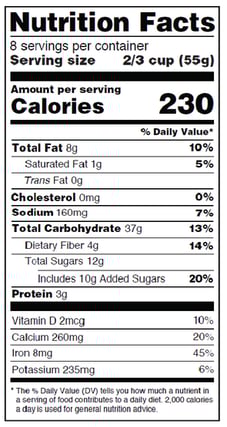
  • The type size for “Calories,” “servings per container,” and “Serving size” will be increased and the number of calories and “Serving size” will be boldfaced.
  • Manufacturers must add the gram weight of Vitamin D, Calcium, Iron, and Potassium.Screen_Shot_2016-06-14_at_3.41.15_PM.png
  • The footnote will be worded differently to help consumers understand its meaning. It will read: “The % Daily Value tells you how much a nutrient in a serving of food contributes to a daily diet. 2,000 calories a day is used for general nutrition advice.”
  • “Added sugars” in grams and a percentage of the daily value will be added to the label.
  • Calories from fat is being removed because research shows that the type of fat in your diet is more important than the total amount.
  • Serving sizes are changing based on what people are actually eating and not what they should be eating. Since the portion sizes have changed since 1993 when labels were first introduced, this will be reflected by soda increasing from an 8-ounce portion size to 12 ounces on the new label.
  • On packages that are between 1 and 2 servings, such as a 20-ounce soda or a 15-ounce can of soup, the label will reflect one serving since that is typically what people consume in one sitting.
In addition, the new label shows how serving sizes have changed to better represent how consumers actually eat.

If you have any questions about the new labeling changes or would like to schedule a personal nutrition coaching session, please contact Angie Mitchell at ascheetz@nifs.org.

Like what you've just read? Click here to subscribe to our blog!


This blog was written by Angie Mitchell, RD, Wellness Coordinator. To find out more about the NIFS bloggers, click here.

Topics: nutrition calories carbs sugar fat

Indianapolis 500 Winners Drink Milk—For Tradition and Recovery

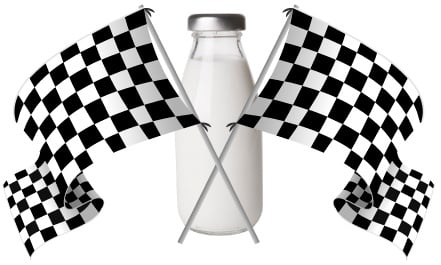
ThinkstockPhotos-450325179--new.jpgWith the Indianapolis 500 approaching, a lot of traditions and stories are being shared. As we head into the month of May and all of the events leading up to race day, the one that as a dietitian I am most intrigued about is, “Why does the winner drink milk?”

I love a glass of cold milk: cow’s milk, soy milk, chocolate milk, almond milk, cashew milk…it doesn’t matter to me. But after a hot and sweaty trip around the oval 200 times, I’m not sure that would be my drink of choice.

The History of the Indianapolis 500 Milk Legend

Here is some history on the interesting choice of beverage for the winner of “The Greatest Spectacle in Racing” year after year. The Indianapolis Motor Speedway writes this:

Three-time Indianapolis 500 winner Louis Meyer regularly drank buttermilk to refresh himself on a hot day and happened to drink some in Victory Lane as a matter of habit after winning the 1936 race. An executive with what was then the Milk Foundation was so elated when he saw the moment captured in a photograph in the sports section of his newspaper the following morning that he vowed to make sure it would be repeated in coming years. There was a period between 1947-55 when milk was apparently no longer offered, but the practice was revived in 1956 and has been a tradition ever since.

It is also interesting to note that the American Dairy Council pays a sponsorship of $10,000 to the winner of the race if they sip milk after their victory. Two drivers skipped the milk in recent years. In 1993 Emerson Fittipaldi opted for orange juice, and in 1981 Bobby Unser also refused. 

Milk for Workout Recovery

We have known for years that chocolate milk is the gold standard in recovery after strength training, so why not grab a glass of cold calcium-packed milk after a grueling workout? Even though it is seen as a strange tradition, it is the perfect recovery fuel after hours spent in a hot car.

The benefit of the chocolate (or any flavor) milk is the additional sugar to help replace what was just burned during the workout; however, even if it is not flavored, the carbohydrates in white milk are beneficial. Chocolate milk does have the perfect ratio of carbohydrate to protein, so if that is available it would be the best choice. Keep in mind that non-dairy milk such as almond, cashew, and hemp do not have the protein component that is key for recovery. 

The good news is that milk isn’t just for winners of the Indy 500. Anyone can benefit from this delicious beverage after a workout. Grab your favorite kind soon!

Like what you've just read? Click here to subscribe to our blog!

This blog was written by Angie Scheetz, RD, Wellness Coordinator. To find out more about the NIFS bloggers, click here.

Topics: exercise nutrition running mini marathon Indianapolis recovery protein milk rest

Five Resistance-Training Mistakes that Slow Muscle-Building

ThinkstockPhotos-517048740.jpgBuilding muscle is perhaps the most common goal (second to fat loss) of an exercise program. Many people eventually hit a plateau with exercise routines and muscle-gaining processes and find it increasingly difficult to continue putting on new muscle. Once the body becomes too familiar with certain exercises or a certain style of training, your results will be hindered.
However, you might in fact need to take a closer look at your training habits before you jump to the conclusion that you have hit a plateau. Take a look at my top 5 muscle-building mistakes, and how to power through the plateau and continue making gains.

1. Overtraining

Overtraining is a very real trap to which many people trying to gain muscle fall victim. In our society we often think that when trying to gain muscle, “more is better.” However, when it comes to training, more is often not better. Only the right amount of the right type of training will be beneficial to increasing muscle in the body.

The easiest way to explain this concept is to first point out that in order for muscles to grow in size (hypertrophy), they must be allowed to fully recover from micro tears experienced during an intense resistance-training workout. If we fall into the trap of thinking more is better, we often find ourselves either doing an absurd amount of sets and reps for each muscle group, or training the same muscle group multiple times a week, and not allowing proper recovery time. While I do applaud the effort in this technique, I have learned from personal experience that sometimes instead of training harder, we must train smarter.

2. Under-training

As opposed to mistake number 1, numerous people also often under-train when working out. Under-training happens when you walk into the gym and head over to the leg extension machine, perform a set of 12 reps at low-moderate intensity, and play with your phone for 2 or 3 minutes while resting, waiting on your next set. When trying to build muscle, the number of reps you complete does not mean anything if you are not bringing the correct intensity to those numbers. If you are on rep 12 and it feels like you are trying to lift a car, you are at the correct intensity for that exercise. If you get to rep 12 and you are already looking forward to your next set because you felt as though 12 reps was not enough, you might not be training with the proper intensity to build muscle. A good workout should come with challenges; therefore, you should almost be reaching failure on each set you do. If a person does not push themselves close to their limits, gaining new muscle and improving lifts will be rather difficult.

3. Avoiding the Hard Exercises

Most of us are guilty of this (including myself). We tend to avoid the hard exercises because they challenge our comfort level in the gym. However, since a majority of the “hard exercises” we tend to avoid happen to be compound exercises, we are actually doing ourselves a huge disservice. Compound exercises are extremely beneficial when trying to build muscle. They tend to use multiple muscle groups at the same time (even the ones we are not accustomed to working out individually). Therefore, compound exercises are great not only for working the major muscle groups in the body, but are also great for working the smaller muscle groups, which will result in improved strength levels overall that should transfer over to other lifts.

4. Failure to Build a Foundation

Before you can move to the “hard” or compound exercises, you must first build a solid foundation through muscular strength, muscular endurance, and proper movement patterns. These three components tie into one another very closely. If a person does not have a solid foundation with correct movement patterns, he or she will be performing compound exercises with improper lifting techniques, causing untargeted muscle groups to compensate. If the targeted muscle is not firing as effectively as it should be within the compound exercise, how can you expect a great deal of muscle growth?

Conversely, if a person has not improved their muscular endurance before attempting to improve their muscular strength, he or she might only be able to lift a certain amount of weight for only a short time (due to lack of muscular endurance), even if the person has learned proper movement technique. Lastly, if a person has not improved their muscular strength, it will be very difficult to continuously improve the weight needed to lift in order to create muscle hypertrophy (or size). So as you can see, building those three foundations first plays a huge role in long-term increase of muscle.

5. Nutrition

The last and arguably most common mistake seen when trying to build muscle is actually undernourishing the muscles themselves. Can you really expect your muscles to be able to grow when you are not giving them the proper amount of nutrients? That’s like expecting your car to survive a family road trip from Indiana to California without putting gas in it first. It simply won’t happen.

The mistake we usually make is thinking that as long as we are allowing our bodies to be in a “caloric surplus,” we will grow new muscle as long as we participate in a consistent resistance-training program. Unfortunately, not all foods are created with equal nutritional value, meaning there are foods we consume on a daily basis that are not giving us the proper amount of protein, carbohydrates, and healthy fats our muscles need in order to grow. Instead they fill us up with “empty calories” (no nutritional value) that include calories from sugar and saturated fat that provide little to no health benefits.

To make matters even worse, you actually intake more calories per gram when you consume fats compared to carbohydrates and proteins.

Nutrient Calories per Gram Calories in 50 grams
Carbohydrates 4 200
Proteins 4 200
Fats 9 450

***

Many times people overlook these mistakes when trying to build muscle. However, if you begin to understand that all of these factors play a huge role in the efficiency of the muscle-building process, you will finally be able to get past the physical barriers you have unintentionally created for yourself.

Like what you've just read? Click here to subscribe to our blog!

This blog was written by Darius Felix, Health Fitness Specialist. To find out more about the NIFS bloggers, click here.

Topics: NIFS nutrition muscles resistance overtraining recovery muscle building functional movement assessments rest

Nutrition and Healthy Habits: How Much Caffeine Do You Consume?

Many people depend on early-morning caffeine to “jump-start” their bodies. Others consume caffeinated beverages throughout the day when they are stressed or tired to keep their bodies alert and functioning. However, caffeinated foods and beverages should not replace the healthy habits of regular, balanced meals and snacks or adequate sleep.

ThinkstockPhotos-5146474021.jpgAlthough caffeine provides an “energy boost,” the stimulant can also cause anxiety, restlessness, constriction of blood vessels, and an elevated heart rate. For these reasons, limit caffeine to 400mg a day.

Below are some common beverages, foods, and over-the-counter medications that contain caffeine. Caffeine content in coffee varies widely depending on the variety of coffee bean and the method of preparation used.

Caffeine Content in Milligrams (mg) for Common Foods and Medications

Coffee (8 oz.)
(The amount of ground coffee per cup is a key variable.)
Brewed: 65–120mg
Instant: 40–110mg
Decaffeinated (instant or brewed): 2–4mg
Starbucks Coffee (12 oz.): 279mg
Coffee drink with one shot of espresso (12 oz.): 113mg

Chocolate (1 oz.)
Dark: 5–35mg
Milk: 1–15mg

Cola Beverage (12 oz.)
30–60mg

Coffee/Chocolate-Flavored Dessert (1/2 cup)
Ice cream: 18–126mg
Frozen yogurt: 0–25mg

Tea (8 oz.)
Brewed: 20–90mg
(The longer it steeps, the higher the caffeine content.)
Instant: 24–31mg

Cocoa (8 oz.)
Average: 80mg

Chocolate Milk (8 oz.)
Serving: 2–8mg

Caffeine-Containing “Energy Drinks” (8.3 oz.)
Serving: 3–32mg

Caffeine-Containing “Energy Bars” (68g)
Average: 50 mg

Stimulants (per tablet)
Vivarin or NoDoz
Average: 100–200mg

Pain Relievers (per tablet)
Average: 32–65mg

Other Ways to Stay Awake During the Day

If you find yourself reaching for over 400mg of caffeine per day to stay awake and energized, try some of these healthy alternatives to caffeine:

  • Do not underestimate the power of a quality night's sleep. If you generally feel well rested in the morning, you are likely meeting your slumber needs. If not, be sure to turn the TV off before falling asleep and avoid looking at bright devices that can keep your brain waves stimulated. 
  • Another key is to maintain a consistent sleep/wake schedule even on the weekends.
  • Exercise is another way to ensure a good night’s sleep and being more awake during the day.
  • Try more natural ways to wake up.
  • Finally, go outside for brief sunshine breaks. Exposure to bright light helps regulate your body's rhythms.

Like what you've just read? Click here to subscribe to our blog!

This blog was written by Angie Scheetz, RD, Wellness Coordinator. To find out more about the NIFS bloggers, click here.

Topics: NIFS nutrition healthy habits hydration sleep caffeine coffee milk dietitian

NIFS Heart Throbs: 5 Healthy Habits for Weight-Loss Success

team.jpgThe Slim It to Win It* (SITWI) program is off and running again for another year of life-changing results and lifestyle modifications to maintain those changes. SITWI, in its tenth year, is NIFS’ equivalent to the NBC show The Biggest Loser. But unlike that show, the highly trained coaches at NIFS work in and around the real-world challenges that face the participants in the program to get true and long-lasting results. I am honored and very excited to be part of this great program again after a few years away, and look forward to witnessing all of the successes had by all those working hard in the program!

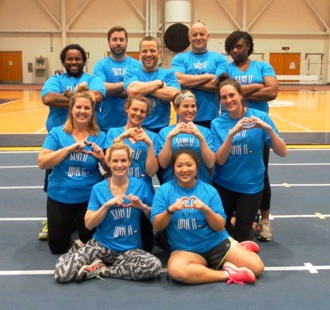
I coached a great group of 10 individuals who called themselves “The Heart Throbs” in a previous season of SITWI. They came to the program with a common goal of reducing body fat and learning to practice habits and behaviors that will keep them healthy and fit throughout their lifetimes. They came to the right place! But why the name Heart Throbs, you ask? Other than being a pretty good-looking group, over half of the people in the group have dealt with or are dealing with a heart issue and have overcome that obstacle to continue to fight and become the individual they want to be.

Stories from the Team

Take Amy Anderyck (Year One overall champion, by the way). Here is a snippet of her story:

I was born with an ASD heart defect. It was a hole the size of a quarter. It's not uncommon for babies to have them at birth, but they usually close up themselves after a bit. Mine never closed. So when I was 5 years old my parents took me to Birmingham, Alabama, to meet Dr. Albert Pacifico, who was the best pediatric vascular surgeon in the country at the time. He did a great job with my repair and I am able to lead a happy, healthy life without any restrictions. I am thankful for my parents and the doctor. 

Slimit16pic2.jpegOr Haley Pratt:

I was diagnosed with Wolff-Parkinson-White (WPW) Syndrome as an infant, but my structures were too small to take care of anything as a baby. I had my first ablation at age 4, which was still very young to operate, but there was no choice. I went on living life normally as an active child. The doctors told me I would never be able to play organized sports, have life insurance, or pilot a plane. I am here to say that I conquered the first two (even got a full-ride scholarship to play volleyball at Lynn University) and someday would love to get my pilot's license.

Two years ago, I did have another scare where I had a tachycardia episode that felt exactly like what I was used to growing up. I wondered how this could happen after 15 years. It ended up being inappropriate sinus tachycardia, which sometimes comes and goes on its own. I am on a beta blocker and have a looping monitor implanted for the time being, but I will be able to quit both soon. I have a healthy heart and nothing can stop me from achieving my goals!

The team’s inspirational stories are too many to list in one blog post, but I assure you that they rival the two stories shared above. It takes a lot of courage and strength to look something like that in the face and overcome it. I am so proud of Haley, Amy, and the rest of the Heart Throbs, and I am humbled that they chose me to lead them to a healthier and better life!

Five Questions About Your Eating Habits

At our first meeting, we spoke about what it took to get results in reducing body fat and body weight, or eliminating medications or staving off type 2 diabetes. I suggested that of the top three things that can lead you down the path to success—mental health, nutrition, and exercise—exercise was a distant third. Exercise should be the fun stuff; it’s the first two that are the tough ones. The Heart Throbs would like to ask you 5 questions about how you are eating that could help you develop those important habits that will lead to success:

  • Are you eating slowly? It takes a minimum of 20 minutes for the brain to signal to the stomach and the rest of the body that you are full. If you eat fast, you usually eat more.
  • Where are the protein-dense foods? Eating protein with every meal will help with recovery, building muscle, and feeling full. Protein consumption soon after a training session is a great habit that will help in all facets of your fitness. Some examples are meat, fish, eggs, plant protein, and yogurt.
  • Are you eating veggies with every meal? Prepare them any way you like, and shoot for few portions each meal. Veggies should account for the bulk of your carbohydrate intake for the day.
  • Where are the carbohydrates? Carbohydrates (grains, beans, starches, fruit) have gotten a bad rap in recent years, mainly due to the increased intake of highly processed and unnatural carbohydrate sources. Carbs are important, especially after a training session, and help supply the body with energy it needs to run various systems of the body. Portion control is key here (1 to 2 cupped-hand-sized servings), as well as timing (after training) to get the most out of your carbohydrates.
  • Are you eating fat? Fat in your diet is important, and although the discussion would be too extensive for this piece, this idea does come with a bit of blowback. So let me put it like this: In the ‘70s and ‘80s, the “experts” labeled fat as the enemy and worked hard to eliminate it from the American diet (remember the SnackWell’s aisles?). What happened to America? It got fat. Choose healthy fats (oils, butter, nut butters, nuts, and seeds) and spread them out through the day.

Bonus Takeaways

 The Heart Throbs have some bonus takeaways for you:

  • Experiment to find what works for you. It has to work for you to be sustainable!
  • Don't try to overhaul; add one habit every couple of weeks.
  • Identify any nutritional deficiencies that can be found through a blood test and work to correct them.
  • You can't change your life unless you change something you do every day.

*Weight loss claims and/or individual results vary and are not guaranteed.

Like what you've just read? Click here to subscribe to our blog!

This blog was written by Tony Maloney, ACSM Certified Exercise Physiologist and Fitness Center Manager. To find out more about the NIFS bloggers, click here.

Topics: NIFS nutrition healthy habits fitness center weight loss healthy eating group training NIFS programs Slim It to Win It carbs

Top 10 Must-Have Pantry Items for Healthy Eating

I get asked all the time, “What should I eat?” This is not an easy question to answer. There are foods that should definitely be eaten more often than others, and foods that are better to just have every once in a while, but it’s hard to pick certain foods that are a MUST HAVE in your diet for best nutrition. However, if you are looking for a list of items that you can purchase to have in your pantry for quick, healthy, and easy meal or snack ideas, start with this list.

ThinkstockPhotos-493279620n.jpg
  • Pouches or cans of tuna: This shelf-stable protein source is packed with heart-healthy omega-3 fatty acids. It is also an inexpensive protein, which is nice since meat adds the most to your grocery bill. Add it to salads, or mix with plain Greek yogurt and enjoy a tasty tuna salad. White albacore tuna is the best, but any variety that is water packed is a great choice.
  • Canned beans: These protein- and fiber-filled gems are also very inexpensive. All varieties are great and can easily be tossed into pastas, salads, or salsas for a filling meal or snack. Be sure to drain and rinse them to rid the beans of the high sodium liquid.
  • Extra-virgin olive oil: A staple of the heart-healthy Mediterranean diet, this flavor-packed oil is versatile; you can use it to cook meats and veggies, or drizzle it on a salad for a quick homemade dressing.
  • Oats: Breakfast is the most important meal of the day, and with oats you can start your day in a variety of ways! Add fruit, nuts, nut butters, pumpkin, or flax for a different bowl of goodness each day. These are also good to use in meatloaf or other recipes that call for breadcrumbs, to up the fiber amount.
  • Nuts: Nuts are loaded with fiber and protein (three times more than potato chips!). These should be a regular part of your diet. Whether you love cashews, almonds, pistachios, or another nut, grab an unsalted or lightly salted variety to get the benefits of the good-for-you fat in all nuts.
  • Quinoa/brown rice/whole-wheat pasta: To fill 25% of your plate with whole grains, it’s a good idea to keep some high-fiber options stocked in the pantry. One-half to 1 cup (cooked) of any of these grains will add staying power and tastiness to any meal.
  • Sweet potatoes: Want an alternative to a white potato? Sweet potatoes are loaded with fiber and vitamin A. Since they are naturally flavorful, they won’t need much added to them. Baked, roasted, or spiralized into noodles, a sweet potato is a great addition to any meal.
  • Salsa: A dip that is also a veggie is a must to keep in your pantry. Choose a chunky salsa where the majority of ingredients are just veggies and not a lot of additives. Then use this to top baked potatoes or eggs, or as a dip for veggies. Chips aren’t the only way to get salsa in your diet!
  • Nut butters: Another inexpensive but great protein option is nut butters. You can do the traditional peanut butter, or try new varieties like almond-nut butter or soy-nut butter. All are perfect for adding to whole-wheat toast, oatmeal, celery, or smoothies.
  • Green tea bags: If you need something more flavorful than just water to drink, add some green tea to your routine. It is loaded with antioxidants to keep you healthy, is a great way to get in your fluid intake, is naturally very low in caffeine, and has been shown to speed up your metabolism! All of these are great reasons to reach for this beverage any time of day.

***

What did you eat today? Don’t underestimate the role that proper nutrition plays in your health and fitness. Contact Angie Scheetz ascheetz@nifs.org or click below to learn more about the My Nutrition Coach app

 Learn More


This blog was written by Angie Scheetz, RD, Wellness Coordinator. To find out more about the NIFS bloggers, click here.

Topics: nutrition healthy eating protein fiber pantry

Allison Griner: A Complete Life Change Thanks to Weight Loss and NIFS!

allison.jpgIn October 2014, Allison Griner decided to join Weight Watchers through her work. Her reasoning was quite simple: “They were giving a discount through my job.” That day she weighed in at 301 pounds. It wasn’t long before Allison started seeing some results and realized that exercise needed to be a part of the plan as well, so she decided to sign up for an event to keep her motivated. The first thing that came across her radar was the Fight for Air Climb, and in preparation for it she signed up for the boot camp at NIFS.
Now for anyone who doesn’t know what the FFA climb is all about, I’ll just say it’s probably one of the hardest events you could sign up for! The climb is a race up the 49 flights of stairs in the Chase Tower in downtown Indy. And if that doesn’t sound hard enough, the boot camp at NIFS is not the easiest of tasks, either! But Allison completed the boot camp amid the severe challenges of not being able to do a burpee or climb the stairs in the workouts.

It’s been over a year now that Allison has kept to her weight loss journey. She consistently follows a workout schedule, meeting her cousin at the gym, and watches what she is eating; and she combines both cardio and strength training workouts to meet her goals. Allison also has PCOS. PCOS (Polycystic Ovary Syndrome) makes losing weight a very difficult task and is linked to an increased risk for insulin resistance, type 2 diabetes, high cholesterol, high blood pressure, and heart disease. Allison has spent lots of time learning to eat right and to focus on making sure that her perspective is not on how her condition inhibits her losing weight, but rather taking the stance of, “It’s not that I can’t lose weight, I just remind myself it’s easier for me to gain weight.” Despite the odds that are against Allison, she has lost 75 pounds since October 2014!!*

Here are a few things that Allison had to say about her journey:

What has kept you consistent in making a change?

I am a very goal-oriented person, and when I see success it makes me want to keep pushing to the next level. I keep setting milestones, and once I got the eating part under control I knew that adding exercise and staying consistent with that would keep me reaching those.

What things have kept you going?

People in my life are what has kept me going! My mom, my roommate, my friends, and other family have really supported me and helped me to believe in myself. Even in times when I start to feel down, they push me to keep going. There are times that I have hit a plateau and they keep encouraging me to keep it up!

What are your secrets to success?

I forgive myself a lot. If I get down or make a mistake I forgive myself, pick up where I am, and move on. I tell myself it’s a new day and I am going to do better than I did yesterday. I am constantly trying to look forward and not backward, which I think is the key.

How has NIFS helped you to achieve your goals?

This facility is fantastic! There are so many different things to do that I never get bored. There are tons of options with weight lifting, the versatility with the track, the canal, or a treadmill. It’s impossible to not get a good workout. FFA also helped me in the beginning to realize it will take hard work, but that I am capable of doing anything I put my mind to!

What has been the hardest part of this weight-loss journey?

The hardest part is that this is a mental thing. I am always struggling to not see myself as that 300-pound girl. I am not surprised by what people say or what I see in the mirror and how much weight I have lost, because the challenge is looking in the same mirror and seeing myself as not just the big girl that I was. It’s also a struggle if I slip up and eat something I shouldn’t. I have to overcome that mentally and remind myself there will be setbacks and I will make mistakes.

What has been the biggest reward from all your hard work?

I feel better!! I was having chronic back problems when I was at my heaviest weight, and those have been nearly eliminated! The best reward is definitely how I feel.*

Anything else you want to share?

When I was at my biggest weight I always felt like I was in the way. I was never able to go out and do things with friends; my biggest fear was being in a crowd and being in the way. I would get so nervous about the idea of having to maneuver through a crowd of people. If you think that way, you can do something about it! One of the biggest changes I and others have seen through this time is my social life. I am confident to go out and be myself now!

*Weight loss claims and/or individual results vary and are not guaranteed.

Congratulations Allison on all your hard work and success! We know this journey has not been easy and it’s not over yet, but we encourage you to keep going and sharing your inspirational story!

***

Like what you've just read? Click here to subscribe to our blog!

This blog was written by Amanda Bireline, Fitness Center Manager. To find out more about the NIFS bloggers, click here.

Topics: NIFS cardio nutrition motivation weight loss attitude boot camp strength stairs

Adding Nutritional Supplements to Your Diet and Workout

Most of us have specific goals in mind when it comes to an exercise program. We work hard to achieve these results day in and day out, but sometimes our bodies may need an extra push to get over that hump. Many people question the importance of adding supplements to a healthy diet and workout routine, as well they should.

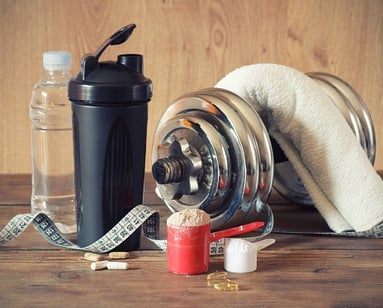
ThinkstockPhotos-471775270.jpgWith so many different supplements flooding the shelves these days, it’s hard to know which ones will truly help you achieve your desired results. Although I agree that some supplements might not be necessary to include in your program, others could be beneficial to many individuals no matter what their fitness goals are.
Not a Substitute for Proper Nutrition

Before I go any further, I want to note that supplementation is simply an addition to your diet and exercise regime. These are not meant to replace a well-balanced whole-food diet; they are meant to be used in conjunction.

Most of the nutrients we need are already being produced by our own bodies to a certain extent, as well as existing in foods we eat daily. Some essential nutrients such as protein, creatine, and branched-chain amino acids (BCAAs) are naturally produced in the body and can be found in meat products, including (but not limited to) red meat, fish, and ground turkey. These amounts are just large enough to support daily functioning, but may not be produced in large enough quantities to aid in dramatic physique enhancements. If you are looking to take your physique to the next level, supplementation might be just what you need.

Which Ones Should I Use?

Here are the top five supplements (in my opinion, and that of many top professionals) you could add to your exercise and diet program.

  1. Branched-chain amino acids (BCAAs): BCAAs are essential nutrients that help the body slow down protein and muscle breakdown, which can aid in preventing muscle fatigue during intense workouts. It works by stimulating the building of protein in muscles, which in turn helps prevent muscle breakdown. I would not recommend using BCAAs when trying to gain muscle hypertrophy (or size), as muscle breakdown is essential for muscle growth. Instead, try a pre-workout or caffeinated drink before your workout for extra energy.
  2. Creatine: Creatine is an organic acid that is produced in the liver and helps supply energy to cells all over the body (especially muscle cells). People take creatine because it allows the body to produce more energy, and with more energy a person is able to increase the intensity of their workouts. Many athletes use creatine to improve their overall performance. It also helps aid in quicker muscle recovery after an intense workout.
  3. Protein: Your muscles need protein grow and recover from muscle breakdown caused by exercise. You can get plenty of protein in your diet; however protein shakes are generally lower in calories than a high-protein meal. They are also portable and more convenient that carrying around whole-food meals (here are some ideas for making your own). Two widely used proteins are whey and casein. Whey is a fast-digesting protein that aids in muscle recovery and muscle growth. Casein is a slow-digesting protein that creates a longer-lasting supply of muscle-building nutrients. Many experts recommend taking a mixture of the two proteins to ensure a release of amino acids into the blood for as long as possible, therefore aiding in lean muscle gain as well as body fat decline.
  4. Multi-vitamins: Multi-vitamins are essential to support the body’s everyday functioning. Your body needs a variety of complex nutrients for optimum efficiency and performance. Taking a high-potency multi-vitamin can ensure your body is getting those essential nutrients to support thousands of metabolic reactions. Here’s more information on the importance of a multi-vitamin for your health and fitness goals, including a list of the essential vitamins and minerals you need.
  5. Fish oil: Fish oil tablets are the most efficient way to get the purest and most concentrated dose of Omega-3s into your diet. Omega-3s have been proven to improve blood circulation, which in turn will allow nutrients such as protein and carbohydrates to reach muscles. Omega-3s also help with maximizing metabolic rate, which in turn helps with fat loss.

Dietary supplements can have many health benefits as well as many performance-based benefits. If you are not concerned with taking supplements for their potential performance enhancements, you should at least be taking supplements such as multi-vitamins and fish oil tablets for your general health. They can be an easy addition to your diet and exercise regimen that may have huge effects on your overall health. Add supplements on an as-needed basis after conducting a needs analysis, and implement one at a time.

If you have additional questions or concerns about supplementation, please stop by and ask any Health Fitness Specialist at NIFS or contact our Registered Dietitian, Angie Mitchell for more information.

Like what you've just read? Click here to subscribe to our blog!

This blog was written by Darius Felix, Health Fitness Specialist at NIFS. To find out more about the NIFS bloggers, click here.

Topics: fitness nutrition fitness center protein muscle mass vitamins supplements

USDA Guidelines: Making the Nutrition Recommendations Work

ThinkstockPhotos-501294518.jpgEvery five years, the USDA releases new Dietary Guidelines for Americans. Typically people get their idea of what healthy eating is and what they should be doing from all kinds of sources. Maybe it’s from a magazine, a TV news report, something a friend or family member suggested, or from reading blogs. Wherever you get your information, know that a team of researchers put together the most recent scientific evidence to come up with their recommendations for Americans. Here’s what they found, with some of the most important takeaway tips.

Strive for a Balance Over Your Lifespan

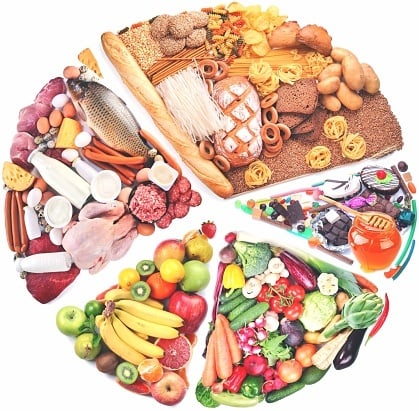
The current guidelines shift away from recommending foods you should or shouldn’t eat, and instead emphasize the importance of a balanced overall eating pattern. Here are the specific recommendations:

  • Follow a healthy eating pattern across the lifespan. Eating patterns are the combination of foods and drinks that a person eats over time.
  • Focus on variety, nutrient-dense foods, and amount.
  • Limit calories from added sugars and saturated fats, and reduce sodium intake.
  • Shift to healthier food and beverage choices.
  • Support healthy eating patterns for all.

Watch Sugar, Fat, and Sodium Intake

The new guidelines also put a cap on sugar, saturated fat, and sodium that can lead to heart disease and obesity, and are easy to overeat. The limits are as follow:

  • Less than 10% of calories per day from added sugars.
  • Less than 10% of calories per day from saturated fats.
  • Less than 2,300 milligrams (mg) per day of sodium for those over age 14.

A couple issues that have arisen after the release of the most recent guidelines is the lack of straightforward numbers for sugar and saturated fat. For example, most people are not aware what 10% of their calories would be from sugar and saturated fat (most sources from sugar are in sodas and juice drinks, and saturated fat is from red meat). Instead, an easier recommendation for the public to follow would be to drink more water instead of sugary drinks, and to eat vegetarian meals two to three times per week instead of red meat.

Moderation Is Key

Overall the new Dietary Guidelines for Americans are a helpful tool in reinforcing what we already know: a balanced diet with all of the food groups in moderation is the best one to follow.

If you need help planning your meals or knowing what to eat, consider a personal nutrition coaching session with our Resident Nutritionist, Lindsey Recker by email or by phone at 317.274.3432
ext 239.

Learn More

This blog was written by Angie Scheetz, RD, Wellness Coordinator. To find out more about the NIFS bloggers, click here.

Topics: nutrition calories hydration sodium sugar