<img height="1" width="1" style="display:none" src="https://www.facebook.com/tr?id=424649934352787&amp;ev=PageView&amp;noscript=1">

NIFS Healthy Living Blog

10 Ways to Survive Your Long Run During Half Marathon Training

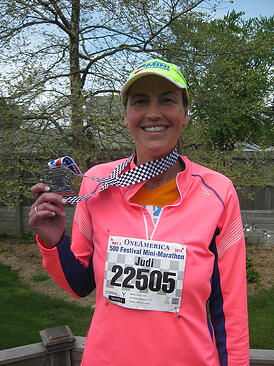
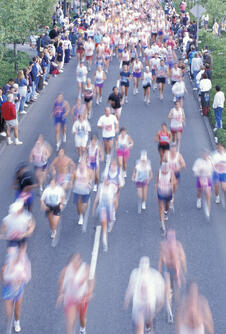
It’s Mini-Marathon training time, which means thousands of people are logging miles to prepare for the big day. The NIFS Mini-Marathon Training Program is holding strong as we meet together each Wednesday night to complete the long run scheduled for the week.

If you have trained for a half marathon, you know that sometimes simply logging the miles can bemarathon training a hefty task. If this is your first time training for a half marathon, and the thought of running 10-plus miles seems a bit daunting, you are not alone.

Distance running is difficult, but it is not impossible. I have compiled a list of 10 things that keep me going when I am logging the miles, which will hopefully make your long run successful, too.

  1. Plan. Put this long run into your schedule and set yourself up for success. If you know that your long run is tomorrow, do what you need to do to enjoy the run the following day. Things like going to bed early and drinking lots of water may be helpful, while going out and partying with your friends may not be quite as helpful.
  2. Run somewhere you LIKE to run. I get it, running 10 miles can seem a bit monotonous at times. Some days I prefer to do my long runs through town so I can look in all the shop windows and be around a lot of people. But other times I choose to run in areas with much more beautiful, natural scenery. It doesn’t matter where, just pick a place that you will enjoy for a couple of hours at a time.
  3. Recruit a friend or have a friend meet you midway for a few miles.MM5K Logo_2023_name and tag Sometimes when I am running by myself, a little voice inside my head starts to doubt that I can finish the long run I set out to complete. When I bring a friend along with me, she encourages me the entire way…even if she doesn't know it! Sometimes, just knowing someone else is running with me really helps me push through.
  4. Imagine your post-race or post-run reward. Is it a massage? A manicure? A shopping trip? Frozen yogurt? (Frozen yogurt is often a favorite reward of mine!) A really yummy dinner? Whatever it is, imagine that reward and I promise it will make your feet and legs push to the distance you set out to complete.
  5. Create a special running playlist. Music moves and motivates me, and it always seems that the perfect song starts blaring into my headphones as I reach a really steep hill at mile seven, or when I feel like giving up. It also helps me get lost and kind of forget what I am doing, which takes some of the pain away from my legs and feet! I am so serious about my music that I created a special running playlist and listen to it only while running. That way, the songs stay special and never get old.
  6. Think of a motivational mantra to keep you going. When the going gets tough, I always tell myself that this is all mental. Another mantra that keeps me going is, “You are stronger than you think you are.” Find something that works for you to keep in mind while training for your race.
  7. Mentally break up the run. If I am running 12 miles, I think of it as three 4-mile runs to make the distance seem much more achievable. Another trick I do is plan an out and back. If I am running a 10-mile run, breaking it down to 5 miles out and then 5 miles home really helps me push through.
  8. Compare the time you are running to something else you do for that same amount of time. This is probably one of my favorite things to do to help me get through a long run. I absolutely love group fitness, so I think of an hour-and-a-half run as a BODYPUMP class and a CXWORX class. It really helps me realize that the running time is totally doable.
  9. Imagine yourself on race day. Racing is emotional, at least for me it is. There is nothing that beats the feeling of exhilaration and accomplishment that I feel when I cross the finish line. For me, simply imagining that feeling is enough motivation to keep pushing through, even when the running gets tough.
  10. Think about something different each mile. This one takes a little preparation, but it can really do the trick and totally take your mind off of the distance of the run. Before you run, simply decide on the number of miles you are running, and on a piece of paper make a list of things to think about. For instance, you could write down five people you are thankful for if you are running five miles, all the things that are currently on your mind if you are running 26 miles, and the options are endless. Then place the piece of paper in a pocket or easily accessible area (maybe even in a plastic bag if you get sweaty!) and you have something to pull out if you need to take your mind off the run.

I hope you are able to use at least one of these tactics to log those miles as you train for the Indianapolis Mini-Marathon, or any other race you have in the future. Good luck with your training!

Written by Tara Deal Rochford, Registered Dietitian and author of Treble in the Kitchen. Meet our NIFS Bloggers.

Topics: NIFS exercise fitness running mini marathon half marathon NIFS programs race endurance training mental focus

NIFS SLIM IT TO WIN IT: Em’s Team

*Hello Fitness Lovers!emilyslimitblogn

As some of you may know, we have our Slim It to Win It competition going on here at NIFS. As a first-timer coaching a Slim It team, I am excited to share with you an interview from one of my team members, and details on how I train my team.

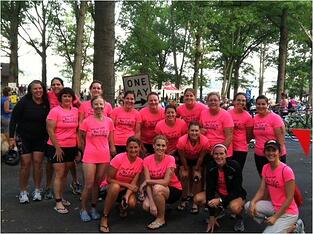
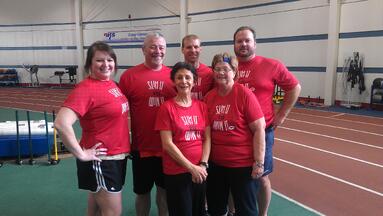
I have 12 members on my team and we call ourselves Em’s Sliminions, due to the fact that I love minions from the movie Despicable Me. Despite all of my team members not knowing one another from the beginning, they have become very close and developed a very good support system. I wanted my team to get to know each other since they will be stuck with each other for 10 weeks, so the first workout was partner exercises. They also had to share with the whole team their story of why they were there. The energy each one brings to the team is awe inspiring!

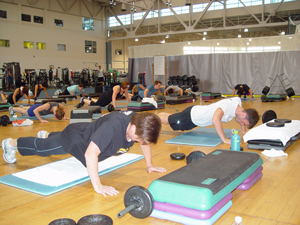
I design my workouts to keep them constantly moving at a high intensity and have little rest in between exercises, or metabolic training. The team shows up to the workouts pumped up and ready to sweat. Even when they see burpees on the board, they still keep faith!

Here are one of the team members’ thoughts about the Slim It competition and about NIFS.

NAME: Sally Mulvaneydescribe the image

SHARE YOUR “STORY” OR A BIT ABOUT YOURSELF IN A FEW SENTENCES: I’m 59 and want to lose weight. I’ve been at NIFS for almost a year and I love what NIFS has done for me. NIFS gave me confidence in myself and has made me stronger. I look forward to my workouts, even when they are hard. My goal is to lose about 40 more pounds.

NIFS PROGRAMS YOU PARTICIPATED IN: I participate in the weight-loss program two times a week, once a week with a personal trainer, and Mini Marathon Training.

WHY DID YOU JOIN THIS PROGRAM? I joined this program to change things up with my weight-loss journey. 

SOMETHING YOU HAVE ENJOYED: I have enjoyed working as a group and helping each other out. Sharing experiences of how the team does things that could help me out.

SOMETHING YOU HAVE LEARNED OR SOMETHING THAT SURPRISED YOU: I learned that I can do things I thought I would never do again: lifting weights, running, and regular pushups.

FAVORITE EXERCISE FROM ONE OF THE WORKOUTS? The Cheetah and anything that focuses on the abdominals, but definitely not burpees!

WHAT ACCOMPLISHMENTS HAVE YOU ACHIEVED DURING YOUR TRAINING PROGRAM FOR SLIM IT TO WIN IT (OR DO YOU HOPE TO ACHIEVE)? I hope to lose about 10 pounds during this program and lose some inches on my whole body.

WHAT STRUGGLES HAVE YOU ENCOUNTERED? TIPS YOU HAVE LEARNED ALONG THE WAY? Some tips I learned were not to do the exercises too fast and to work the muscles thoroughly.

HOW DO YOU STAY MOTIVATED? I’ve already lost 45 pounds this past year and feel much better. Also, the fact that I could go off some of my medications with my weight loss keeps me motivated to lose more weight*.

*Weight loss claims and/or individual results vary and are not guaranteed.

ANY OTHER THOUGHTS YOU WISH TO SHARE: I feel like joining NIFS and their programs has been the best choice I have ever made. NIFS is a wonderful place to work out and learn about ways to improve my fitness.

Training with a group is a proven strategy for sticking with a workout routine and is more economical than one-on-one training. If you are interested in trying a small group or large group training session contact Tony Maloney today to get started!

This blog was written by Emily O'Rourke, NIFS Heath Fitness Instructor. Learn more about the NIFS bloggers.

Topics: exercise weight loss group training mini marathon NIFS programs metabolism Slim It to Win It

Fit & Forty+ (Fabulous) Series—Increasing Your Metabolism

Fit & Forty+ (Fabulous) Series—Increasing Your Metabolism with Strength Training (Dumbbell Workout)Band workout at NIFS

For the fourth, and final, workout in this series we are going to be using dumbbells.

Dumbbell training is another in the line of adding more weight to your moves to make you stronger and to fire up your lean muscle mass. Dumbbells are easy to find in varying sizes, but as with the kettlebell, you do not need to buy a pair of them. I would go with a light weight for pressing moves and heavier for any leg moves you will be doing. If it feels “manageable” to lift over your head in the store go a bit heavier (2-5lbs). You can do less repetitions and more sets.


Remember we want to get strong, burn a ton of calories, and be able to move about your day easier.  It is not “hard” but it will be a “challenge” that we all can conquer.

This is our final workout for our Fit & Forty+ blog. I hope this series has helped you incorporate some changes into your exercise and nutrition routine.  Keep in mind it is not how old the calendar says you are it is what your mind tells you. Keep working small steps equal BIG results.
 
Coming up I will be doing a series on Spring/Summer shape up workouts for ANYWHERE. Thanks for watching!

If you have just joined this series please be sure to go back and read all the blogs including:

Getting Started

Foam Rolling and Increasing Your Range of Motion

Eat Right to Feel Right

Increasing Metabolism with Strenght Training (Band Workout)

Increasing Metabolism with Strenght Training (Kettlebell Workout)

Increasing Metabolism with Strenght Training (Bodyweight Workout)

Ready to get started with an exercise program designed for you? Schedule an appointment with Kris by contacting her at 317-274-3432 or email.

This blog series was written by Kris Simpson BS, ACSM-PT, HFS, personal trainer at NIFS. To read more about Kris and NIFS bloggers click here.

Topics: exercise fitness equipment muscles challenge workout dumbbell 40

Thomas’ Corner: Slim-lympics Decathlon of Fitness

Good Morning, NIFS! Welcome to Slim It to Win It 2014. We are very excited to bring you another Slim It season, with tons of new workouts and fresh ideas.

Today’s workout is inspired by one of the most celebrated events of the Olympics, the decathlon. In today’s workout, we have 10 exercises in which we will do one set each for a 2-minute AMRAP(as many reps as you can). Between exercises, take 2 minutes to rest. When your rest time is up, be ready to immediately start the next exercise.

For a benchmark, make note of total reps you complete on each event. At any time, complete the event again to see progress, challenge a friend, or change up the exercises with some of your own. Total workout time is around 40 to 45 minutes.

  1. TRX squatThe Dawn Patrol Thomas Team
  2. Dynamax slammers
  3. Box step-ups
  4. Crunches
  5. TRX rows
  6. Lunges
  7. Push-ups
  8. Kettlebell swings
  9. Overhead press
  10. Jumping jacks

Team Thomas completed this workout on February 13 at 6am, just our second class. All 15 team members completed the workout and left nothing on the table. Eighteen-year NIFS member Harrison Royce had this to say immediately following the workout:

“This was definitely an excellent HIT routine. There was amped-up cardio, high-intensity exercise while maintaining friendly competition amongst others in the team and with yourself.”

Others echoed Harrison’s sentiment. Angela Dixon stated, “The partner’s exercises were good and the workout was a good hurt” and Bridget Harter exclaimed, “This workout makes me feel like I’ll be fit in no time!”

Warning: This workout has been linked to profuse sweating, increased heart rate, calorie burning, team-building camaraderie, increased self-confidence, and sense of accomplishment. Participate at your own risk. (Just kidding… GET BUSY AND HAVE FUN!)

Want to try a HIT class for free? Free class sessions are offered each month. Click here to see the HIT schedule and dates and times for fress sessions.

This blog was written by Thomas Livengood, Health Fitness Specialist at NIFS. To find out more about the NIFS bloggers click here.

Topics: NIFS cardio Thomas' Corner NIFS programs circuit workout HIT rowing kettlebell Slim It to Win It

Fit & Forty+ (Fabulous) Series— Increasing Your Metabolism with Strength Training (Bodyweight Workout)

Fit & Forty+ (Fabulous) Series— Increasing Your Metabolism with Strength Training (Bodyweight Workout)Band workout at NIFS

For this third workout in the series we are going to be using our own bodyweight. 

Bodyweight moves give you NO excuse not workout. Plus it is a no cost alternative to adding a bunch of equipment. There is nothing more empowering than “you moving you”. Modifications can easily be made to get you to more strength, range of motion, and greater function in all you movements.


If you have just joined this series be sure to go back and read all the blogs. Including:

Getting Started

Foam Rolling and Increasing Your Range of Motion

Eat Right to Feel Right

Increasing Metabolism with Strenght Training (Band Workout)

Increasing Metabolism with Strenght Training (Kettlebell Workout)

Ready to get started with an exercise program designed for you? Schedule an appointment with Kris by contacting her at 317-274-3432 or email.

This blog series was written by Kris Simpson BS, ACSM-PT, HFS, personal trainer at NIFS. To read more about Kris and NIFS bloggers click here.

Thomas’s Corner: Using Tennis Balls for Self Myofascial Release

By now, you may have been to the gym a few times and have seen or even tried using the foam rollers. As we have learned from NIFS Personal Trainer Kris Simpson in her blog, foam rollers are a great way to loosen up the muscles by promoting flexibility, blood circulation, and recovery through self myofascial release. Although foam rolling is great, we can take the self myofascial release techniques a step further by implementing a commonly found piece of fitness gear, the tennis ball (or lacrosse ball).

Differences Between Foam Rollers and a Tennis Ball

A tennis ball or lacrosse ball can be used as a tool for applying self myofascial release to the muscle, similar to foam rolling. Differences between foam rolling and tennis ball rolling go beyond the obvious. Visually, a foam roller is traditionally a cylindrical, foam object and can be rather bulky, which would be fine for large muscle groups such as the glutes, hamstrings, or latissimus dorsi. The tennis ball is much smaller and round, giving it the ability to reach smaller areas and pinpoint tight, sore muscles. This is great news for small-muscle issues, but it is not exactly practical for total body myofascial release.myofascial release

How to Use a Tennis Ball for Self Myofascial Release

Some examples of areas on which I like to utilize a tennis ball or lacrosse ball(pictured) include the hip flexor, the glute, and the shoulder blade. Follow these steps:

  1. Rest your body weight (as much as you can handle) on the tennis ball.
  2. Support yourself with your opposite-side leg and foot or with your upper body (depending on the areamyofascial release you are targeting).
  3. Then, roll over your target area, pinpointing and triggering muscles that otherwise may have been missed by the bigger foam roller.

Foam rolling and tennis ball rolling intensity can be determined by increasing or decreasing the size, shape, and hardness of the tool. The various tools you bring to the table will ultimately determine the experience you have with myofascial release.

myofascial release


If you are new to self myofascial release or want to experience some new rolling techniques and tips, meet with a NIFS health fitness specialist or personal trainer to get started on your way to wellness excellence. A more fit day is right around the corner.

Like what you've just read? Click here to subscribe to our blog!

This blog was written by Thomas Livengood, Health Fitness Specialist at NIFS. To find out more about the NIFS bloggers click here.

Topics: NIFS Thomas' Corner shoulders injury prevention muscles flexibility stretching

Fit & Forty+ (Fabulous) Series— Increasing Your Metabolism with Strength Training  (Kettlebell Workout)

For this second workout in the series we are going to be using a Kettlebell. Kettlebell training isBand workout at NIFS becoming a hot new way to change up your workout and is great for women.

Kettlebells come in many sizes, when looking for weights right for you, think of using a lighter weight of 10lbs, that you will use to press off your chest or over your head. You will need a heavier weight of 20lbs or more for leg/full body moves. You do not need more than one of each size, as you can offset your moves (use one arm/move) which challenges you to stabilize your core.

Watch the video below and try the movements. Be sure to start with lower weights if you are new to strength training or are not familiar with the Kettlebell.


If you have just joined this series be sure to go back and read all the blogs. Including:

Getting Started

Foam Rolling and Increasing Your Range of Motion

Eat Right to Feel Right

Increasing Metabolism with Strenght Training (Band Workout)

Ready to get started with an exercise program designed for you? Schedule an appointment with Kris by contacting her at 317-274-3432 or email.

This blog series was written by Kris Simpson BS, ACSM-PT, HFS, personal trainer at NIFS. To read more about Kris and NIFS bloggers click here.

Topics: exercise training metabolism strength kettlebell workout

“Fight for Air Climb” Raises Money to Beat Lung Disease

Imagine the last time you ran up a few flights of stairs because you were running late to a Fight for Air Climbmeeting or were struck with a sudden burst of energy. Your legs probably began to tighten up and burn a little. Your heart rate suddenly climbs and you begin to consume more and more oxygen with every step. You have to, your body is craving oxygen to supply a rich blood flow to the working muscles so you can get to that meeting on time.

Now try to imagine that same climb up the stairs, but this time you have lung disease and you are unable to deliver that much-needed oxygen to your working body. I think it would be safe to say that you may be late to that meeting.

The Fight for Air Climb

The Fight for Air Climb is an event that can give you a taste of feeling unable to breathe while trying to get somewhere. This annual event, presented by the American Lung Association, helps raise money for lung disease research and educates people on the seriousness of this group of debilitating conditions.

The unique format is unlike any other race or fitness challenge out there. The site for this year’s event is the Chase Tower, and the challenge is to climb all 47 floors. If that’s not enough of a challenge for you to climb the tallest building in Indianapolis, do it twice or even three times for a total of 141 floors. There is a challenge for everyone.

A True Fitness ChallengeFight for Air Climb

I climbed my first event last year at the Regions Tower, made up of 35 floors, with a motivated and determined group from NIFS. Now I have run my fair share of half marathons, and even conquered a Tough Mudder, so I was pretty confident that this would be a challenge I could soar through. It wasn’t until I reached the 17th floor on my first run that I realized I was very much mistaken.

I took the Ultimate Challenge course and climbed the tower three times. It was about that time, halfway up on my first run, that I knew I was facing a mountain of a challenge (insert lame-joke rim shot here). It really is like no other feeling, midway up, and not being able to breathe very well at all and having 18 floors to go, plus 70 more. It really was like no other challenge I have ever faced.

Although the physical effort was immense, it did not compare to the empathy I felt for those who can barely walk around their homes without feeling this way. It’s for those individuals that we climb, because they can’t. It is so uplifting to see so many climb in hope of making the lives of those suffering from a lung disorder better by supporting the research needed to battle these conditions.

Fight for Air Climb Boot Camp

Last year, I also had the pleasure of helping train many of the individuals participating in the climb here at NIFS through our Fight for Air Climb Boot Camp. It was great to work with so many inspiring climbers all with a unique story of why they have decided to put their body through a grueling challenge. Many of them have loved ones battling a lung disease or have lost someone to the same battle. No matter the details of the story, there was always a consistent message: “Let’s climb for those who can’t.” 

The American Lung Association and NIFS have joined together to bring participants a FREE training program for the climb. You do NOT need to be a member of NIFS to participate, you just need to be registered for the The Fight for Air Climb event.

Tony Maloney is NIFS Fitness Center Manager and leads group training Sunday through Thursday. Follow Tony on Facebook at NIFS Elite. Meet all of our NIFS Bloggers.


Topics: NIFS cardio running step group training challenge boot camp endurance training disease prevention

Fit & Forty+ (Fabulous) Series—Increasing Your Metabolism with Strength Training

Fit & Forty+ (Fabulous) Series— Increasing Your Metabolism with Strength Training

Loss of muscle and decrease in metabolism go hand in hand and seem to happen when we hit theBand workout at NIFS big 4-0. Some sources claim that your metabolism can decrease by up to 5% every 10 years once you hit 40. That means you have to eat fewer and fewer calories every year just to maintain the same weight.

But what the heck IS your metabolism, anyway? It's the process by which your body uses the fuel and energy you eat and drink. Your body uses little cellular “furnaces” called mitochondria to burn that energy. Unfortunately, mitochondria in the cells tend to slow down or die with age or inactivity.

Another problem that can damage your metabolism is sarcopenia, a fancy word for muscle loss. Lots of stuff can cause sarcopenia, including extreme diets, a job that keeps you sedentary, too much long and slow cardio, and simply aging without doing any resistance exercise. In this part of my series I will focus on workouts that include strength training. These workouts are targeted to help you build muscle, which will help keep your metabolism high.

Our first workout focuses on Band Training. Bands let you strength train without adding a bunch of equipment. With a band you can add tension by just moving away from the anchor point. In addition, when working with bands the core must stabilize as the band re-tracts back to normal length.

Watch the video and try the workout and tell me how you did. Don't forget to fuel up before and after your workout the right way using the nutrition tips we gave you in our last video.


If you have just joined this series be sure to go back and read all the blogs. Including:

Getting Started

Foam Rolling and Increasing Your Range of Motion

Eat Right to Feel Right


If you have questions about something in this series or would like to schedule an appointment with Kris please contact her at 317-274-3432 or email.
 
This blog series was written by Kris Simpson BS, ACSM-PT, HFS, personal trainer at NIFS. To read more about Kris and NIFS bloggers click here.
Topics: NIFS exercise weight loss calories muscles resistance metabolism

Half Marathon Training and VO2 Max

It has taken a bit of time to get used to calling myself a “runner,” but I enjoy running races and incorporating running into my weekly workout routine. So, even if I still have vivid memories of quitting the middle school cross country team after one practice, where I walked the entire time…I am still a runner.

Although I’m not an elite runner, and I don’t plan on winning any races anytime soon I do have a slightly competitive mindset and I enjoy seeing improvements in my fitness level. When I signed up to complete my fifth half marathon this November, I knew that I needed a new goal. I have had small personal goals each time I completed a half marathon to help get me through training:

  • Finish the half marathon without walking.
  • Finish the half marathon in under two hours.
  • This half marathon was only weeks after my second half marathon, so I just wanted to finish feeling good!
  • Beat my previous best time of 1:56:53.

The next goal: complete a half marathon in 1:45:00. This will mean shaving a significant amount of time off of my mile, but I know that with hard work and dedication I can do it. Because I am not an “experienced” runner, I thought I would use some of my resources at NIFS and ask the more experienced staff for advice in decreasing my running time.VO2 max test

Steph, one of our Health and Fitness Specialists and an experienced runner, suggested completing a VO2 max test to find out my lactic threshold. She explained that a VO2 max test is used to measure how much oxygen your body processes at a maximal effort during exercise. This would determine how my aerobic fitness compared with other women my age. The test also would determine what my lactate threshold point is, which tells me how intense my training sessions could be and what my “tempo” or lactic threshold pace should be.

You may have heard of a “tempo” run, which is simply a run completed at the heart rate just below your lactate threshold, designed to help you improve your lactate threshold level and stamina. Lactic threshold is the point of intensity during exercise when lactate starts to accumulate in the blood.

I was excited to complete this test, but I was also very nervous! I had heard horror stories of participants getting sick at the end of the test, and the contraption/face mask looks pretty intimidating, too. That being said, I knew that this would be valuable and helpful information for me, so I completed the test willingly.

What Was the VO2 Max Like?VO2 Max test

It was a bit uncomfortable running with the face mask on and at such a steep incline, but overall the test was not bad at all! All of my previous fears were unnecessary. I started running on a treadmill at a comfortable pace of around 8:30min/mile. Steph slowly began to increase the incline as the machine calculated my heart rate and how efficiently my body was using oxygen. I was shocked at how quickly I began to feel the burn in my legs—but I guess that was the point of the test!

Looking back, I probably could have gone slightly longer, but for fear of flying off of the steep and quick-moving treadmill I asked Steph to turn off the test as soon as I felt I was at my edge.

Once the test was complete, Steph went over the results with me to explain my target heart rate for my training runs, my lactic threshold, and what my VO2 max was. She also completed a training plan for me based on this information and my goal of running a half marathon in 1:45:00.

I was not sure if I would reach my goal of 1:45:00 this time around because of the short 8 week training window, but I still had my heart set on achieving that time. Race day came, and I was feeling as ready as ever to run the fastest I have ever run such a long distance. Adrenaline was pumping through my veins and Steph’s excellent training program gave me the confidence I needed to know I COULD achieve my goal time…and I did! I ended up completing the race with a pace of 7:57 and a time of 1:44:04 and I could not believe it! (I still can’t!) 

Now that I have achieved my long-time running goal, I want to see how much faster I can actually get and the VO2 max test will allow me to do just that. It will allow me to see how much energy I still have left in my tank and Steph can create a new training plan for my next race. I can’t wait to see how this new to me training will positively affect my race time as I lead a training group for the NIFS Mini Marathon Training Program.

How Can You Schedule Your VO2 Max Test?

All you have to do is e-mail Tony Maloney, Fitness Center Manager, at tmaloney@nifs.org, to ask about pricing and schedule your assessment.

This blog was written by Tara Deal Rochford, NIFS Membership Manager and a group fitness instructor. Author of Treble in the Kitchen. Meet our other NIFS bloggers.

Topics: NIFS running marathon training mini marathon half marathon assessments