<img height="1" width="1" style="display:none" src="https://www.facebook.com/tr?id=424649934352787&amp;ev=PageView&amp;noscript=1">

NIFS Healthy Living Blog

NIFS Staff in Action: 2014 Summer Showdown Challenge Sneak Peek!

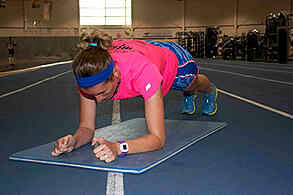
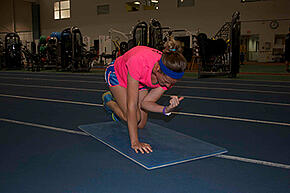
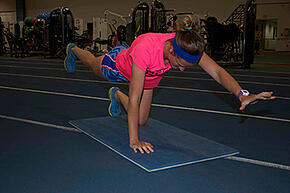
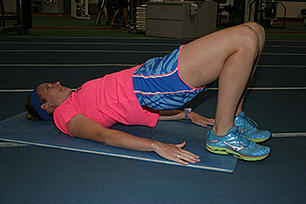
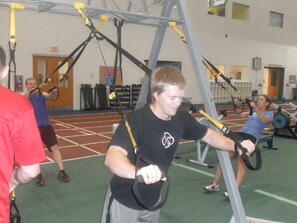
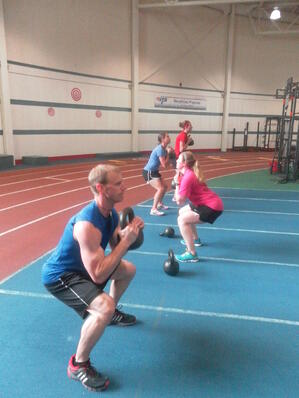
SS2We know what crosses through many of your minds in the middle of the workouts that we provide to you through HIT classes, Group Training, and special programs at NIFS: “I bet he/she doesn’t even do this stuff he/she is putting me through!” With that in mind, it would not be fair of us to expect you to complete our Summer Showdown Fitness Challenge without us testing it out first!

For the Summer Showdown this year, we are sticking with basic fundamental movements that almost everyone can complete with no trouble. The challenge comes into play when we ask that you select a level and complete as many rounds as you can in a given period of time.

Beginner: 10 minutes
Intermediate: 15 minutes
Advanced: 20 minutes

Here is what we have in store for you this year:SS4

Complete as Many Rounds as Possible

50m Suitcase Carry

10 KB Goblet Squats

10 KB Swings

10 TRX Rows

10 TRX Chest Presses

10 Slider Mountain Climbers

As a staff, we had a great time completing the workout! Now you can rest assured that we can relate to what you are going through. If you have never participated in the Summer Showdown, don’t be intimidated. This is your year to pick your level and complete the challenge to give you that extra push this summer!

If you are looking for a a great summer challenge participate in Summer Showdown from June 23-July 25! Sign-up  6/9-6/20 on the bulletin board located in the fitness center hallway.

This blog was written by Stephanie Kaiser, Fitness Center Manager and Health Fitness Specialist. To find out more about the NIFS bloggers click here.

Topics: group training nifs staff NIFS programs Summer Showdown summer HIT

What It’s Like to Be an Intern at NIFS

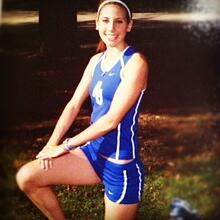
AU_XC_picFour years ago when I began applying for schools, if someone asked me what I wanted to be when I grew up, I would have laughed and said, “I have NO CLUE!” I was not sure where I wanted to go, who I wanted to be, or what type of job I could see myself in. All I knew was I wanted to be close to home. Growing up I was very family oriented, so I knew whatever college I chose needed to be close enough to come home on the weekends for family dinner.

I found the perfect one, Aurora University—small campus, small class size, with the added bonus of being only 30 minutes from home! Here I found my niche in the Fitness and Health Promotion major, understanding various levels of exercise prescription for diverse populations, and having the expertise to plan and implement prescribed exercise programs.

First_day_of_senior_yearWhen my senior year rolled around, I had one last program to complete before I could hold my diploma: a 16-week internship! Completely overwhelmed at the thought, seeing that the internships I did previously were barely a month long, I spent countless hours searching for a good fit. And after 3½ years of living at home as a college student, I was finally ready to be out on my own. I wanted to challenge myself and find something completely out of my element.

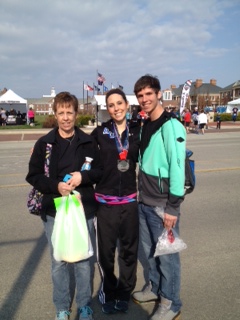
When I came across NIFS, competitive was a complete understatement. I knew I would really need to step up to get accepted as an intern. But all the long hours of resume and cover letter work really paid off. Coming to NIFS was the best decision I could have made at this point in my career. Sure, it was hard for me to pack up all my belongings and live in a city by myself, but the reward was well worth it.carmel_finish_with_family

Wanting to find out where else my major could take me besides the personal training/coaching realm, and having a love for healthy lifestyles, I worked in the Education Services department with Angie Scheetz, RD. I did not just feel like another intern, but an employee who had my own responsibilities and tasks to contribute to the department. I worked on anything from wellness presentations and nutrition consultations to Mini Marathon training. Working with Angie I learned more than I had ever expected and was able to see how maintaining a healthy lifestyle goes hand in hand with exercising.

NIFS was different from any other internship that I have ever experienced, because there was the option to investigate the various other departments. Through shadowing and volunteering, I was able to experience just how diverse each was. Seeing what each job entailed helped to point me in the direction I wanted to go and left me with a better idea for a future career.

Although I still have a long road ahead of me in the fitness and health world, working at NIFS as an intern was a great experience that truly applied my education. I could not have asked for a better end to my senior year.

This blog was written by Alyssa Furman, NIFS intern. To find out more about the NIFS bloggers click here.


Topics: NIFS nutrition mini marathon nifs staff education interns

Incorporating the Erg Rowing Machine into Your Exercise Routine

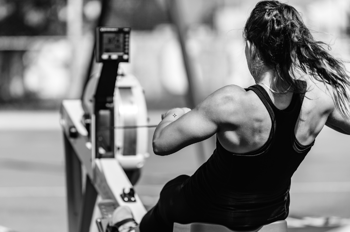
Tired of running, stair climbing, and cycling? If you are looking for a cardio workout that promises plenty of calorie burning, upper- and lower-body conditioning, all while being low impact, look no further than getting in some indoor rowing exercise.Rowing Machine

This exercise is not necessarily new (its origins date back nearly 2,000 years to ancient Greece) and not exclusive to outdoor rowing enthusiasts. For the average individual, rowing provides an excellent warm-up source, while the seasoned CrossFitter may use the rower as a cardio component in an elaborate superset. Regardless of your fitness level, the erg rowing machine is designed to give a low-impact, smooth exercise movement that provides training for outdoor rowers as well as an uncomplicated total-body exercise for the average Joe or Jane.

Steps for Learning Indoor Rowing

Indoor rowing technique can easily be taught in four convenient steps:

  1. The Catch: The starting point; legs are bent at the knees, arms are straight, and the back is flat.
  2. The Drive: The legs are extending and the handle is pulled toward the chest.
  3. The Finish: Legs are extended and the handle is at the chest.
  4. The Recovery: The sliding motion in which the body moves back to “the catch” position and performs another rep.

Like most exercise patterns, rowing requires practice and sometimes coaching to fully and safely get the most out of the movement.

For more detail, check out these instructional videos from the manufacturer of our rowing machines, Concept2.

NIFS staff is here to help and encourage you all the way! Please contact a NIFS Health Fitness Specialist with help on improving your rowing technique or incorporating the rowing machine into your current exercise program.

To get started or develope a new workout routine, contact us for a free fitness assessment!

New call-to-action

Evolve and rejoice,

This blog was written by Thomas Livengood, Health Fitness Specialist. To find out more about the NIFS bloggers click here.

Topics: exercise cardio calories rowing

NIFS Weight Loss and Slim It to Win It Participant: Misty Mercer

*NAME: Misty Mercerpizap.com13994687304371

SHARE YOUR “STORY” OR A BIT ABOUT YOURSELF IN A FEW SENTENCES:

I made the decision for my 30th birthday to become a healthier person. I am now a 31-year-old formerly overweight attorney turned power lifter.

NIFS PROGRAMS YOU PARTICIPATED IN:

Weight Loss program

Slim It to Win It

WHY DID YOU JOIN THIS PROGRAM/NIFS?

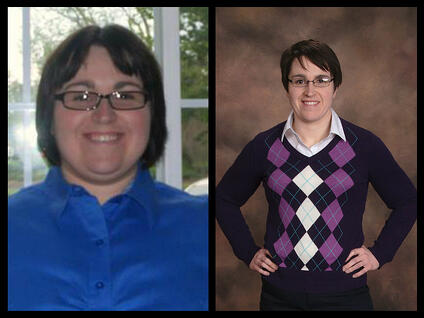
I had been overweight since childhood, and to be honest I assumed that I would always be overweight. However, when I turned 30, I sort of did a life evaluation. I realized that with the exception of one area, I had a great life and that I had achieved and done many things that I would not have thought possible before doing them. The one area where life wasn’t all that great was my health. On my 30th birthday, I weighed around 275 pounds, and that was light compared to the 315 pounds that I weighed at my heaviest. While I didn’t have any major health issues, I knew that it was only a matter of time before problems began to appear. I just didn’t feel good.

At that point I made the decision to improve my health, and to do that I knew that I needed to lose a lot of weight. I also knew that I couldn’t do it on my own, and that’s why I searched for a gym where I could get the help and education I needed. That search led me to NIFS. NIFS’ focus on fitness and health at all ages was what I was looking for.

When I joined NIFS in October 2012, the person who did my guest workout suggested that I try the Weight Loss program. The program sounded like the right fit for me since I wanted both nutrition counseling and fitness instruction. The one-on-one focus of the program is what especially drew me to it. When I completed the 14-week Weight Loss program it was around the time that the Slim It to Win It program was beginning, so I moved into that program to continue my progress.

SOMETHING YOU HAVE ENJOYED:

What I enjoy most about NIFS are the exercise prescriptions. I have never been able to really enjoy group workouts, but I am also not keen on developing my own program or using a commercial program. The exercise prescriptions developed by the fitness specialists are great in that they allow me to work out on my own with the knowledge that the routines were developed specifically with me in mind. Additionally, if I have a question or problem, I have someone, the fitness specialist, I can talk to.

SOMETHING YOU HAVE LEARNED OR SOMETHING THAT SURPRISED YOU:

I have learned how to powerlift (weightlifting using deadlift, back squat, and bench press). I am continually surprised by how much I have progressed since starting the program.

FAVORITE PIECE OF EQUIPMENT AT NIFS OR CLASS, PROGRAM, ETC. YOU USE?

The free weights.

WHAT ACCOMPLISHMENTS HAVE YOU ACHIEVED DURING YOUR TIME AT NIFS?

When I began the Weight Loss program on November 1, 2012, I weighed 272 pounds and was at 57% body fat. I am now down to 162 pounds and 25% body fat*.

*Weight loss claims and/or individual results vary and are not guaranteed.

I competed in my first powerlifting competition in March 2014 and set a 14-pound personal record on my deadlift (264 pounds).

WHAT STRUGGLES HAVE YOU ENCOUNTERED? TIPS YOU HAVE LEARNED ALONG THE WAY?

My primary area where I struggle is my diet. When I started, I didn’t want to go "on a diet." I wanted to learn healthy eating skills that I could use for the rest of my life. I really struggled at first because I wanted everything I ate to be perfect, but that wasn’t sustainable for me. The nutrition counseling sessions that were a part of the Weight Loss program were excellent in helping me realize that the perfect nutrition plan was one that I could remain on for the long term and that would incorporate a balance of healthy foods as well as the occasional treat.

In order to keep me eating a balanced diet, I track my progress in a food journal. Also I am always experimenting with new foods and techniques. I plan my meals in advance and pre-cook meals on the weekend that I can freeze for later.

HOW DO YOU STAY MOTIVATED?

I stay motivated by continually challenging myself. My goal is to always set some type of personal record when I go to the gym, regardless of whether it is lifting more weight, running a faster mile, or just stretching a bit further than I did last time.

ANY OTHER THOUGHTS YOU WISH TO SHARE: 

Get to know the NIFS employees. They are great people and are always willing to help you out.

NIFS Weight Loss Memberships give you the extra tools you need to take off pounds and keep them off without compromising your health*. These programs focus on healthy eating, exercise and accountability. We recommend starting with our 14-week Ramp Up to Weight Loss Program.

*Weight loss claims and/or individual results vary and are not guaranteed.

Call Masie Duncan Weight Loss Membership Coordinator, at 274-3432 ext. 273 or email to find out about more about our Weight Loss Memberships options.

Like what you've just read? Click here to subscribe to our blog!

This blog was written by Tara Deal Rochford, NIFS Membership Manager and a group fitness instructor. Author of Treble in the Kitchen. Meet our other NIFS bloggers.

Topics: nutrition weight loss NIFS programs weightlifting Slim It to Win It

The 3 Most Common Nutrition Coaching Questions

As the Wellness Coordinator at NIFS, I get to meet a lot of great clients and help them attain their nutritional goals. I have noticed some common questions that arise during the nutrition coaching sessions. Hopefully, if you have been wondering the same things, these answers will give you some more insight!

How Do I Gain Muscle and Lose Fat? weights-and-food

The best way to lose fat is to either increase the amount of calories you burn or decrease the number of calories you consume. As you are doing this, you also need to make sure you are doing two or three days of strength training to build muscle. To decrease calories, it is important to keep track of what you are eating and see where you can decrease. This might be decreasing the amount of coffee creamer you put in your cup of joe or swapping the potato chips at lunch for some raw veggies.

Increasing your protein intake won’t automatically increase your muscle mass. If you are strength training two or three times per week, a simple calculation to know your protein needs is to divide your body weight in half and multiply by 1.5.

How Can I Lose Weight?

The first advice I always give to anyone wanting to lose weight is to start keeping track of your food. Studies have shown you eat 40 percent less when you write it down! This can be done with apps available for your phone, using a website, or just jotting it down with a pen and a piece of paper. It will allow you to see when and why you eat and also hold you accountable for what you are eating.

The other thing that can be helpful with weight loss is to look at what you are drinking. Are you consuming empty calories from flavored coffee drinks, soda, juice drinks, or alcohol? Most people tend to eat the same amount of food no matter how many calories they consume from their beverages. So, try to stick to water, low-fat milk, unsweetened tea, and 100 percent juices for the majority of your liquids.

How Many Calories Do I Need per Day?food-log

Every person is a different height and weight, and has varying levels of activity, so there isn’t one calorie number that works for all individuals to follow. Instead, use this simple calculator, which takes these factors into account to determine the proper amount you should be consuming. Not only does it give an overall number, but what is more important, it tells you how to get that number. Recommended servings of grains, fruits, vegetables, dairy, meat and beans, and fat are given, along with some “extra” calories for those every-once-in-a-while food choices!

If you are interested in having your questions answered during a personal nutrition consultation, please contact on-site Nutritionist Lindsey Recker at lrecker@nifs.org or 317-274-3432, ext 239. Learn more about Nutrition and Wellness services at NIFS.

This blog was written by Angie Sheetz, NIFS Registered Dietitian. Read more about the NIFS bloggers.

Topics: nutrition weight loss healthy eating calories

NIFS Mini Marathon Training Program Participant: Judi Border

NAME: Judi Border, 14-Minute-Mile GroupBorderPhoto

SHARE YOUR “STORY” OR A BIT ABOUT YOURSELF IN A FEW SENTENCES:

Born and raised in Cincinnati, moved here in 1992 for work. Since then I’ve been happily married for 20 years this July. We have a beautiful 17-year-old daughter and two cats. I work at WFYI as the Television Art Director and Motion Artist. About two years ago I realized I needed to make some life changes due to lack of personal challenges, weight gain, and the loss of two young friends to cancer. I started going to my local community center three days a week using a treadmill for 30 minutes. At the same time I started following a blog called the Happy Herbivore and became vegetarian. After a year I had lost weight, felt much better about myself, and added a yoga class.

Every year for as long as I can remember, a co-worker friend of mine registers for the Mini and always asks if everyone has signed up, too. This got me thinking, secretly I’ve always wanted to walk the Mini, just experience it, but I always had some excuse not to! This year I couldn’t seem to find a reason not to, so in January I took a deep breath and signed up.

NIFS PROGRAMS YOU PARTICIPATED IN:

NIFS Mini Marathon Training Program

WHY DID YOU JOIN THIS PROGRAM?

I’ve never been much of an athlete, but I’ve always enjoyed walking. Luckily I work with several friends who have experienced the Mini and it was their advice that I should check out the NIFS Training Program. I knew I would need to join something because I had no idea how to prepare for the Mini. My greatest fear was being picked up by the bus and not completing the marathon. I couldn’t find anyone who would walk with me; all my friends and co-workers were runners. NIFS has been a great supporter of WFYI over the years and I knew of them from that. It seemed like an obvious choice.

SOMETHING YOU HAVE ENJOYED:

I have really enjoyed this whole experience, which I credited to NIFS. It is a great feeling being surrounded by a group of enthusiastic people with a common goal. The group training is new to me and I have really enjoyed it. I found myself looking forward to Wednesdays.

SOMETHING YOU HAVE LEARNED OR SOMETHING THAT SURPRISED YOU:

I guess I surprised me. I’ve never been much for exercising, but I find that I really enjoy it. I like the fitness schedule NIFS has put me on for the Mini Training Program and hope to continue it. I believe I am in the best shape I’ve ever been in; it is very renewing.

FAVORITE RUNNING ROUTE FROM ONE OF THE RUNS?

The route to Fountain Square. You spend time in Downtown, drive through it, but how often do you actually walk through it? It was a nice tour.

WHAT ACCOMPLISHMENTS HAVE YOU ACHIEVED DURING YOUR TRAINING PROGRAM FOR THE MINI?

Every Wednesday night was an accomplishment for me because almost every Wednesday I was pushed to walk farther than I had ever walked at a 14-minute-mile pace. Then ultimately I completed the Mini Marathon, something I have wanted to accomplish for almost 15 years.

TIPS YOU HAVE LEARNED ALONG THE WAY?

Where do I begin? I’ve learned about the importance of stretching, cross training, what to eat/drink before and after training, what are the best types of clothes to wear when exercising, what it feels like to wear proper-fitting gym shoes, how to drink water out of a cup while walking. My favorite thing to learn was the importance of letting your body rest. Who knew?

HOW DO YOU STAY MOTIVATED?

First, I would have to say NIFS and my Wednesday Night Group, they kept me motivated. Having an additional support group outside of NIFS helped a great deal, in my husband, Terry, and my co-worker friends. But I would also say that my daughter has been a big motivation for me as well. As a parent it is amazing what we expect our children to do, while we sit by and watch. My daughter recently received her Black Belt and it was during her final preparation for the test that she had to run three miles at a 7-minute-mile pace. That motivated me to step up my exercising. She still motivates me in her continued fitness goal to stay healthy and fit.

ANY OTHER THOUGHTS YOU WISH TO SHARE: 

If you have ever wanted to participate in the Mini Marathon, this is the best way to prepare for it. NIFS brings all the right elements together, the Runners Forum helps you with shoes, the onsite physical therapist works with you and any muscle pains that might occur during the training, and the group leaders guide you and answer all your questions. It is a wonderful way to get moving during the winter and really has been a great experience for me. I loved it.

NIFS new Fall Marathon Training Program begins July 9th-October 25th. Get Registered Today! Early Bird pricing before May 31—Members: $65 Non-Members: $80

Register_Button_Icon_for_client_website


This blog was written by Tara Deal Rochford, NIFS Membership Manager and a group fitness instructor. Author of Treble in the Kitchen. Meet our other NIFS bloggers.

Topics: goal setting marathon training group fitness group training mini marathon half marathon

Top 10 Reasons to TRI a Triathlon This Year

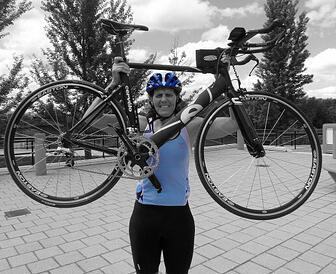
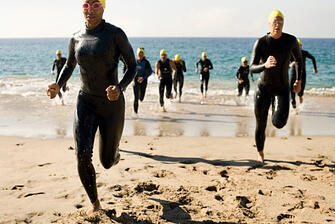
Have you ever thought about training for and doing a triathlon? This is a great time to start getting ready for it, and here are some reasons why you should!

tri

  1. Never a boring day. You can swim one day, bike another day, and run another; then rest and do it all over again.
  2. The pool is warm (76+ degrees) when it’s cold outside.
  3. Cycling inside (in a group fitness class or on a bike trainer) is a great way to start to build your aerobic fitness base.
  4. Running outside on a warm winter day is peaceful.
  5. The outdoor training gear is awesome at keeping you dry and warm; plus it looks good, too!
  6. Gear is ON SALE NOW!
  7. The NIFS Triathlon Training Program is fun, educational, and great preparation for triathletes of all levels. NIFS runs co-ed and women’s-only training programs.
  8. The definition of insanity is doing the same thing over and over and expecting different results: TRY SOMETHING NEW THIS YEAR! Triathlon is the original CrossFit.
  9. Destination triathlons are a great way to get away and still work out.
  10. You can knock doing a triathlon off your bucket list. 

Ready to TRI? NIFS 11-week tri-training program is Tuesday nights starting 6/28 at 5:30-7:30p. All experience levels are welcome. This training includes race entry for the Go Girl Triathlon at Eagle Creek Park on August 27, 2022.R19XDP1

Contact Kris for more information either by email or at 317-274-3432 ext 211. Or register online.

This blog series was written by Kris Simpson BS, ACSM-PT, HFS, personal trainer at NIFS. To read more about Kris and NIFS bloggers click here.

Topics: running group training swimming triathlon cycling NIFS programs

4 Questions to Determine If You’re Ready for Your First Marathon

Has completing a marathon always been on your bucket list? Are you looking for a new challenge and to step up your commitment to fitness this year? You may be ready to try your first marathon! Here are 4 questions to ask yourself to determine whether you are ready:

1. Have You Run a Few Half-Marathons? marathon-1

Yes: Great! You are already halfway there! You mentally know what it takes to complete long-distance runs and a training program, and you have experienced that race atmosphere and everything that goes with it. Along with this, you know the ins and outs of how to fuel, hydrate, and recover from the high-mileage training properly.

No: That is okay! Starting with a half-marathon is a great first step to getting to that first marathon. This will get your body and mind up to speed with more ease than jumping into a full marathon

2. Do You Have the Time to Dedicate to Training?

Yes…I think: Training for a marathon requires more time and energy than training for a half-marathon. To prepare to have the most successful race that you can come race day, you will need to complete some long training runs that go up to 20 or 22 miles! Depending on the speed that you are going, this can take you between 2 and 5.5 hours. Be sure that you have a day during the week that you will be able to dedicate toward this kind of training. Along with this, you will need to complete two or three additional runs or walks throughout the week, as well as complete some cross-training sessions.

No: Training for a marathon may not be in the cards for you right now. If you have a lot going on as it is and hardly find time to squeeze in a short 3- or 4-mile run or walk, completing a marathon successfully should wait until your schedule calms down.

3. Are You Motivated to Complete 26.2 Miles?

Yes: Good! This will carry you through those long runs mentally. Having the desire to get out there and train to complete the race is key to having a successful training program.

Not really: You should keep that in mind before starting to train and signing up for your first race. If you are not completely sure that you are motivated to do the race, hold off on signing up. I suggest completing a few weeks of a marathon training program to see if your motivation grows as the distances get longer. If you find yourself becoming less motivated right away, reconsider your goal and maybe stick with a half-marathon again.

4. Are You Running/Walking Consistently and with Few Injury Issues?

Yes: That is a huge plus! If you are already consistently going out for runs or walks and are not having any pains or injuries, it is safe to start ramping up your mileage slowly to prepare for the marathon.

No: Get consistent and healthy first! If you are not consistently walking or running, that is the first thing that you should do. Consider following a scaled-back training plan and start by making sure to complete 3 or 4 days of walking/running for at least a month. If this seems to be going well and you are not running into any injuries, you can start to reconsider.

GettyImages-608516034_low resIf you said yes to all of these questions, it is pretty safe to say you are ready to get started on a marathon training program! If you answered a few with “no,” no worries. A marathon is still not too far out of reach. Just address the obstacles that you have and work toward resolving those!

This blog was written by Stephanie Kaiser, Fitness Center Manager and Health Fitness Specialist. To find out more about the NIFS bloggers click here.

Topics: NIFS motivation goal setting running marathon training half marathon NIFS programs race training injuries

“Alice & Chains” Part 2: Making Your Training Functional

When we last left Alice (aka you), we provided her with two kinetic chains to rescue her from the mythical land of functional training. Now that I have established a solid base to build from, I can hone in on what actually makes moving functional, and that is movement. (I know, shocking isn’t it?)

The Patterns of Human MovementDSC04021n

Basic human movement is pretty much divided into seven different patterns. As stated in Part 1,
these patterns can affect one another and be built onto one another. The seven movement patterns are the following:

  • Squat
  • Hinge
  • Lunge
  • Push
  • Pull
  • Single-leg balance
  • Rotary/core stability

Taking the definition of functional training discussed earlier (to train or restore function in movement), these are the movements I was referring to. Functional training should revolve around making these basic movement patterns better. That’s it, end of story? There are many aspects that can go into a functional movement program such as heavy strength training, metabolic acceleration work, core stability, and much more. But the program’s components should always point back to restoring and training the function of these patterns.

Pairing Functional Movements

When programming a strength-training workout, to train or restore function in movement, I like to pair movements together. This will add to the training effect and save you time as well. There are a number of ways to pair these basic movements together. Keep in mind two things when pairing up movement: the kinetic chains being trained, and the residual fatigue of staying on one side (or chain) of the body. Simply put, don’t pair movements that occur on the same side of the body.

Here are some of my favorites:kettlebell

  • Kettlebell Swing (Posterior Chain/Hinge) and Push-up (Anterior Chain/Push)
  • Kettlebell Goblet Squat (Anterior Chain/Squat) and TRX Row (Posterior Chain/Pull)
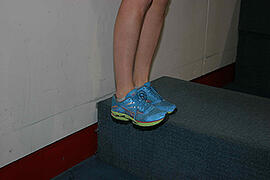
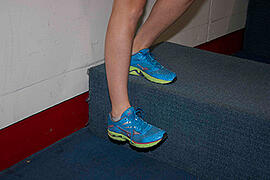
  • Box Step-up (Anterior Chain/Single Leg Balance) and Mountain Climbers (Rotary/Core Stability)
  • Chin-up (Posterior Chain/Pull) and Reverse Lunge (Anterior Chain/Lunge)

If you were to complete these movements I listed for 10 reps each and for 3 sets with moderate to heavy weight (while keeping proper movement mechanics), you would have yourself a well- founded functional training workout. If you forget everything I have told you, just remember this:

Do something for the legs, do one push, one pull, and a core exercise!

So there you have it, the dirty on functional training. Please keep in mind that I have only scratched the surface of this topic. I can’t stress enough the importance of knowing how you are currently moving so you can have the best plan of attack in your training.

Schedule a Functional Movement Screen with us today and know the metrics that matter.

New call-to-action

This blog was written by Tony Maloney, BS, ACSM-PT, HFS, personal trainer. To read more about the NIFS bloggers, click here.

Topics: NIFS fitness center workouts functional training injury prevention muscles kettlebell TRX

7 Tips for Safe Outdoor Workouts

GettyImages-1087128992Taking my workouts outside is an easy way to soak up the benefits of nature and switch up my normal gym routine. That being said, I understand that exercising outdoors isn’t exactly the same as exercising inside, and there are some necessary precautions I always take into consideration when completing my outdoor workout.

1. Map My Route Ahead of Time

I am probably the worst person to ask for directions. The GPS was invented for people like me, and I am so thankful to have one with me at all times (thanks to my phone!). Whether I am going for a jog, bike ride, or walk, or completing an outdoor circuit workout, I always make sure to plan my route ahead of time (so I don’t get lost) and show someone else the route I will be taking. This way, if I do get lost or injured, or am not home when I expected to be, someone knows where to find me.

2. Bring My Cell PhoneSprigs_Wrist_Band

Yes, it’s cumbersome and I would prefer to feel “free” and not have it with me while running outdoors, but I know that if I were to fall, or get lost, or for some reason I wasn’t able to make it back home, I could give someone a call to help me. I keep it in my Sprigs Banjee Wrist Wallet so I can listen to music or a podcast, or I keep it in my SPIbelt. Either way, it allows me to keep my hands free. I also have an ICE (In Case of Emergency) number in my phone. I have heard that emergency professionals are trained to look for an ICE number in cell phones to notify a loved one in an emergency situation.

3. Carry an ID

I always carry an ID with me, but that doesn’t mean I always bring my driver’s license along. My Road ID bracelet is the perfect running accessory that contains my name, my husband and parents’ names and contact information, and my age—all important things “just in case” there is an emergency. I love that it is on my RoadIDwrist and I often forget I am wearing it because it is so lightweight and comfortable.

4. Beware of Dogs

Recently, a coworker and fellow NIFS employee who is a runner informed me that one of her friends was attacked by a dog while running. Hearing her story really got me thinking, because luckily I have not come into a negative encounter with a dog while running. Here are some canine safety tips I keep in mind when running and exercising outdoors:

  • Do not run from the dog; this can stimulate the animal.
  • Stand perfectly still with hands and fists close to the body.
  • Don't yell or say anything.
  • Don't look the dog in the eye; this can be threatening.
  • Do not use mace on an animal; it is not strong enough and will upset it more.

5. Wear Reflective Gear

When running in the evening or in the early morning while the sun is rising, I always make sure to wear some sort of reflective gear. I prefer to choose clothing that has the reflective gear “built in,” but you can easily purchase reflective vests to wear over your clothes. Wearing reflective gear makes it easier for cars and bicyclists to see me when I am coming their way, which makes me safer while getting my outdoor workout on.

6. Check the Weather

The weather often dictates whether I take my exercise outside or keep it indoors. If it’s raining, chilly, or super hot, I will opt for an indoor workout. That is, unless I am training for a race. Often when I am training for a race I will head outside to train in less than ideal conditions. Exercising in the elements may seem intimidating, but when I am dressed properly I can go out in all kinds of weather! When dressing for cooler weather, I always layer my clothing. This helps trap the heat in and gives me the option to get rid of some clothing articles if I get too warm. That being said, if the roads are dangerously icy, if a rain storm brings thunder and lightning, or if there is a heat warning I will always pick safety first and move my run to the indoor track or treadmill.

7. I Don’t Blast My MusicTara_ipod

I love listening to music and podcasts while I run and exercise because they really help me enjoy the workout even more than I already do. While I love listening to my music and podcasts, I make sure not to blast the music so I can hear oncoming cars, people, bikers, and anything else that I may not be expecting to come my way. I know how easy it is for me to “get in the zone,” but I try to stay as alert as possible when exercising outdoors, especially if I am not with a buddy.

What are some of your tips for staying safe during your outdoor workouts? Share them here.


This blog was written by Tara Deal Rochford, NIFS Membership Manager and a group fitness instructor. Author of Treble in the Kitchen. Meet our other NIFS bloggers.

Topics: running walking equipment cycling half marathon injury prevention circuit workout outdoors safety