<img height="1" width="1" style="display:none" src="https://www.facebook.com/tr?id=424649934352787&amp;ev=PageView&amp;noscript=1">

NIFS Healthy Living Blog

Healthy Living: Just Be Yourself

126868686For people new to fitness, creating a healthy body image can be as challenging as creating a workout or diet plan. What do we consider healthy and why?

Unfortunately, for the majority of our lives, Americans have been shown and told through various media what it means to be healthy. This heavy load of misguided information can lead individuals down the road to anorexia, depression, low self-esteem and unhealthy choices. The obsession with body image can be overwhelming, but with good advice, a smart goal set in mind, and a positive attitude, you may have a clearer path to fitness prosperity and healthy living.

Change Your Attitude

As cheesy as it may sound, the first thing you will want to do to reprogram your outlook is to list a minimum of 10 good things about yourself that have nothing to do with appearance. Then set some realistic goals, keeping in mind that you should not compare yourself to others in that we are all given a completely unique set of DNA and are different. Fad diets only work in the short term, provide little to no answer and can compromise your health by creating a “yo-yo” effect.

Tools for Getting Started on Your Fitness Journey

In moving forward with your program, there are some tools that can be very effective and healthy to get you on your way. For individuals wanting to know how many calories they should consume in a day, there is the Resting Metabolic Rate test (RMR for short). The RMR test can tell you if your calorie intake is too much or too little for what your body and goals require.

For the scale obsessed, I suggest a much healthier option, the BodPod, which measures body fat percentage and composition. Your body composition is linked to health; risky high body fat percentage is linked to various health issues such as heart disease and diabetes.

Yet another option could be meeting with a registered dietician (RD). An RD is educated and trained to help you excel in your goals using wiser diet and nutrition choices, along with exercise. Find out more about NIFS nutritional coaching options.

With all the pros of having a positive body image, including improved self confidence, lower stress and a healthier body, the only question is, “Why didn’t I start sooner?” Your first step to fitness prosperity lies right in front of you. Take a chance with a new outlook and just be you.

Start your new journey right with a free fitness assessment at NIFS.

Free Fitness Assessment

This blog was written by Thomas Livengood, NIFS Health Fitness Specialist. To find out more about the NIFS bloggers, click here.

Topics: nutrition healthy habits motivation weight loss attitude

Flu-Fighting Foods

469103861If you are like most people, as soon as the fall season arrives, it’s time to get your annual flu shot. This is definitely recommended; however, can you also choose certain foods to help fight off influenza? What you eat can help lower your chances of catching that nasty bug.

Here are some foods and drinks to fill up on:

  • Green tea: Green tea is packed with antioxidants. Sip it hot or cold throughout the day to help keep illness away.
  • Sweet potatoes: This bright-orange food is packed with Vitamin A to help keep at bay the free radicals that can threaten to weaken your immune system. Pop a sweet potato in the microwave for 7 minutes for a quick and easy addition to lunch or dinner.
  • Yogurt: Yogurt naturally contains probiotics that help to keep your immune system healthy and strong. It’s such an easy and filling snack to grab or use as a substitute for sour cream, mayonnaise, or cream in any of your high-fat recipes. (See some tasty Greek yogurt recipes here.)
  • Tuna: Tuna is an excellent source of selenium and Vitamin D, which helps protect cells from free radicals and improve your immune system. Try mixing a pouch of tuna with some plain Greek yogurt and place it atop a bed of leafy greens.
  • Mushrooms: Mushrooms are rich in selenium. It has been found that low levels of selenium in your body increases your chance of getting the flu. Chop them up and add them to a pasta dish, salad, or soup.
  • Peanuts: This tasty snack is full of zinc, which helps keep your immune system working properly. A handful is the perfect amount to grab for an afternoon snack or to throw in a stir-fry at dinner.
  • Water: This essential nutrient keeps the body running efficiently. Getting fluid in various forms such as tea, 100% juice, coffee (preferably decaffeinated), and water-filled foods such as fruits and vegetables all counts toward filling your hydration needs.

With most things, a balanced diet is the key. A diet high in a variety of produce, lean meats, whole grains, and low-fat dairy, along with moderate exercise, adequate sleep, and minimal stress, contributes the most to well-functioning immunity and faster healing if the flu does strike. Incorporate the above foods but continue to work on overall balance to your life.

This blog was written by Angie Scheetz, RD, Wellness Coordinator. To find out more about the NIFS bloggers, click here.

Like what you've just read? Click here to subscribe to our blog!

Topics: nutrition healthy eating disease prevention

’Tis the Season for Healthy Holiday Baking

78464944One of my favorite holiday traditions is making fabulous treats and snacks for friends, family, co-workers, and neighbors. Entire days are spent baking in the kitchen, and the best part (after sampling the treats first hand) is hearing how great everything tastes. Little do they know that with just a few simple tweaks, those cookies and candies can be dramatically lower in fat and calories. Here are a few easy ways to tweak your recipes for healthy eating.

Reduce

Many recipes call for an amount of sugar or fat well above the amount needed for taste and texture. Try reducing these ingredients by one-third or one-half when making your recipe. Also, by using nonstick pans and cooking spray, you can reduce the oil or butter on baking sheets and pans.

Substitute

There are healthier alternatives to use without compromising taste. Give the following substitutions a try.

  • Eggs: For every egg, use two egg whites or 1⁄4 cup egg substitute. Egg Beaters and other substitutes can be found in the dairy/egg section of the grocery store. You can also make your own version of egg substitute: 6 egg whites, 1⁄4 cup nonfat dry milk, 1 tsp. oil, and 6 drops of yellow food coloring. Refrigerate for up to one week.
  • Whipped cream: Make your own! Beat together 1⁄4 cup ice water and 1⁄4 cup nonfat milk powder until thick. Add 1⁄4 tsp. vanilla, 2 tsp. lemon juice, and 1⁄4 cup sugar. Another option is vanilla nonfat yogurt.
  • Baking chocolate: Use 3 Tbsp. cocoa powder for every ounce of baking chocolate.
  • Applesauce: Rather than using all of the oil, margarine, or butter in baked goods, substitute a portion with applesauce. For example, instead of 1⁄4 cup oil, use 2 Tbsp. of oil and 2 Tbsp. of applesauce. The applesauce provides moisture, but you still have the benefits of the fat in the oil and save 230 calories and 28 grams of fat.
  • Prunes: For your best baked chocolate recipes, try baby food prunes as a fat replacement. They retain moisture and add to the color. Substitute the same amount as in the recipe, or try replacing with a portion of the prunes.

For some ideas of healthier cocktails to go with your baked treats at holiday parties, see this post.

Whatever you decide to bake or eat this holiday season, just remember moderation. Enjoy one or two cookies, not the whole batch! Happy holidays and happy baking!

Learn more about Nutrition and Wellness services at NIFS.

This blog was written by Angie Scheetz, RD. To find out more about the NIFS bloggers, click here.

Like what you've just read? Click here to subscribe to our blog!

Topics: nutrition healthy eating recipes snacks calories holidays

NIFS Lifestyle Program Participant: Kim Flowers

KimI’d like to take a few moments to highlight a member of the NIFS Lifestyle Program. This program provides extra guidance and observation to individuals with chronic medical concerns. NIFS’s Lifestyle Coordinator communicates with the participant’s physician about their progress and helps them plan workouts geared to their specific medical needs. Take a few minutes to read about Kim Flowers and learn how this program has changed her.

SHARE YOUR STORY OR A BIT ABOUT YOURSELF IN A FEW SENTENCES:

I am 48 years old and have been a member of the Lifestyle/Scholarship Program at NIFS for about five months. Currently I am on dialysis three times a week and am awaiting a kidney transplant. Due to diabetes I lost my leg, but I am coming to NIFS to turn all of this around and get healthier in all aspects of my life! My goal is to get back to work as a social worker once I receive my kidney.

SOMETHING YOU HAVE ENJOYED ABOUT BEING IN THE LIFESTYLE PROGRAM:

I have enjoyed getting out of the house and learning different ways to exercise. Even with the limitations that I have physically, I have enjoyed seeing how much I am able to do that I didn’t think was possible. Working out, something that I have not done in the past, is giving me more overall energy. It is helping me to get stronger, and helping me in my everyday tasks, which sometimes are difficult with a prosthetic.

SOMETHING THAT YOU HAVE LEARNED OR SURPRISED YOU:

After getting my general fitness assessment, I learned and was surprised at the amount of fat I have in my body and that could cause me to have serious health issues. I am learning ways to work on getting my body fat to a more acceptable level.

FAVORITE THING TO DO FOR A WORKOUT:

All of it! I really do enjoy everything that we do. Though some things are harder than others and really stretch my abilities, there is not one thing that Amanda has me do that I don’t like. I really enjoy working out with Amanda and it has made a difference in my life.

ACCOMPLISHMENTS SO FAR:

I am able to do exercises that I was not able to do in the beginning. I have also increased my endurance. Being on dialysis and having a prosthetic makes it challenging to keep up my heart health, but I can tell when I am walking that I am able to last a lot longer than I could before*.

*Weight loss claims and/or individual results vary and are not guaranteed.

THINGS LEARNED FROM YOUR TRAINER ALONG THE WAY:

I have learned about better eating habits, how to use the machines at NIFS correctly, and how to make exercise a part of my life.

WHAT KEEPS YOU MOTIVATED:

This is something that I want and that I know I need to do in order to help myself. It is helping me to take steps to my goal of getting my kidney and starting a new life.

I have really enjoyed being a part of the Lifestyle/Scholarship Program at NIFS. I am so thankful for the opportunity to participate in something that without others’ help I would not be able to do. Even once I hit my goal, I want to keep going! I want to say thank you to every person who helps to make this program possible.

NIFS Lifestyle/Scholarship Program

One component of the Lifestyle Program is that there is a scholarship opportunity for those involved. Many of these people have physical limitations and are unable to work. NIFS has a scholarship fund on a needs basis, allowing participants the opportunity to get the help and guidance they need. Currently NIFS funds 16 scholarships to program participants.

To help sustain our current scholarships and increase the opportunities to fund additional ones, NIFS organizes an annual auction. We need your help to continue to provide this gift to those who need it! Please consider bidding in the seventh annual online auction.

AuctionImageVisit the auction website beginning November 24 at 8:00am and concluding on December 15 at 8:00pm and see what great items you can bid on!

For questions about the Lifestyle Scholarship program or the online auction please contact Amanda Bireline at 317-274-3432 ext. 219 or abireline@nifs.org.

This blog was written by Amanda Bireline, Lifestyle Program Coordinator and Health Fitness Specialist. To find out more about the NIFS bloggers, click here.

Topics: exercise nutrition goal setting NIFS programs endurance diabetes

The Fitness Puzzle: Nutrition, Workout, and Recovery

460050857Along the way, I have learned that fitness and wellness can seem quite complicated. Various mentors, self-described gurus, professors, doctors, and muscle magazines have provided us all with enough quick fixes, miracle workouts, and “sound” advice to help us become the person we want to become (and also fill an encyclopedia). Probably the best advice anyone has given me would be the old saying, “Find something you love to do, do it, and do it well.” If you do not love any form of fitness, whether it is ice hockey or Zumba, at least find something that you can put up with, such as outdoor hiking or gardening, and do it well.

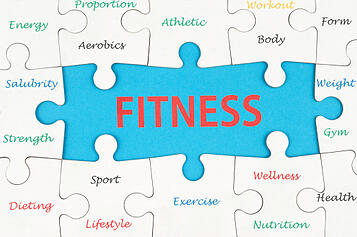
There can be any number of pieces to a puzzle, but we will focus on three. While missing puzzle pieces make it harder to see the big picture, having no puzzle pieces makes it impossible to see your potential outcome. On the other hand, with all three pieces of this puzzle in place, there is no reason you will be unable to fulfill your goals and realize your potential.

The Pieces of the Puzzle

Here are the pieces:

  1. Nutrition: Most importantly, you should be aware of the number of calories you are consuming each day, how frequently are you eating, and the quality of food you are eating. There are registered dietitians who specialize in nearly every aspect of wellness, whether it is for weight loss or sports nutrition.
  2. The Workout: Comprised of both resistance training and cardiovascular work, we always seem to think this is the hard part, but it can be easier than you think. Think about how many hours there are in a week (168). Then think about how many hours you are recommended to exercise each week (a minimum of 2.5). Also, you have a built-in support network when you work out with friends, and especially with instructors there to help along the way. (Here are more reasons to work out with friends or a group.)
  3. Recovery: Recovery is not always associated with the big picture, but it’s equally important. This encompasses everything from getting a good night’s sleep, to getting a massage or foam rolling, to proper hydration. Really, all that matters here is readying your body properly for another workout, maximizing your potential, and decreasing chances for injury.

The Pieces Work Together

Getting back to the puzzle analogy: If I were to have an amazing two-hour workout but then followed it up with gas station pizza and then pulled an all-nighter with my buddies, I’m probably not going to see results. That example goes without saying, but there are plenty of distracters out there to sabotage your puzzle and big picture.

Focus on your weakest puzzle pieces and try to make them one of your strengths. Understand that there will be slipups and hiccups along the way, but ultimately, if you can find the three puzzle pieces of the fitness analogy, there will be very little that stands between you and fitness prosperity.

This blog was written by Thomas Livengood, Health Fitness Specialist. To find out more about the NIFS bloggers, click here.

Like what you've just read? Click here to subscribe to our blog!

Topics: exercise fitness nutrition motivation goal setting group fitness recovery

Smart Snacking for Healthy Eating and Weight Management

184366974Some people think that snacking can sabotage your healthy eating and weight management plan. However, snacking keeps your energy levels up, and prevents you from becoming overly hungry, which can lead to poor food choices. Eating every three to four hours can also help regulate your metabolism, which ensures that you burn calories throughout the day. Strive for at least two small snacks per day, but try to limit yourself to 100 to 150 calories or less per snack.

Also, be sure your snack is balanced: it should offer complex carbohydrates for energy, protein for muscle building and repair, and a small amount of fat for satiety. You can ensure nutritional balance and prevent snack boredom by varying your daily choices.

The Benefits of Snacks

You may feel guilty about snacking, but snacks aren’t necessarily bad. In fact, mini meals several times a day can be beneficial. Here’s how:

  • Binge control: If eating several low-fat, whole-grain crackers, a few pretzels, a piece of fruit, or some raw vegetables keeps you from taking second or third helpings at your next meal, you may actually consume fewer total calories for the day.
  • Extra energy and nutrients: Traditional, made-at-home meals often lose out to busy schedules. A grab-and-go snack can be the difference between some nourishment and none at all.
  • Satisfaction for small appetites: Young children’s tiny stomachs can hold only small portions of food at a time. Older adults who are less active and who burn fewer calories also may feel comfortable eating smaller meals more frequently.

Healthy Snack Choices

Here are some great snack choices:

  • 6 oz. fat-free yogurt topped with 1 cup of berries
  • ¾ cup whole-grain cereal with nut and dried-fruit trail mix
  • 1 apple and 1 oz. low-fat cheese
  • 1 cup yogurt smoothie made with real fruit
  • 1 oz. baked tortilla chips with ¼ cup bean dip
  • 2 oz. low-fat cheese on 5 whole-grain crackers
  • 1 whole-wheat tortilla with 1 oz. melted cheese and ¼ cup salsa
  • 1 cup raw vegetables and 2 Tbsp. low-fat dip or hummus
  • 1 Tbsp. nut butter on a banana
  • 1 cup berries topped with ¼ cup low-fat granola cereal
  • ¼ cup whole-grain cereal and ¼ cup raisins with ¼ cup skim milk
  • ¾ cup pasta salad made with raw veggies, cheese, and low-fat dressing
  • ¼ pita pocket stuffed with raw vegetables and 1 slice low-fat cheese
  • 1 cup low-fat vegetable-bean soup
  • ½ turkey and cheese sandwich on whole-grain bread
  • 1 handful almonds and ¼ cup dried cranberries
  • ½ cup cottage cheese and ½ cup pineapple
  • ½ peanut butter/banana sandwich on whole-grain bread
  • ½ toasted whole wheat English muffin topped with a slice of tomato and low-fat cheese

For more tips on eating well and feeling great, especially after age 40, check out this post.

If you are interested in having your questions answered during a personal nutrition consultation, please contact Sabrina Goshen at sgoshen@nifs.org or 317-274-3432, ext 239. Learn more about Nutrition and Wellness services at NIFS.

Like what you've just read? Click here to subscribe to our blog!

Topics: nutrition weight loss snacks metabolism weight management

What Elephant? Getting Past Bad Fitness and Nutrition Advice

My version of a famous Indian parable.

elephantThree blind men, who had been blind for life and who had never experienced an elephant, were brought into an area where an elephant was standing. They were placed within arm’s reach of the animal and were allowed to explore the elephant by just touching what was within their reach. They were not allowed to step closer or move side to side.

One subject was placed at the tail, the second along the side, and the third subject at the front. From what they were able to touch, their task was to describe what kind of an animal they were experiencing.

The parable has been used to show with humor how humans are quite willing to reach conclusions based on very limited information, and this is where my version takes a fitness twist.

The subject at the rear of the elephant reached out into the space in front of him. His arms moved cautiously like someone entering a dark room, groping for a light switch. Then it happened: the back of his hand bumped into what seemed to be a heavy, flesh-covered rope. He was able to grab this rope and realized it was hanging down from somewhere above his head. His head snapped back and he quickly jerked his hands away as if he had just touched a hot stove.

Excitedly, he blurted out, “This is a big snake! I just touched the tail! He must be resting on a tree limb. Big snake. Big snake.” His nostrils flared as a very strong odor raced into his head. Something had just pooped, and he hoped that he wasn’t responsible.

The subject along the elephant’s side reached forward as directed and found a massive flesh wall, and from where he stood, it seemed endless. And when he pushed against it with all of his might, it didn’t move.

He pulled his hands away, and with a confused look on his face he pronounced, “I don’t know what this is. All I know is that it’s big, and from where I stand I don’t know how big. Without knowing the height and length and the structure of the head and tail, I would be just guessing. I’m sorry, I can’t help you.”

The last subject standing at the front of the elephant had a similar experience. His searching hands found a large tube that was too big to be a tail. What could it be? As his hand moved sideways from his new find, he hit a very hard object that had a soft point and seemed to recede backward toward the animal. He cocked his head like a dog searching for meaning in his master’s words as he reached out again to touch the tube and then the soft-pointed hard bone.

He dropped his head in deep thought. After several seconds he calmly stated, “I have no idea. The large tube and pointy bone are certainly very interesting, but I need a lot more information before I can even guess.” He, too, apologized for not being of more help.

What’s the Point?

The subjects at the front and side of the elephant would have made good scientists. They clearly understood that from their very limited data, there was no basis for them to predict the totality of the animal before them, and any attempt to do so would be irresponsible.

However, the subject at the tail of the elephant represents bad science and those willing to use bad science to promote their own agenda. With more investigation, the large snake’s tail hanging from a tree limb becomes something quite different: an elephant.

Much of what we in the fitness and nutrition world think we know today is a result of bad science. Ideas are promoted as truth with the intent to profit from a motivated and yet ill-informed public. So question the diet or workout program you’re about to embark upon. Is it a real elephant or just an imaginary snake? Hint: until proven otherwise, it is closer to snake than elephant.

Research Your Workouts and Diets Before Starting

It is appropriate that the subject at the rear of the elephant is standing in elephant poop. What they are promoting is worth just that. By doing a little more research regarding the workout or diet you’re considering, asking probing questions and reading opposing views, you can avoid missing the elephant and finding yourself holding just an imaginary snake tail while standing in the smelly outcome of following bad science.

No one wants to waste time, set themselves up for injury, or follow a diet that is detrimental to their health, but in the fitness world it happens all the time, albeit with good intentions. Scientific research is slowly chipping away at the knowledge of what we are and how we function. We have come a long way in the last 50 years and we’ll certainly discover more of the elephant as time goes by.

So I advise my clients that the value of any fitness/nutrition idea depends on who you are, the nature of your goals, and the strength of the research behind the ideas that are attracting them. I also want them to be open-minded to and aware of opposing views so that their fitness/health knowledge continues to grow. Why? Because in the end, they are truly responsible for their own health and fitness, and quality information will determine the outcome.

What elephant? It's what you are seeking.

You can get started researching healthy eating here on the NIFS blog. Learn more about fitness and workouts here.

This blog was written by Rick Huse, NIFS Health Fitness Specialist. To find out more about Rick and the other NIFS bloggers, click here.

Ready to get started the right way? Start with a free fitness assessment by a NIFS Fitness Specialist.


Free Fitness Assessment

Topics: fitness nutrition injury prevention exercises fitness trends

5 Tips for Healthy Living in College

184813283Nothing can replace my four years at Butler University. I made sure to enjoy myself and my friends, try new things, and study hard, so I know what a juggling act college can be. With so many organizations to be part of, parties to attend, events to host, and exams to ace, there are a lot of things on your college plate and it’s easy to put your health and wellness on the back burner.

Instead of just eating a couple of pieces of boring lettuce from the salad bar during meal time and missing out on a social life, I used a few simple tricks to keep the freshman 15 weight gain from creeping up on me.

1. Focus on making the best choice in each moment, not on being perfect.

It’s easy to get overwhelmed when thinking about living a healthy life, but being healthy isn’t about exercising all the time and eating only nutritious foods. Being healthy is about being balanced and being happy with your life. There will be times when all of your friends want to go out for ice cream, skip a workout, or do something that may not be in your “healthy-living plan,” and that’s okay. One of the biggest lessons I learned in college was to go with the flow, make the healthiest choice for my body and mind in that moment, and enjoy every second of every day.

2. Stock the mini fridge.

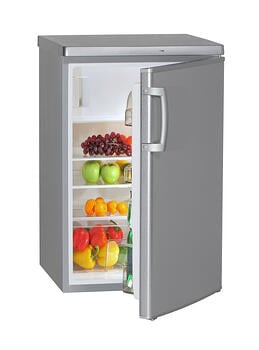
Having a mini fridge was one of the smartest things I could have done during my college career. I made sure to stock it with fresh vegetables and hummus for snacking, fruit for breakfast, and almond milk to put in my coffee. Some easy dorm-room snack essentials to have on hand (even without the mini fridge):

  • Chopped carrots, celery, broccoli, and cauliflower (I would chop this up at my parents’ house and bring it to the dorm with me!)123097912
  • Hummus
  • Nuts and seeds (cashews, almonds, and sunflower seeds are my favorite!)
  • Dried fruit
  • Natural peanut butter or almond butter
  • Portioned-out baggies of oats

3. Get involved in your campus fitness center with programs like First Year Fit.

The fitness center was where I spent my “me” time while I was in college. I loved experimenting with new classes, meeting people, and getting high on endorphins! Many campus fitness centers (NIFS included!) are hosting incentive programs to encourage new students to become gym members, try new classes, and get fitness into their weekly routine. The staff wants to help you get into your healthy living groove, so don’t hesitate to ask questions—that’s what they are there for.

4. Take the fruit.

Most campus dining halls have a bin of fresh produce that usually includes apples, bananas, and oranges. While I was in college, the dining hall staff really didn’t encourage removing foods from the dining hall, but grabbing a piece of fruit to go was okay. I always made sure to take one or two pieces to have on hand, in my bag, and ready to go as soon as hunger struck so that I had a healthy option to keep me focused and fueled through the afternoon. My tip is this: Always take a piece of fruit, even if you aren’t hungry at that moment and don’t want to eat it right then. Fruit can keep for up to two weeks without being refrigerated, and having that fruit nearby will give you an instant (and free!) snack to tide you over until mealtime.

5. Inspiration on YouTube

It’s not always easy to get to the gym, and when there is time to get there sometimes it’s hard to decide what equipment to use and what workout you want to do. This is where YouTube comes into play. I love following fitness professionals, healthy living bloggers, and my fitness center on YouTube for easy-to-follow workouts and motivation. Some of my favorites are NIFSindy, Jennifer DeCurtins of Peanut Butter Runner, and Livestrong.

NIFS 1st Year Fit program was designed to help keep students on a healthy track as you start a new chapter in your college career. This is a completely free program for IUPUI students who are NIFS members.

Get started today!

This blog was written by Tara Deal Rochford, contributing writer, group fitness instructor, and author of healthy living blog Treble in the Kitchen. Meet our other NIFS bloggers.

Topics: exercise nutrition healthy habits fitness center healthy eating weight management education

Healthy Eating on a Budget

469650455One of the biggest reasons people give as to why they aren’t eating healthy is the cost of foods, specifically fruits and vegetables. However, a study found that adults could eat the recommended servings of produce for $2 per day. Here are some ways that you can save money on your next visit to the grocery store!
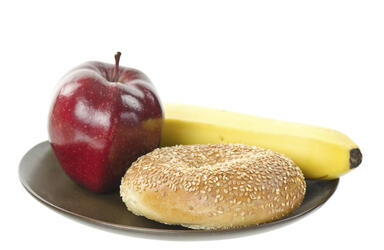
  • Don’t shop when you are hungry. A study from Cornell University found that shoppers purchased 19 percent more food and bought 45 percent more high-calorie snacks than those who had a snack prior to going shopping. This is an easy way to save 19 percent off your bill by having a handful of almonds, a piece of fresh fruit, or a string cheese before your next trip to the store.
  • Buy in season. Your produce will be cheaper if you purchase it during the time of year that it is most plentiful. Use this growing guide to see what produce is most abundant at which time of year. Also, take advantage of local farmers’ markets to get the best deals on locally grown produce. Use this map to see when and where the closest Indianapolis-area farmers’ market to you is. During the winter months, you can purchase frozen fruits and vegetables and they are just as nutritious and less expensive than fresh!
  • Buy in bulk. It makes sense that when you buy more of something, the individual unit price will be less per product; and this is true with food, too. So instead of buying single apples or oranges, purchase bags of them. Or, instead of the single-serving packets of oatmeal, grab a container of oats. Over time the savings will add up. The other option is to join a warehouse club like Sam’s or Costco that offers savings for purchasing in bulk.

There are lots of other ways to save money while practicing healthy eating, such as shopping at discount stores like Aldi, clipping coupons, and buying plain items and flavoring them yourself. The goal is to try as many of these options as you can so that you see the benefits to your health and your bank account!

For tips on packing healthy lunches, read this post from NIFS Dietitian Angie Scheetz.

This blog was written by Angie Sheetz, NIFS Registered Dietitian. Read more about the NIFS bloggers.

Topics: nutrition healthy eating HIT Indianapolis

Race Day Nutrition: Before, During, and After

You have trained for the marathon, half-marathon, triathlon or other race, and now it’s the big day! However, you need to make sure you are properly fueling your body with optimal nutrition to guarantee that you will cross the finish line feeling great! Here are some tips to ensure that will happen.

Before the Race154039075

It is essential to have carbohydrates before racing. They provide the best source of energy for your body and give the most efficient fuel for working muscles. Examples of these are whole-wheat pasta, brown rice, whole-grain breads, cereals, bagels, oatmeal, and fruits and vegetables.

Protein helps with sustaining energy for longer periods of time. A small to moderate amount of protein-rich foods is essential before exercising. Examples include skim milk, 1% milk, or low-fat chocolate milk; low-fat cottage cheese or low-fat cheese; boiled eggs; peanut butter; yogurt; a small amount of nuts; lean meat, poultry, or fish; and soy products. Fat is stored in the body and is used as an important energy source. It is especially important for endurance athletes, such as runners.

Try to avoid high-fat foods because they may slow digestion. Examples of high-fat foods are crackers, chips, snack cakes, or muffins. Instead, opt for healthy sources of fat such as peanut butter, nuts, and olive oil.

Eating sugary foods before a race may cause side effects such as upset stomach, diarrhea, and hypoglycemia (low blood sugar). This can have a major effect on your race! You might think you get that burst of energy from the sugar, but the energy will peak quickly and will not last for a long time. Avoid pastries, donuts, and high-sugar cereals.

Drink 2 to 3 cups of fluids such as water, 100% juice, low-fat or skim milk, or a sports beverage two to three hours before the race, and then 1 more cup of fluid 10 to 20 minutes before the race. A small amount of coffee (6 to 8 oz.) may be an option, but be sure that it settles well in your stomach.

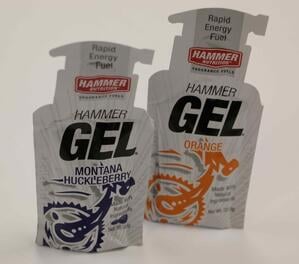
During the Race Gels

Drink at least 1 cup of fluid every 10 to 20 minutes during exercise (24 to 48 ounces per hour for most people). For every pound you lose during exercise, consume 2 to 3 cups of fluid. It is always good to calculate your sweat rate during training to know the proper amount of fluids you need to be taking in during the race. This can be done by weighing yourself before a workout and immediately afterward.

Water is always an excellent choice during the race, but for durations of longer than 60 to 90 minutes, it is important to take in some type of sports drink. Sports drinks provide a mix of water, carbohydrates, and electrolytes. Electrolytes are lost in sweat during the race, which is why sports drinks help replenish electrolytes in the body.

It is important to intake the proper amount of carbohydrates during the race. Consuming carbohydrates should be a goal during the race to help increase endurance; 60 to 70 grams per hour is recommended. Good options for getting in carbohydrates during the race are sports drinks, energy bars, GUs, gummy blocks, and Sport Beans. If you prefer consuming an energy bar during the race, it is important to consume a bar that is high in carbohydrates, but low in protein and fat. Make sure to take in 4 to 8 ounces of water with the gels or the energy bars to prevent an upset stomach. Consider how your body digests these different items. Go with the item that digests well for you and will help you stay at your optimum performance level. Always practice with these products during training and never try something new on race day.

After the Race

Here are some tips for recovering after the race:

  • Aim to consume a 200- to 300-calorie snack within 30 minutes of finishing the race.
  • Rehydrate with 16 to 24 ounces of fluid for every pound of body weight lost during the race.
  • Eat a well-balanced meal that includes protein, fluids, carbohydrates, and electrolytes.455658863
  • Aim for 15 to 25 grams of protein to be consumed within 30 to 60 minutes after the race.
  • Take in at least half a gram of carbohydrate per pound of body weight within the first hour after the race.
  • Have salty snacks and sports drinks to help with replacing electrolytes, if it will be 3 to 4 hours until your next well-balanced meal.

Remember that training with certain foods is just as important as the physical training for the event! If you need help, consider a personal nutrition coaching session from NIFS.

If you are interested in having your questions answered during a personal nutrition consultation, please contact Lindsey Recker, lrecker@nifs.org or 317-274-3432, ext 239. Learn more about Nutrition and Wellness services at NIFS.

Like what you've just read? Click here to subscribe to our blog!

This blog was written by Angie Sheetz, Registered Dietitian. Read more about the NIFS bloggers.

Topics: nutrition running marathon training triathlon cycling half marathon hydration endurance