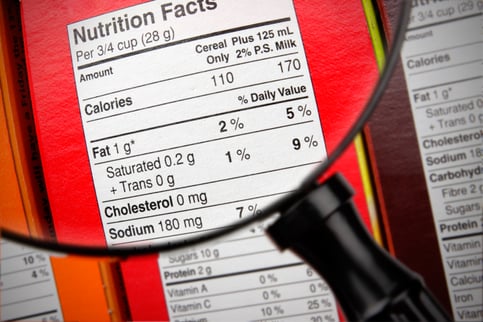
 In part 1 of this blog, I showed you how to interpret the nutrition information on the front of your favorite packaged foods. Now let’s get into the back of the package!
Serving Size and Servings Per Container
This doesn’t necessarily tell you how much to eat, but all of the values on the label apply to this chosen serving size. You might be surprised to see that many items you thought were individually packaged really are telling you that two cookies are 160 calories. Let’s say you eat the entire package (it happens!). You can take the “servings per container” and multiply that by all of the listed values. If two cookies are the serving, but you actually ate the entire bag, just take your 10 servings and multiply it by 160 calories to calculate that 20 cookies would be 1,600 calories.
Calories
For anyone trying to lose weight, it helps to cut back on calorie content, especially calories from packaged foods because they are often empty calories: the food gives your body a lot of calories but provides very little nutrition.
% Daily Values
Unless you are sticking to a strict 2,000-calorie diet, these numbers might not be very helpful for you, so don’t look into these values too much. For instance, 5% DV of fat provides 5% of the total fat you want to eat on a 2,000-calorie diet. In some areas you may need more or less than the 2,000 calorie % Daily Value. Low is 5% or less—aim low in saturated fat, trans fat, cholesterol, and sodium. High is 20% or more—aim high in vitamins, minerals, and fiber.
Total Fat
Total fat sums up all of the following values. Type of fat is extremely important. Often, items that are “reduced fat” end up increasing your sodium and added sugar to make up for what fat would have brought to the table—taste and body. So don’t shy away from fat completely. Just be mindful that fat packs a punch in terms of calories, so you want to practice everything in moderation.
Saturated Fat
The American Heart Association recommends keeping saturated fat to less than 5–6% of your total caloric intake. This means that if you eat about 2,000 calories per day, you will want to keep saturated fat at 13g or less per day. In general, about 3g of saturated fat per serving is a good goal to aim for, but make sure to try and stick to no more than 13g per day. The majority of saturated fat comes from animal products such as beef, pork, poultry, butter, cream, and other dairy products.
Trans Fat
The goal is 0g of trans fat. Keep an eye out in the ingredient list for partially hydrogenated vegetable oil. A trans fat ban is going into effect; however, the grace period means you may still have to watch for this harmful type of man-made fat. If a small enough amount exists, the serving size can be altered, and manufacturers may list trans fat as 0g even if there is a tiny amount of trans fat in the product.
Polyunsaturated and Monounsaturated Fat
The “healthy fats!” These fats may not always be listed. There isn’t a big reason to limit them other than they can add a large amount of calories fairly quickly and contribute to weight gain. However, these healthy fats don’t raise cholesterol like the saturated and trans fats do. These fats are found in nuts, nut butters, olive oil, fish, and vegetable oils. We won’t put a limit on these healthy fats because, in general, the more the better because they help increase your good cholesterol (especially if you are replacing an unhealthy fat with a healthy fat—think olive oil for cooking instead of butter).
Cholesterol
The body is capable of making its very own cholesterol from dietary fat intake, so current nutrition recommendations do not emphasize limiting dietary cholesterol; rather, they talk about limiting saturated and trans fat (dietary cholesterol is seen as impacting body cholesterol levels less so than dietary fat does). However, because the science is always changing, try to keep cholesterol to no more than about 200–300 mg/day because any dietary cholesterol is ingested and taken in as simply cholesterol.
Sodium
The 2015–2020 Dietary Guidelines for Americans recommend consuming less than 2,300mg of sodium per day. The American Heart Association recommends sticking to 1,500mg or less.
Total Carbohydrates
The sum of your starches, fiber, and sugar (added and natural) [see below]. Carbohydrates have somewhat of a bad reputation, but you ideally want most of your diet to stem from carbohydrates. So don’t shy away from these just because you might see a number you think is too high. Carbs provide your body with most of its energy needs, give your brain all of its energy supply, decrease chronic disease risk (fiber!), are key for digestive health (more fiber, yes!), and help with weight control (complex carbs!).
Dietary Fiber
Most experts agree that the average American should aim for a minimum of 25–30g of fiber per day. On average most of us come in at around 12g/day. See if you can get your 1–2 slices of bread to come in as close to 5g or more of fiber if possible!
Sugars
We aren’t sure if these are natural sugars (natural fruit sugars we don’t worry about!) or added (cane sugar), but we can sometimes deduce from the ingredients list whether most of the sugars are added or natural. If you see high fructose corn syrup, corn syrup, brown sugar, cane sugar/juice, honey, or maple syrup (there are many different names for added sugar!) near the top of the list, the sugar value is likely all added sugar. The American Heart Association recommends that men keep daily added sugar intake to less than 36g (9 teaspoons) and that women aim for less than 25g (6 teaspoons) daily. The 2015–2020 Dietary Guidelines are more lenient and recommend 48g or less daily for adults and 30–35g or less for children.
Added Sugars (optional)
Again, somewhere between 25-48g of added sugar daily or less is recommended (see above).
Protein
In general, the recommendation (dietary reference intake) is to consume about 0.36g of protein per pound of body weight daily. Anywhere from 10–30g of protein per meal is a good number to aim for. If you weigh 150 pounds, this means that you will want about 54g of protein daily (about 18g at each meal).
Vitamin D
600 IU or 15 mcg for most adults is recommended (aim for a higher %DV).
Calcium
1,000mg/day for most adults; women age 50+ 1,200mg/day.
Iron
Adult males and women over age 50 need 8mg per day. Women age 19–50 need 18mg. Pregnancy increases this need to 27mg daily.
Potassium
Aim for about 4,700mg of potassium per day (Dietary Guidelines for Americans).
Ingredients List
Pick items that have fewer ingredients—this usually means that they are less processed. Or bonus if the first three ingredients are whole foods. Ingredients are listed from highest weight to lowest weight. When it comes to crackers or bread, look for “WHOLE wheat” as opposed to “enriched flour” to pick breads that contain the entire grain. Whole grain, whole wheat, whole [other grain], brown rice, oats/oatmeal, or wheatberry means the grain is WHOLE. Wheat, semolina, durum wheat, and multigrain mean you might be missing some parts of the grain. Enriched flour, wheat flour, bran, and wheat germ mean there are no whole grains.
***
It’s no wonder that we are so confused by labels—there is a lot of information to try and remember and process! The best way to avoid being misled is to avoid most processed foods. With most whole foods (apples, potatoes, oats, etc.), we can be certain that we are not getting too much or too little of any one nutrient. But even dietitians enjoy the convenience (and taste) of packaged foods every now and then, and we hope that the tips in this article help clear up some confusion for you.

This blog was written by Lindsey Hehman, MA, RD, CD. To learn more about the NIFS bloggers, click here.

 Ramp Up to Weight Loss is a program designed to do exactly what the name suggests: ramp you up to weight loss. It’s a 16-week program that provides various tools to help you get a head start on achieving your goals. These tools include meeting with a Registered Dietitian, attending coaching sessions to help set and manage goals, and meeting with a trainer twice a week to walk you through workouts. As a weight-loss member, you also have access to the facility and group fitness classes every day. These resources are what makes Ramp Up one of the most popular programs at NIFS.
 The ultimate goal by the end of the 16 weeks is to make sure you feel confident in your own abilities to continue the journey that you are on. Whether you are struggling with nutrition, knowing what to do in the gym, sleep, or stress management, this program provides resources to teach you how to handle these situations in ways that will aid you in achieving goals. We start by setting one long-term goal, then break it down into short-term goals to act as stepping stones to get there. After all of the goals are finalized, we look at what action steps can be taken to achieve them. Setting realistic goals is essential for staying on track, and reaching them builds confidence in your abilities.
 Standing in the bread aisle, flipping over the seventh loaf of bread, scanning the fine print, asking yourself which brand is best… Giving up trying different bread after five minutes and just picking what we usually go for—we’ve all been there! I want to help clear up the confusion by offering some recommendations on what numbers to look for and the most important places to look on the label to decide what brand is healthiest, whether that be crackers, bread, peanut butter, granola bars—you name it!
 There is good reason for confusion surrounding what might arguably be one of America’s favorite spreads, topping everything from toast to popcorn to potatoes. The butter-versus-margarine debate has been a hot topic for the last several decades and is still a slippery subject. We have begun to understand the possible dangers of our high saturated fat consumption to our health. However, at the same time we are told that margarines are “artificial,” while butter is the all-natural choice. Which do we choose?
 Whether you are starting your first year in college, sending your kids off to school, or are teaching classes this school year, make sure that your nutrition stays at the top of your priority list. It can be easy to get bogged down in your day-to-day routine and quickly lose sight of your goals. Follow these steps to help you stay on track this year.
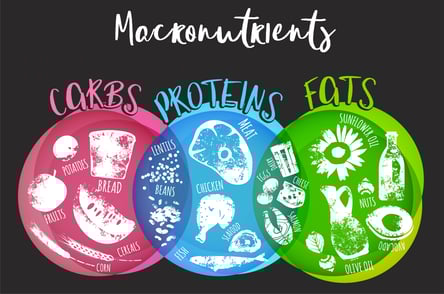 A diet that is balanced in its macronutrient distribution can help reduce the risk of disease and help with lasting weight loss. You might have heard of others tracking their “macros” and wondered if this is something that you need to do. So, why and how do you do this tracking?
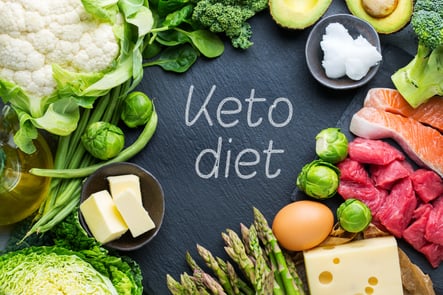 The “keto diet,” which is short for ketogenic diet, is a low-carbohydrate, high-fat diet that is similar to the
  Start your day off right by nailing breakfast with a healthy, nutrient-rich meal. Breakfast helps kickstart your metabolism and burn more calories throughout the day. Eating breakfast tells your body there are plenty of calories to be had throughout the day. When you skip breakfast, the message is clear: conserve calories rather than burn them. Those who skip breakfast may eat fewer calories but still tend to have higher BMI.
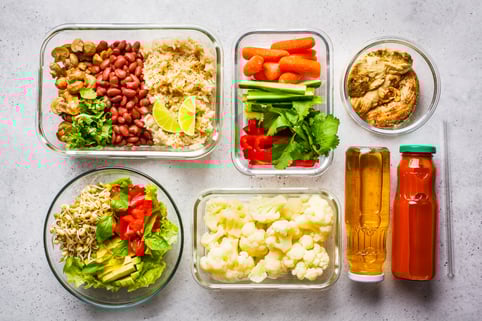 “Aim to consume a diet that is high in fruits and vegetables.”
 There is no escaping the colors of the sugary candy that is around every corner. From jelly beans to chocolate bunnies and Cadbury eggs, the temptations are endless and the calories are empty.