
 Every March, the American Academy of Nutrition and Dietetics celebrates National Nutrition Month. This campaign is intended to put the attention on the importance of making informed food choices and developing sound eating and physical activity habits. If you started out the year with resolutions or a goal to be healthier but have already fallen back into old habits, take a look at these 10 messages and use National Nutrition Month as an excuse to get back on track.
- Discover the benefits of a healthy eating style. Take notes on how you feel when you eat a balanced meal. Do you have more energy and are not as sluggish? Did you enjoy the fresh flavors from foods that aren’t processed or packaged?
- Choose foods and drinks that are good for your health. Each week, challenge yourself at the grocery store to try a new-to-you food or drink that is good for you. This will help expand your options when it comes to making healthy meals and snacks.
- Include a variety of healthful foods from all of the food groups on a regular basis. Aim for three food groups at every meal and two food groups at snacks. This will help increase the balance and variety of the foods you are eating.
- Select healthier options when eating away from home. Plan ahead. Check out the menu and see what you want to order before you arrive. Then try to balance your meal with only one higher-fat item and healthier sides, entrees, and beverages.
- Be mindful of portion sizes. Eat and drink the amount that's right for you, as MyPlate encourages us to do. Use your hand to guide your portion sizes! Your fist is the size of a serving of fruits, veggies, and grains. Your palm is the size of a serving of meat. Your thumb is the size of a serving of oil.
- Keep it simple. Eating right doesn't have to be complicated. Look at your plate and half of it should be filled with fruits and veggies, one-fourth with whole grains, and one-fourth with lean protein. Sprinkle in some healthy fat and dairy, too!
- Make food safety part of your everyday routine. Wash your hands and your produce. Don’t cross-contaminate your raw meat, and cook foods to their proper temperatures to avoid any food safety issues.
- Help reduce food waste by considering the foods you have on hand before buying more at the store. Make a meal plan based on what foods you have and then create a shopping list to fill in the holes. This will help reduce waste and save you money on your food bill, too!
- Find activities that you enjoy and be physically active most days of the week. What did you like to do as a kid? Ride your bike? Dance? It never felt like exercise then, so find something you enjoy doing and it will be something you will look forward to doing daily.
- Consult the nutrition experts. Registered Dietitian nutritionists can provide sound, easy-to-follow, personalized nutrition advice to meet your lifestyle, preferences, and health-related needs. NIFS has Registered Dietitians that are here to help! Check out our website for more information!

This blog was written by Angie Mitchell, RD, Wellness Coordinator. To find out more about the NIFS bloggers, click here.
 When it comes to nutrition and your heart, the things you hear in the news can be very confusing:
 If you are like most people, the dreaded
  What’s your motivation for working out? Eat healthy? What’s your motivation to get enough sleep or practice de-stressing with yoga or foam rolling? What’s your motive to get your friends and family to go on a walk or to the gym with you?
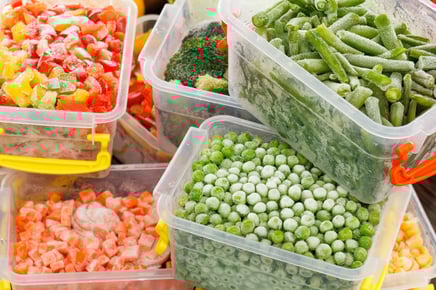 Since you were young you probably have been told to eat your fruits and vegetables. Fruits and vegetables are the nutritional powerhouses of your diet. They offer essential vitamins, minerals, fiber, and phytochemicals that not only keep your body healthy, but also protect against cancer, heart disease, stroke, and other health conditions. During the winter months, fresh fruits and vegetables are more limited and generally more expensive. As a result, many of us turn to canned or frozen options. So are canned and frozen options just as healthy as the fresh produce we consume?
 This year make an effort to change small things and create healthier habits. You'd be surprised how little changes can lead to big benefits.
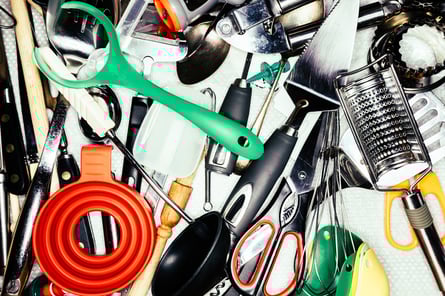 When my husband and I got married and combined our kitchens, he was appalled at the amount of gadgets that filled my drawers and cabinets. I have always loved the single-use items such as the pineapple peeler and corer, the avocado slicer, the strawberry-top remover, the banana case keeper—and the list goes on and on and on!
 It’s Halloween time, and that can only mean one thing: sugar, lots of sugar! Toward the end of summer, stores start to taunt us by placing all of the Halloween candy out on display. What’s worst of all is that the candy is in tiny, easy-to-eat servings. By the time the actual day of Halloween rolls around, we’ve already been thumbing through fun-sized candy the entire month.
 Most of us are aware that the number of Americans diagnosed with diabetes is increasing, but so is the number of us at risk.
 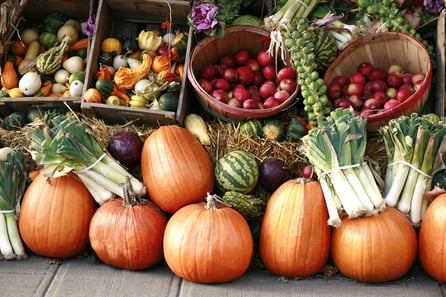 The air is crisp, football season is in full swing, and the plentiful bounty of summer’s gardens is all gone. Instead of reverting back to the frozen fruit and veggie staples that are typical of fall and winter, experiment with some of the tasty foods that give fall the name the harvest season!