 There are numerous different products on the market now that are supposed to help improve your strength training. From lifting belts to Mark Bell’s patented Slingshot, there is more gear available now than ever. For a novice lifter, the multitude of available products will probably just leave your head spinning. What is actually helpful and what is just a moneymaker? Here is my take on some of the most popular products out there.
Lifting Belts
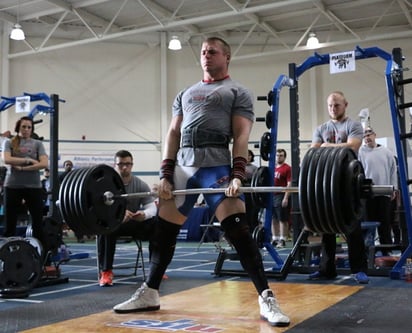
There are some products that I will advise most lifters to stay away from, but this is not one of them! A lifting belt is imperative to a good strength training regimen. Any kind of substantial load for a squat or a deadlift is going to put a lot of pressure into your abdominal cavity, as well as onto your spine. A lifting belt acts as a brace when the lifter takes in a large breath and pushes their abdomen out into the belt. This ensures that the spine stays stable in place and has nowhere to go, resulting in a much-reduced risk of injury. This piece of equipment is the first that I would recommend purchasing for any new lifter, especially if you are thinking about competing in powerlifting.
Not sure if you want to compete? Try it out at the annual NIFS Powerlifting Competition! It is a great starter meet to get your feet wet and see what competition is all about.
Olympic Lifting Shoes
You have probably seen or heard of lifting shoes before. They have an elevated heel and make a nice, loud “SMACK” sound on the platforms at NIFS during a properly executed Olympic lift. These shoes can be helpful for more than just Olympic lifting, though. They can be very helpful for front and back squats (depending on your body type). If you have the right body type (usually tall and lanky), these shoes will create better leverage for you to squat more efficiently. The elevated heel actually shifts your center of gravity forward just a slight bit, which allows the squatter to sit backwards and reach “good depth” easier.
These shoes can be somewhat costly for students. Try to find a good deal on a pair of lifters if you are strapped for cash. The more expensive pairs (Nike Romaleos) can run up to $250 or $300, but Adidas makes a similar shoe that you can find for around $75. If you are not an Olympic competitor, there is not much need to spend a couple hundred dollars on these shoes.
Mark Bell’s Slingshot
So, we have looked at an “almost necessary” product and a “nice to have, but don’t totally need” product. Here is an example of a “don’t really need at all” product. Mark Bell’s Slingshot is a highly elastic band with two arm sleeves on the side, which, once you put the Slingshot on, causes the elastic band to stretch across your chest. Basically, this tool allows the lifter to handle heavier loads on the bench press than they normally could. The few advantages to this product are
- Less shoulder pain for those with very severe shoulder issues
- Overloading the bench press with above-maximal weight
- Frankly, loading your ego by seeing how much you can bench when using it
If you’re thinking I am just hating on Mark Bell or his product without just cause, please reconsider. I am a big fan of Mark and his no-nonsense business style. He knows what his product is for and to whom he should market it. I even have a Slingshot of my own! That being said, I think there are too many young lifters who buy his products just because they see him as an idol and they want to be like him in any way possible. The Slingshot is a tool that can be utilized by experienced lifters, and it can be helpful. But, for the beginner lifter, this product will almost certainly do you more harm than good.
Start with the Basics
There is a time and place for most lifting products, but most of them are not needed until you are way down the road to being competitive. Start with the basic products that will benefit you, not confuse you. A lifting belt is a great product to start with, and possibly a pair of lifting shoes. Do your research about all lifting products and try to determine which ones will work the best for you. I urge you to not just buy any of these products on a whim, thinking that they have to help you because somebody famous said so.

This blog was written by Aaron Combs, NSCA CSCS. To find out more about the NIFS bloggers, click here.
 Next up on the minimal gear with max results list is truly one of my favorites, the
 Okay, so the title is a bit misleading. You shouldn’t really strive to be the worst at what you do. What I mean by that title is to put yourself in situations where you are consistently surrounded by people who are better than you. If you are too afraid to associate with those who are clearly more skilled, more talented, and harder working than you are, how will you ever figure out why they are better than you in the first place and find motivation and attitude to improve?
 What Is Functional Training?
 For just shy of a year now, NIFS has had the honor and privilege of assisting in the training of the
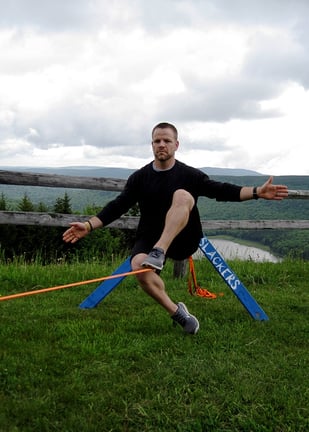 I recently attended an event that was pretty far outside my usual activity base. I consider myself a lifetime mover and a lifetime learner, but I have to admit this event had me a bit concerned about my success rate, comfort level, and quite honestly my enjoyment. After all, I was supposed to be on vacation. The event I am referring to is a rather large one called
 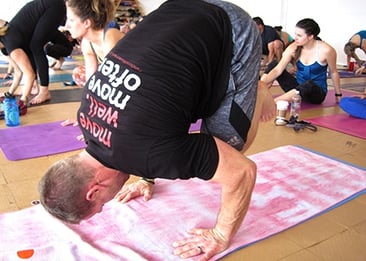 Prior to this trip to
  I am a huge believer that if there is a will, there is a way, and to always find ways to get things done. Just like the tree in the picture growing on top of a rock, it found a way to get tall and strong even though it is out of its usual environment of growing from the ground. IT FOUND A WAY. You can always find a way to eat right, exercise, get enough sleep, decrease stress; you just have to reach and work for it. There is a way; find it. This tree did, and so can you.
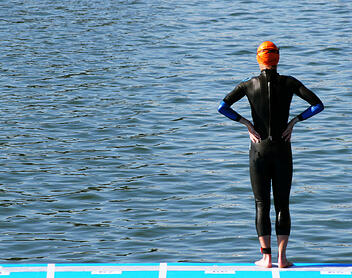 For many triathlon participants, the swim is the most difficult discipline. Open-water swimming is different than following the black line on the bottom of a pool. Here are some tips to help the swim portion of the race go more smoothly.

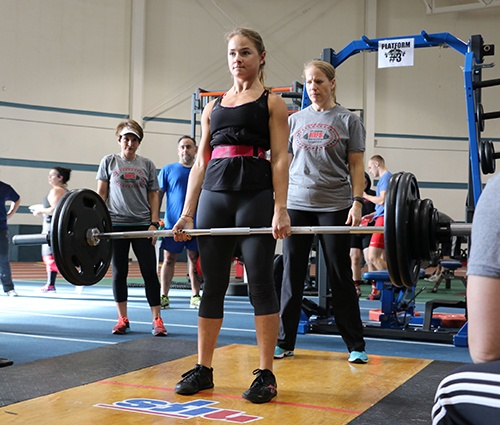 The deadlift is a creature all its own. There is no other exercise like it, and there are so many reasons behind that. It can be one of the most beneficial total-body exercises, yet at the same time, one of the most detrimental if performed incorrectly. Numerous factors go into this very important lift, but there are a few tricks to keep in mind to help you set up and perform well consistently while avoiding injury.
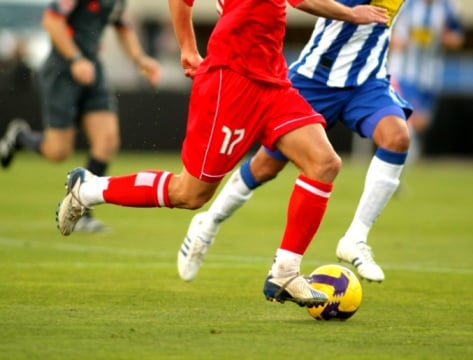 Once the competitive season begins, scheduling time to get in to lift is a lot more difficult due to the practices, games, and travel that are happening. To me, in-season lifting is sometimes undervalued in the competitive/athletic world because of the fact that the primary focus is to win games or matches, not lift weights. However, I believe that this is one of the most important (if not the most important) times during the year because of what lifting can do for the athlete throughout the competitive season and into the off-season.