
 One of the most important elements of performance and exercise is rest, and it’s also one of the hardest things to do! According to ACE (a fitness governing body), recovery is the most important part of any person’s program. Taking time to rest your body can be challenging mentally, but rest has significant physical benefits.
The Recovery Stage
To get better at a sport or to enhance your personal fitness, you must expose your body to stresses. Different stresses include training and exercise programs like weightlifting, sprinting, endurance runs, etc. But upon completion of these stresses the human body needs to adapt to the stresses it just underwent, and this is where we get the recovery stage.
Neglecting the recovery stage can lead to injuries. Many programs have built-in rest days, but if you are creating your own program to follow, be sure to find where to fit one in! It’s essential to listen to your body and gauge how you are feeling as well. If you are physically worn out, take a rest.
It’s Worth Making the Time for Rest
So maybe this is enough to get you to take a day or two off a week. But I know there are still some of you out there saying, “Okay, Amanda, thanks for the tip, but I’m in the middle of training hard right now for the half Ironman in Wisconsin, so I can’t afford to take a day of rest.” Let’s take a look at the benefits of recovery on the body.
The whole purpose of recovery in exercise is to allow your muscles to repair themselves and to engage muscles that are sore from your workout. There are also different things that you can do during the recovery stage to help move the process along and come out ready to perform better than your pre-rest stage.
Top 5 Recovery Techniques
Here are some things to keep in mind and apply while recovering:
Rest: Now we are talking about actual rest, sleep. This is one of the most important ways to get your body to quickly recover from the physical and mental demands of hard training.
Hydration and eating: One of the most vital aspects of both training and recovery is being properly hydrated. And nourishment falls right in line with hydration. Food helps to restore the body’s energy supply, so try to eat good, healthy options at the right windows of time to enhance your performance and recovery.
Massages: Getting a massage helps to loosen up muscles, increase oxygen and blood flow into muscles, remove lactic acid buildup (which is what makes you sore), and deliver nutrients from your body to your muscle.
Contrast therapy: If you are or were an athlete this may be familiar to you, but those who don’t have a facility at their disposal might not use it as frequently. You will be contrasting between an ice bath and a hot shower. You want to be sure to start and end with cold (like an ice bath). Jump in the ice bath for about 45 seconds and then into the hot shower for 3 to 4 minutes. Repeat this three times. The benefits of contrast therapy are to increase blood flow to the muscles and speed up the removal of lactic acid.
Ice bath: A familiar process to many, an ice bath causes the blood vessels of the body to constrict, pushing the blood away from the muscle because of the cool temperature. Once you are done and start to warm up, the vessels open up and allow blood flow back into the muscle, bringing with it more oxygen to help you recover.
No matter where you are currently in your workout regime, I encourage you to take some recovery time. It will benefit your performance in significant ways down the road. Consider trying a method from above that you haven’t before and see if it helps you. Different things work for different people, so find out what’s best for your body. You can also consult one of our health fitness specialists here at NIFS for advice. Most important, take time to rest and recover to avoid injury!

This blog was written by Amanda Bireline, Health Fitness Specialist. To find out more about the NIFS bloggers, click here.
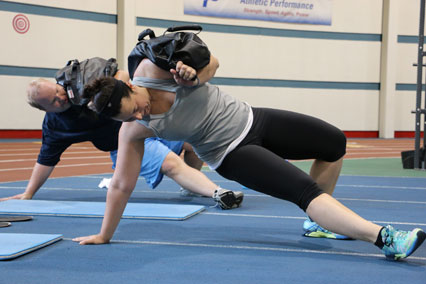 When you think of the term “economy,” what is the first thing that comes to mind? Money would probably be number one, and maybe government and the idea of debt would more than likely come to mind next. There is another economy that should be as well known, and that is your training economy. Simply put, your training economy is the rate of return that you get from the methods and practices of your current training program.
 “Start somewhere today. Don’t put it off. You can do something, no matter how ‘small’ you think it is in terms of your long-term goal. Every step you take is one you’ll be thankful for when you get there. Remember: You're lapping everyone who’s still on the couch.” —

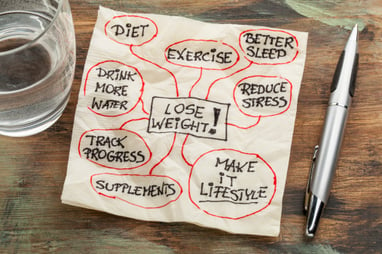 Are you excited about your progress thus far in 2020 toward those goals you set back in January?
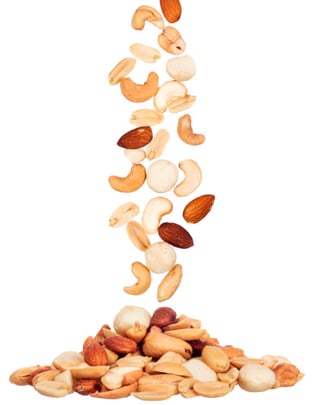 Nuts, basically one of the original food groups and predating even the most basic diet, have been a part of human existence since the beginning, and there is good reason. They taste good and are loaded with nutrients. The properties and benefits of nuts vary based on each individual nut, with some options being a little healthier than others.
 A recent
 Even though it’s been a few years since I graduated, it still feels like I was just walking through campus and living in the dorm. I absolutely loved college, and while many people gained the
 NIFS would like to highlight Brian Kumle, one of the recent graduates from its 14-week

 Probiotics are live bacteria and yeasts that are good for your health, specifically your digestive system. These “good” types of bacteria help to keep your gut working properly.
 There are several different ways that you can train. Common training methods are interval training, total time and sets/reps, but heart rate training is