<img height="1" width="1" style="display:none" src="https://www.facebook.com/tr?id=424649934352787&amp;ev=PageView&amp;noscript=1">

NIFS Healthy Living Blog

Tough Sledding: Strength, Explosiveness and Metabolic Training

Football season has arrived again! College and professional training camps have wrapped up and each player is hoping that they pushed themselves hard enough in the offseason and that the diligent work will pay off when they take the field. From the early-morning training sessions to late-night practices, the opportunities are endless to improve their skill set to perform at the highest level on Saturday and Sunday afternoons.

Football players train in a variety of styles and programs that yield different results throughout their calendar years. They aim to become bigger, stronger, and faster in order to gain an advantage on their opponents during the season’s games. Barbells, kettlebells, dumbbells, bands and medballs, among many other tools, are used during this process.

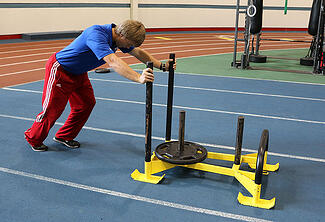
The Weighted SledAlex-Sled

One of my favorite tools as a former football player turned strength coach is the weighted sled. The sled is a great item that allows anyone to get a beneficial workout, regardless of their training goal. It utilizes nearly every muscle in your body and can be as challenging as any exercise you can do in the gym. You do not have to be a football player to train like one.

Sled Workouts

Let’s go over a few ways you can implement the sled into your workout to maximize the time you spend at NIFS. Below I have listed three options for sled workouts depending on what your training goal might be, broken down into three categories: strength, explosiveness and metabolic. Below the goal you will find sets, reps, a (very) rough idea of weight and distance. Enjoy!

Strength
  1. 5–6 sets of one 10-yard repetition (2 minutes rest between sets)
  2. High weight being pushed very short distances ( < 15 yards)
  3. This is not a fast sled push
Power/Explosiveness
  1. 6–8 sets of one 15-yard repetition (1–2 minutes rest between sets)
  2. Moderate amount of weight for short distances
  3. As fast as possible on each repetition
Metabolic
  1. 2–3 Rounds of:

          a. 1 repetition of “Sled Suicide” (10 yards, 15 yards, 20 yards)
          b. Squat Jumps x20
          c. Push-Ups x10
          d. Bodyweight Lunges x10/Leg
          e. Mountain Climbers x30 (15/side)
          f.  30 seconds to 1 minute rest between sets

      2. Light weight for longer distances

      3. Constant movement throughout the whole circuit

This blog was written by Alex Soller, NIFS Athletic Performance Coach. To find out more about the NIFS bloggers click here.

Like what you've just read? Click here to subscribe to our blog!

Topics: fitness center workouts metabolism strength

10 Better Ways to Do 10 Exercises (Part 3)

Salutations NIFS blog followers! Today’s blog is part 3 of our blog series, “10 Better Ways to Do 10 Exercises.” In the preceding two installments, we took a look at bettering your pushups, helping your squats, and building better pull-downs, in an attempt to help you understand that there may be a better, safer way to exercise and that NIFS is happy to facilitate your fitness experience with these injury-prevention tips.

Now, here are the final three improved exercises.

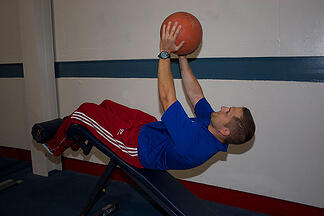
8. Weighted Sit-ups on an Incline Board

We’ve all seen the famous boxing workout montage and its famous weighted sit-up scene. It must be legit, right? Well, to be honest, the sit-up isn’t exactly the best exercise for your spine. Again, like the torso rotation machine in part 2, we find flexion on a loaded spine to be a loaded gun that could spark any number of injuries.

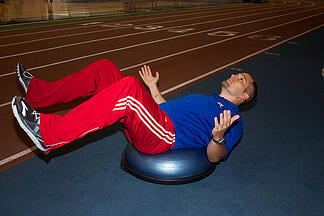
A good, challenging alternative would be a dead bug on a BOSU balance ball. With your body positioned on the BOSU ball so that you are completely balanced on your back, hold your position (like a plank) without arms or feet touching the ground. To modify the exercise, tap one heel to the ground to regain balance. Start with a 30-second period and progress in time as you become more proficient.

WEIGHTED-BENCHBOSU

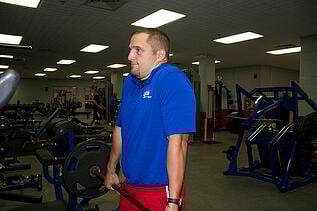
9. Rotating Shoulder Shrugs

The shoulder typically gets a lot of workload, especially when you think about its role in so many exercises. Shrugs, though, are a classic bodybuilding movement and have their place among those who are trying to sculpt their bodies. The main problem lies with the impingement in the shoulder while performing a rotating shoulder shrug.

You can alleviate the need for a shoulder shrug by taking it out of your routine altogether and focusing more on overhead dumbbell press (which works the shoulders as well as the traps). For those who still want to do a shrug, I suggest making the movement simpler by shrugging only up and down.

SHRUGOVERHEAD


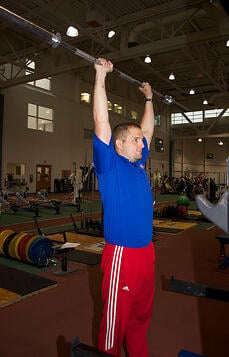
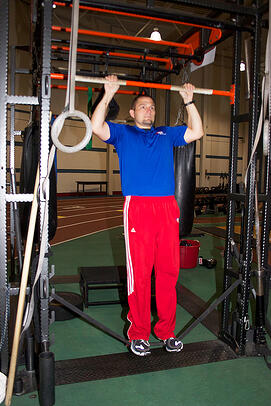
10. Kip Pull-ups

Kip pull-ups can be considered an exercise that teeters on the edge of dangerous. The exercise itself, if done properly, can be seen as a tool for individuals seeking to increase stamina in the upper body when there is a lack of strength to perform standard pull-ups. By using momentum, an individual is able to “swing” themselves into a pull-up; creating substantial stress on the shoulders and connective tissue that holds it all together. What makes the exercise most dangerous is when underqualified individuals teach inexperienced, deconditioned individuals the exercise improperly (which can be said about all exercises).

To get an idea of where you should start, begin training with an assisted pull-up machine, gradually decreasing weight until you are able to do multiple sets and reps without extra weight. Perform the exercise fairly deliberately, counting a three-count on the way up and down and making sure to breathe. Force yourself to have good posture from the very first repetition. If done properly, lats, biceps, grip strength, as well as core should all improve in strength. If an assisted pull-up machine is not available, another option is to use a superband on your foot or knee to simulate the same move.

MACHINE-PULLUPband-pullup

I hope you have been inspired to branch out and try new exercises that we feel will give you the safest workout with the best results. If you have any questions regarding program design, do not hesitate to contact the NIFS track desk to schedule an appointment with a degreed, certified staff member.

Muscleheads, rejoice and evolve!

This blog was written by Thomas Livengood, Health Fitness Specialist at NIFS. To find out more about the NIFS bloggers click here.

Like what you've just read? Click here to subscribe to our blog!

Topics: fitness center injury prevention strength exercises core strength

Heavy Metal: Powerlifting Strategies Can Lead to Big Fitness Gains

Being the youngest of six boys is a badge of honor that I wear proudly. Growing up in my rather large family was not always easy. Most of the time money was pretty tight and we were not afforded some of the luxuries that other families may have been. Hand-me-downs and bumming lunch money from friends were standard operating procedures for a great deal of my childhood.

No matter how hard things got, there was always one constant: sport. Football and powerlifting were the two main obsessions in our household. As the youngest Maloney lad, I had many great examples to learn from andbrotherpyramid just as many expectations to live up to. You guessed it, that’s me on top of that pyramid crying my eyes out about something I don’t remember—I’m sure one of my older brothers had recently given me “something to cry about” (a phrase we heard a lot).

Look beyond the cuteness of this photo and you will see one of the messages of this post. Training to compete in powerlifting events provided a foundation on which I built my lifelong fitness. The stronger the foundation, the bigger and more impactful things you can stack on top. Powerlifting provided so many opportunities; we didn’t know it then, but we were solidifying practices that are looked on today as the first best steps in overall fitness improvement. The stronger you are, the more accomplishments are to be had.

I want to share with you some of the huge gains training as a powerlifter has provided me over the years—not all physical, either. These are results I know you can have when you implement powerlifting training ideas into your fitness program.

Discipline

Consistent with most aspects of your life, strong discipline will always lead to strong results. It takes hard work to get better at anything, and it takes discipline to consistently provide that hard work. To follow a specific program and sound plan of attack is not always easy to do. Making the decision to get better at something and taking the proper and consistent steps to get there takes discipline. I’m not referring to only the physical stuff, but also the mental and emotional stuff as well. Those days spent in the weight room filled me with proper etiquette and respect for that environment and the discipline it took to be a part of it.

Rick Huse paints a brilliant picture of the atmosphere of those days in the weight room in his post, Old-School Weightlifting Gym Etiquette. Those rules and concepts set the tone for a strong work ethic in the gym that was ingrained early and often and has served me and countless others well along the fitness path. “There are two types of pain in this world: the temporary pain of discipline, or the permanent pain of regret” is a motto I live by, and it was learned early in life.

Absolute Strength

In this post, I referenced a “bucket” analogy that I have adopted from legendary coach Dan John. Think of absolute strength as a bucket. The bigger the bucket, the more concepts or abilities you can put into the bucket. Building absolute strength will result in gains in many other fitness aspects such as power, endurance, mobility, motor control, and sport-specific skills. The specific lifts in powerlifting, Squat, Bench Press, and Dead Lift, transfer to overall fitness capabilities in many movement patterns and sport skills. We all squat to sit down, we all push something away from our bodies, and we definitely bend over and pick up heavy things. Being stronger in these lifts not only allows you to compete at a high level in this sport, but it carries over to daily life and our pursuit of feeling better, losing weight, and gaining muscle.

I have seen the shirts that read, “Strong is the new sexy,” and it might be, but strong has always been the foundation for overall athleticism and functional capabilities. I am pretty confident that without growing my “bucket” in those early days in the weight room, there are many things I wouldn’t have been able to accomplish down the road and to this day. Get strong, and stay strong! Your tomorrow will thank you for it.

Accomplishment

Implementing powerlifting strategies provides a progressive message to fitness that is so important. Unless you came from the planet Krypton and wear a red cape, it is unlikely you were able to step into a squat rack and get low on a 1,000-pound barbell-bending squat. But for most of us, that is what we wanted: for that bar to bend! We had to work up to that kind of performance or ultimately pay the price of injury. When you see the weight go up after all of the hard work, there is nothing like that sense of accomplishment. Powerlifting is full of those victories, and they can happen often. There are few things more powerful than seeing your hard work pay off in big ways. The motivation and inspiration you feel when you hit a PR (personal record) or when you add that extra 10 pounds you were unable to do last week is so impactful and will keep you striving for more.lifting_picmaloney
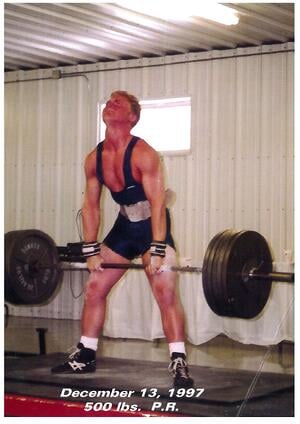
If you are just starting out, you can see big improvements quickly, spurring you on to get even better and stronger. Conversely, from defeat comes progress. Not getting a lift in a meet, or dropping out on that last set in the weight room, can be just as powerful as, if not more powerful than, the successes you have. You realize you have to work harder, be more disciplined, and improve that absolute strength.

Strength was stressed early and often in my early years. That has led to an ever-improving fitness level throughout my life, and it can do the same for you. Witnessing huge lifts, like the one in the photo to the right of my brother Andy, fired me up to be better and stronger, and has paid huge dividends in my athletic and fitness life. I look back on those early days in the weight room training with my brothers—the smells, loud music, and the emotions that packed each training session—and I know that because of it, I have been able to succeed not only in the physical realm, but in the mental realm as well.

Tony Maloney is the NIFS Fitness Center Manager and leads Group Training on Sunday through Thursday.

Topics: fitness muscles weight lifting weightlifting strength power

Do You Even Lift, Bro? Weightlifting for Beginners (Part 2 of 2)

Episode #2: Have a plan, ink the plan, and work the plan.

Tony-weightsIn the first episode of “Do You Even Lift, Bro?” I concluded with the notion of absolute strength as the foundation to fitness. The stronger you are, the more things you will be capable of across the fitness continuum. World-renowned coach Dan John explains this best for me with a bucket analogy: The bigger your bucket is (your absolute strength), the more room you have to put in things like mobility, power, speed, and endurance, among other things. To get stronger, you have to lift heavy things--bottom line.

So now I hope you all understand how important strength is, and the weight room is where you can really develop your strength. The key is having the proper progression in the program that will overload the system, causing adaption and ultimately strength in the major movement patterns that we live in. Now, I can talk about programming for 8 hours straight and still barely scratch the surface. My hope in this post is to give you a few super-important facets that should be a part of your weightlifting program. I’m going to work fast here, so try to keep up!

Master These Movements

Human movement can be broken down into six major movements. When planning your assault in the weight room, be sure to include these movements in your attack:

  • Squat: Bending at the knees and hips as if sitting down and standing up
  • Hinge: Bending at the hips to pick something up from the floor, like a Dead Lift
  • Push: Pushing weight away from your body either vertically or horizontally, like a push-up
  • Pull: Pulling weight toward the body, like a pull-up
  • Lunge: Lifting legs in a split stance
  • Rotary/Core: Spine stabilization and rotating

Pairing movements is one of the best ways to get the most out of your time in the weight room. To reduce residual fatigue, I recommend pairing movements that complement each other, such as a Squat with a Pulling movement. The Squat is an anterior (front) lower-body movement, while the Pulling exercise is a posterior (back) upper-body movement. Simply put, one can rest while the other is in motion, maximizing effort and making recovery time more efficient.

Plan in Four-Week Blocksweights

Again, I could spend hours discussing the different parameters of the “block system” of programming, but I’m not going to. All I want you to keep in mind when planning is to keep it to a month-long (four-week) cycle. After you have completed a workout four times, it’s time to reevaluate and progress. We can define progression as increasing the weight used in an exercise, increasing the number of reps, or adding something to the exercise that makes it more demanding. Changing all these things at once is not the best idea, but making some changes is key to providing the overload principle necessary in strength gain. You have to change it up!

Reps, Sets, and Weight Selection

I know I sound like a broken record, but there is so much that has be taken into account when discussing these three key aspects of your program. Goals, fitness level, and timeline just to name a few, are all things that need to be considered when designing your plan, and I can’t cover all these details in one small blog post. As a safe and beneficial rule of thumb, 2 to 3 sets at 6 to 8 reps of each movement will do the trick. The weight should be challenging enough to complete all reps, but not sacrifice the form of the movement. If you know your predicted 1RM (hyperlink to fitness assessment) of each movement (which you can find in a free assessment with an HFS here at NIFS), you can use percentages of that weight in your sets and reps. Use the “first and last” rule: the last rep should look like the first rep. I would also recommend starting at a lower weight for your first set, and increasing weight every subsequent set. Again, this is the overload concept that is the cornerstone of building strength.

I can’t stress enough the importance of having a plan and working that plan. Having a sound plan of attack will keep you on track, provide accountability, and show you where you were and where you are now. I urge you to seek out the advice of a qualified fitness professional when beginning or tweaking your strength-training program. I’m talking to the veteran lifter, too; you can always improve on something you are doing. Implementing the preceding strategies is a great first step.

If you are interested in setting up a personal fitness program with Tony click the button below:

Free Fitness Assessment

Tony Maloney is the Fitness Center Manager and leads group training Sunday through Thursday.

Topics: fitness center workouts weight lifting weightlifting strength

Do You Even Lift, Bro? Weightlifting for Beginners (Part 1 of 2)

Episode #1: 5 Game-Changing Tips for the Weight RoomTony-1

I spent a great deal of time in a weight room growing up, and still do. The “Iron Church,” “The Metal Shop,” and “House of Pain” were all names I used to reference a place where I saw so much growth in myself, both physically and mentally. I remember watching one of my brothers train to power lift with the U.S. team when I was pretty young, and couldn’t wait to get my hands on all the stuff. Flash forward a few years and I was the one on the training side preparing for high school athletics. Man, there was nothing like the weight room! The feel of it, the smells (not always pleasant, but part of the charm), and the clanking of metal on metal were all rushed to the senses, signifying that a lot of hard work was about to go down!

I learned so much during that period of my life when I was in the gym every day; I definitely thought I had everything figured out on how to get strong and stay injury free. As I got older and wiser (okay, older and after many mistakes), I needed to find a way to lift so that I could lift another day. As fitness evolves, we learn bigger and better ways to get the most out of every workout.

5 Game-Changing Tips for the Weight Room

In the first installment of this beginner’s guide, I would like to share with you 5 game-changing tips to rock the weight room like you never have before. In future episodes, I will dig a little deeper into each of these tips (along with a few extras) and outline a guide that will allow you to get the most out of it.

1. Have a plan, ink the plan, and work the plan.free

Going into a place full of things to do without a plan will usually result in meandering around and wasting time, extinguishing the metabolic fire. Get a workout log and write down your plan of attack for the week. This will keep you focused as well as give you a means to track your progress. I highly recommend consulting a fitness professional to help you set up your first program. 

2. Get a super friend.

The benefits of working out with one or more partners are substantial, emotionally, mentally, and physiologically. Find a likeminded individual and link up your training times to provide support for each other and accountability. And if you are using the room for what it is intended (to GET STRONGER), you will eventually need a spotter.

3. Pair exercises.

If you want to get the most out of your time, not only from the clock, but from your ability to get stronger and lose fat, you must pair exercises. You may know this as “super setting.” No matter what it is called, DO IT! I prefer to pair exercises in this fashion: Push/Pull/Upper/Lower. We will spend more time on this in later posts, but here is a basic example:

  • 1a. Front Squat
  • 1b. Chin-ups
  • 2a. Dead Lift
  • 2b. DB Bench Press

4. Work unilaterally.

There are many fitness pros, me being one of them, who believe you are stronger unilaterally than you are bilaterally. I jokingly say that you have nothing to hang onto when you are working one side at a time. The core stability necessary to work unilaterally is also a huge benefit of working one side at a time. So next time you are planning to do a squat, try it on a single leg. You will love the feel and the results.

5. Utilize many different modes.

Many of us can get stuck using the same tools to perform the same exercises, and wonder why you continue to get the same results. Packing your workout with many different pieces of equipment and varying the movements themselves is similar to why your salads should have a bunch of color in them. It’s because different ingredients provide different nutrients, nutrients that we need. Lifting weights is the same thing; your body needs the different benefits that come from different movements using different pieces of equipment. Some refer to this as “muscle confusion”; I think that’s an industry term made up by those who like to dance around the living room and sell DVDs. I don’t really care what you call it; you just have to do it! Change up the movements and modes of training from time to time so you can taste all that a weight room has to offer and your body can enjoy the benefits of the different ingredients.

This is just the start of what will be a pretty handy guide to getting the most out of your weight room as you begin to lift weights. Keep your eyes open for the next episode, where I show you how to put together a program. Until then, I leave you with one more piece of advice to get you going. Absolute strength is the foundation to your fitness. The stronger you are, the more things you will be capable of across the fitness continuum. Bottom line: to get stronger, you have to lift heavy things. Do it right.

Tony Maloney is the Fitness Center Manager at NIFS in Indianapolis and leads group training on Sunday through Thursday.
Topics: fitness center injury prevention muscles training weight lifting strength core dumbbell personal training

5 Core Exercises to Make You a Better Runner

GettyImages-1132747409Runners are generally good at doing the same thing over and over again, day in and day out: RUNNING! Oftentimes they will neglect doing some of the components of what runners refer to as “the little things” that pay huge dividends in overall performance and how you feel while running. The little things include sleeping enough, eating right, staying hydrated, maintaining flexibility, and core strength, and the list goes on. When there is limited time in the day to get in a quality run, the thought of cutting a run one or two miles short to do core and flexibility work is often quickly neglected.
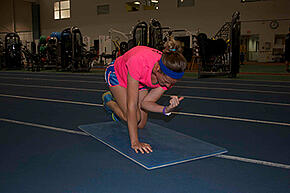
Core strength and endurance is a critical component that should not be neglected by anyone, especially runners. Since running is a repetitive movement, the muscles in the body can become imbalanced when cross training, strength training, and core conditioning are not included in the training plan, which can lead to injury.

Here are 5 simple exercises that you can incorporate into your daily training plan with no additional equipment. All you need is 5 minutes!

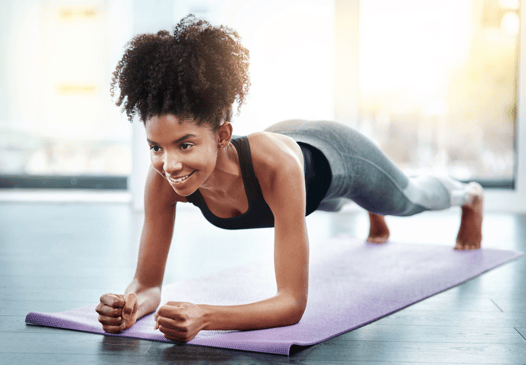
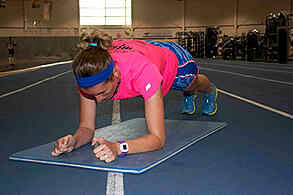
  • Planks: plank-2Lay flat on your stomach and tuck your toes underneath. Raise yourself up onto your elbows and toes. Hold this position, maintaining a straight line between the top of your head and your tailbone. Do not let your hips sag down too low or press up too high.


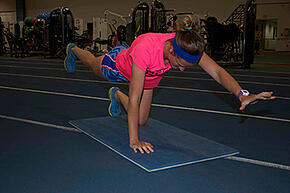
  • Bird Dogs: Start in a tabletop position with your wrists beneath your shoulders, knees below the hips, and a flat back. At the same time, extend one arm out in front of you as you extend the opposite side leg behind you. Bring the elbow and knee together in the middle to complete the movement. Complete sets on both sides of the body.

bird-dog2bird-dog-1


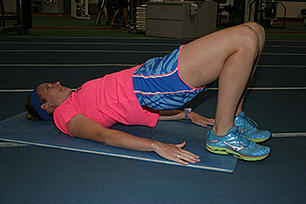
Bridges: Lie flat on your back with your knees bent and feet flat on the floor. Bring your heels as close to your hips as you can without pain. Press your hips up as high as you can while keeping your feet in contact with the ground. Hold for a 2-count and return to the start position.

bridge-2


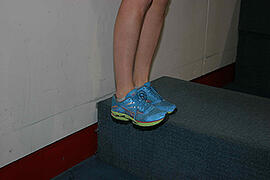
  • Hip Hikes: Standing tall in a neutral position with one foot flat on the ground on an elevated surface, drop the opposite side of the body below your pelvis on the side of your grounded foot. Activate the grounded leg’s glute to return back to the start position. Complete sets on both sides of the body.

Foot-dips

foot-dips-2


Try these 5 exercises before you go out for your next run. Start out completing just one set of each exercise. Hold the plank with good form as long as you can and build up to 1 minute. For the rest of the exercises, gradually build up to 3 sets of 10 to 12 repetitions. Once you get the hang of this, it will not take you any longer than five minutes to complete. This method will give you a great start to adding core exercises to your running routine.

Here's another core workout you can try.

Like what you've just read? Click here to subscribe to our blog!


This blog was written by Stephanie Kaiser, Health Fitness Specialist. To find out more about the NIFS bloggers click here.

Topics: running injury prevention training flexibility strength core exercises

SLIM IT: Team "Cast-A-Weighs" Utilized Group Fitness Classes

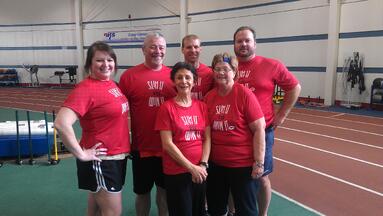
First off I need to say how proud of our team, the “Cast-A-Weighs” I am! They always give 110% no matter what craziness I throw at them. Coming into Slim It I was the new kid, having only started working here a month steve_team_picearlier. When I was asked to take a Slim It team I said “sure, what’s a Slim It team?”
Being the Group Fitness Coordinator you know I would end up throwing some of the classes into the mix of training. In addition to the regular style of small group training we also added in Bodypump™, CX Worx™ and a little Bodycombat™. I wasn’t sure how this would go over, but now feel confident that the Cast-A-weighs will without a doubt continue their workouts utilizing our amazing group fitness schedule and group training options.

At first look all classes and training programs look different and unique, but at the core many hold several things in common. The first is the effectiveness of the workouts. No one wants to come into the gym day after day and not see the results from their hard work. Every program at NIFS is designed to give you the maximum results for the workout time*. Another important aspect of group training is the accountability factor. As Slim It participants have seen, you instantly have a group of people you are accountaible to and everyone is responsible for  Slim-It-logo2motivating one another; even on days you felt like staying in bed. Finally, and most importantly, is the “fun factor”! Let’s face it, exercise is challenging! No matter how great the workout is, if you aren’t having a good time doing it odds are you will stop. Here at the NIFS we are a community of people with common goals and together we can all achieve those goals!

Don't forget the Slim It Finale and spring launch is coming next Monday 4/28. This is going to be an amazing workout and celebration of all your hard work this year in Slim It. Its also a chance to try a variety of workouts, meet new people and plan out your ongoing fitness routine. As for the Cast-A-Weighs, they will not only be participating in the group fitness classes that night, but will be helping all of the Slim It participants in leading by example! The students will become the teachers! I can’t wait!!

*Weight loss claims and/or individual results vary and are not guaranteed.

Regardless of fitness level or goals, almost every member at NIFS could benefit from Group Training or enrolling in a NIFS program. See our Group Fitness Schedule for more information on classes and programming. If you are interested in trying a small group or HIT training session contact Tony Maloney today to get started!

This blog was written by Steve Koebcke, NIFS Group Fitness Coordinator. Learn more about the NIFS bloggers.

Topics: exercise weight loss group fitness group training challenge strength

Fit & Forty+ (Fabulous) Series— Increasing Your Metabolism with Strength Training  (Kettlebell Workout)

For this second workout in the series we are going to be using a Kettlebell. Kettlebell training isBand workout at NIFS becoming a hot new way to change up your workout and is great for women.
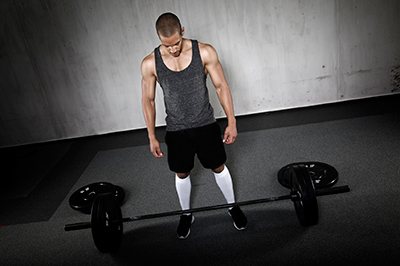
Kettlebells come in many sizes, when looking for weights right for you, think of using a lighter weight of 10lbs, that you will use to press off your chest or over your head. You will need a heavier weight of 20lbs or more for leg/full body moves. You do not need more than one of each size, as you can offset your moves (use one arm/move) which challenges you to stabilize your core.

Watch the video below and try the movements. Be sure to start with lower weights if you are new to strength training or are not familiar with the Kettlebell.


If you have just joined this series be sure to go back and read all the blogs. Including:

Getting Started

Foam Rolling and Increasing Your Range of Motion

Eat Right to Feel Right

Increasing Metabolism with Strenght Training (Band Workout)

Ready to get started with an exercise program designed for you? Schedule an appointment with Kris by contacting her at 317-274-3432 or email.

This blog series was written by Kris Simpson BS, ACSM-PT, HFS, personal trainer at NIFS. To read more about Kris and NIFS bloggers click here.

Topics: exercise training metabolism strength kettlebell workout

Quick and Easy Ways to Improve Performance: Taking a Deload Week

Just so that we are clear, deloading is when you reduce the volume, intensity, or frequency of training for a specified length of time. For many athletes, thinking of taking a deload week can sometimes be difficult. They are either in a groove that they don’t want to mess up, or the fear of losing too much strength or momentum can outweigh their decision to lighten up for a week. The reality of it is that they could come back the following week refreshed and more motivated than ever to reach their performance goals.

When utilizing a deload week, it canweight lifter
sometimes be difficult to understand when to take advantage of it and how to modify your training so that you can come back fully recovered. Your training age, strength levels, and injury history will determine how often you need to take one. The higher your training age, the stronger you are and the more weight that you can lift. If you tend to be injured a lot, a deload week is more important if you want to be successful. 

The three weeks hard, one week deload idea is something that I have added to my programs and have gotten great results from, as well. I use a four-week block system. Depending on where they are at (think off-season or in-season) will dictate if they deload at the fourth week or the eighth week.

Here I outline some general guidelines so that you can take your training and performance to the next level.

Reduce Training Volume

My first recommendation is to drop the total training volume to 60 to 70 percent of what was originally planned. To make things easy, if you had 10 total sets planned, you would only do six to seven total sets for the training session.

Reduce Training Intensity

My second recommendation is to drop the intensity to 60 to 70 percent. So here you would calculate your one-rep max (RM) and work up to only 60 to 70 percent of that 1RM. Let’s say that your bench press is 200 pounds. Then the highest weight that you would lift for the day would be anywhere from 120 to 140lbs. You can reduce both volume and intensity if you are really feeling under-recovered. In this example, if you had 4 x 5 at 80 percent of 200, you would do the following: 

70% of 4 sets = 2.8
(so you would round up and do 3 sets instead of 4 sets)
Instead of doing 80% of 200, which is 160, you would complete 70% of 200, which is 140.
The athlete now would do 3 x 5 at 140 instead of 4 x 5 at 160.

Take Some Days Off or Reduce Training Frequencyfitness calendar

The other option is to take a couple of days off or reduce the training frequency. So if you normally train five times per week, maybe come in for three days that week while dropping your volume and intensity to 60 to 70 percent. On the days off, you could incorporate some active recovery, which includes some cardiac output training (keep heart rate between 120 and 150) to help stimulate recovery, or even a mobility circuit. Again, if you are feeling very under-recovered, it might be best to take the day off completely.

Recovery

The biggest benefit from taking a deload week is to give your body a chance to fully recover so that you can stay healthy and come back refreshed and eager to train even harder. The recovery process is just as important as the training process. If you can’t recover properly, that is going to set you up for injuries. 

If you take only one thing from this post, let this be your warning: Don’t wait for something bad to happen that forces you to take time off. Incorporate a deload week as part of your training program so that you can stay healthy longer. Hopefully this post gave you good insight about how to deload properly, stay healthy for a long time, and improve overall performance.

This blog was written by by Josh Jones, MS, CSCS, USAW. Learn more about the NIFS bloggers.

Topics: fitness center workouts injury prevention muscles strength safety

Why You Need Pilates in Your Fitness Regimen

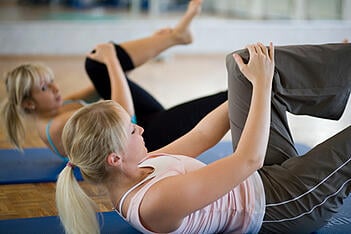
Okay, I know what you are thinking. I have conversations about Pilates almost daily with skeptical fitness enthusiasts, and so often people feel that Pilates is not worth their time. I sympathize; before I tried Pilates I thought that I had things covered with weightlifting, core work, yoga, and cardiovascular training. Why would I need to add anything to my already busy schedule?Pilates

When I took my first Pilates class, I realized that I was wrong. I could barely finish any of the exercises and for several days after I was so sore that I thought I had broken a rib. I almost did not go back because I was embarrassed by how poorly I had done. I could not believe how weak, inflexible, and uncoordinated I was. Later I learned that the muscles targeted in Pilates exercises should be used in other forms of training, but that people are not always taught how to use them when they exercise. Since including Pilates in my regimen, my strength and skill has improved in all of my workouts!

The Workout Benefits of Pilates

So, why should you consider Pilates? Pilates enhances everything you do. The Pilates Method Alliance states that Pilates improves posture, coordination and balance, flexibility, and strength in every muscle group. It helps to align the body and adjust imbalances from sports. The system even increases lung capacity, circulation, joint health, and bone density. From marathon runners to baseball players, athletes in every sport benefit from Pilates.

I love that, once you are confident enough to do so, you can take Pilates with you anywhere and do it any time. It is easy to incorporate the movements and principles into your workout regimen, and you don’t have to do many repetitions for the work to be effective. Even a few exercises a day will benefit you greatly!

Pilates at NIFS

Interested in trying Pilates? Check out our online Pilates Fusion class through the NIFS at-home page.

This blog was written by Morgan Sanders-Jackson a group fitness instructor at NIFS. Meet our other NIFS bloggers.

Topics: NIFS group fitness group training balance flexibility strength core Pilates