<img height="1" width="1" style="display:none" src="https://www.facebook.com/tr?id=424649934352787&amp;ev=PageView&amp;noscript=1">

NIFS Healthy Living Blog

NIFS Lifestyle Rx Program Member Robyn Britt


Thanksgiving has come and gone and its time to look forward to the holiday season that is fast approaching! What better way to start, and save some cash, than with NIFS’ 9th Annual Online Auction! The Online Auction was created to help sustain scholarship opportunities for some of the members of the NIFS Lifestyle Rx Program.

The Lifestyle Rx Program provides extra guidance and observation to individuals with chronic medical concerns. A NIFS’s Lifestyle Coordinator communicates with the participant’s physician and helps plan workouts geared to his or her specific medical needs. The scholarship component of the program is determined on a needs basis and allows for some participants who are unable to work, due to their physical limitations, to come in and get the help and guidance they need at NIFS.

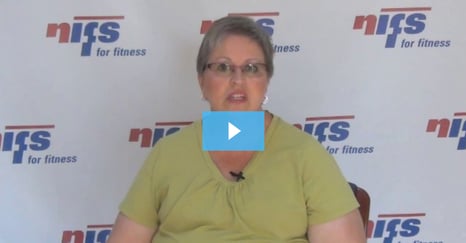
I would like to highlight a current member of the Lifestyle Rx Program, Robyn Britt. Please take a few moments to watch the video and listen to Robyn's journey!


Screen Shot 2016-11-28 at 3.03.09 PM.png


Auction Information

Our Online Auction begins Friday November 25 and runs through Monday December 19 at 11:00pm. There are a lot of great items that everyone can enjoy so be sure to get your bid on today!

AuctionImage.jpgFor questions about the Lifestyle Rx Program please contact Rebecca Newbrough at 317-274-3432 ext. 263  rnewbrough@nifs.org.

This blog was written by Rebecca Newbrough, Lifestyle Program Coordinator and Health Fitness Instructor. To find out more about the NIFS bloggers, click here.


Topics: exercise motivation weight loss member NIFS programs health lifestyle

NIFS Dietitian Reviews Hello Fresh Meal Delivery Service

Hello Fresh Box.jpgWhen I ask people why they don’t cook more, I get a lot of answers. Typically it’s along the lines of “I don’t have time,” “I haven’t been to the grocery store,” “I don’t know what to cook,” or “I don’t know how to cook.” So I was intrigued by the meal delivery service options that are available for individuals who don’t cook as often as they’d like.

Some of the more popular services are Blue Apron, Plated, Hello Fresh, and one local to the Indianapolis area called Fresh Artistry. I had an offer for 50% off my order with Hello Fresh, so that is why I chose to try that one. Here is my experience.

Ordering and Delivery

I went to the Hello Fresh website to sign up. I was able to choose three meals to feed two people (from a selection of six meals) for $35 (originally $70). If I were getting vegetarian choices, it would be a little cheaper, and they also had an option for a family of four. After choosing a beef dish, chicken dish, and fish dish, I was able to pick my delivery date. I chose a Tuesday delivery so I could enjoy the meals during the week when time is short for meal prep.

The box arrived on my front porch with many ice packs to keep the food fresh. Each meal was nicely distributed into its individual boxes, which I appreciated, so I knew which ingredients went with which dish.

Hello Fresh Instruction Card.jpgHello Fresh Ingredients.jpgMaking the Meals

I pulled out the colorful instruction card for the first meal that it suggested I make to guarantee freshness, which was Bayou-Spiced Rockfish. It also listed the prep time, that it was gluten and nut free, the difficulty level, the ingredients I would be using, and a picture (this I really appreciated!) of the final product. When I flipped over the card, it listed the nutrition facts for the meal, what tools I would need to use, and detailed instructions with more photos! So far I was really enjoying my purchase!

I started to work on prepping the veggies and potatoes. What I really enjoyed was the fact that I had minimal dishes getting dirty in the kitchen. When I was finished, the only items I needed to clean were a knife, cutting board, and skillet. This was a plus for sure! After the veggies and potatoes were prepped and ready, I switched those out for the fish. The pan was hot so it didn’t take long at all for it to cook.

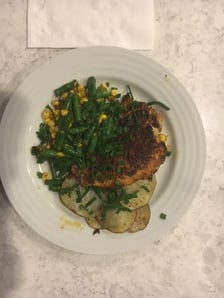
Hello Fresh Meal.jpgHello Fresh Veggies.jpgThe final thing to do was to put it all on the plate and taste it. I thought it was delicious! The portion size was ideal, the flavor was great, and the prep and cleanup were easy! From start to finish the time was around 30 minutes before eating.

The other two meals that I was shipped were also tasty. Each of those took around 35 minutes to prepare (due to a longer cooking time for the chicken and beef), and they both involved one extra piece of equipment to wash.

The Verdict: Thumbs Up!

Overall I was very happy with the service. What I really liked was the option to skip weeks easily when you don’t want a delivery. I was really delighted with the Hello Fresh process. If you have been wanting to cook balanced meals and do more healthy eating, this is the easiest way I know of to get started. Try one soon and let me know what you think!

Like what you've just read? Click here to subscribe to our blog!

This blog was written by Angie Mitchell, RD, Wellness Coordinator. To find out more about the NIFS bloggers, click here.

Topics: NIFS nutrition healthy eating wellness cooking dietitian

From Mini-Marathon Participant to Ironman: NIFS Leader Nick Iaria

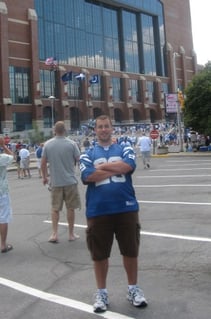
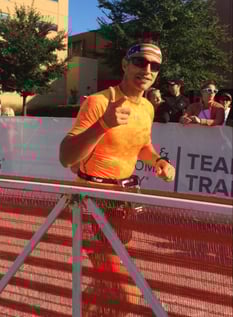
Nick-Before.jpgnick-after.jpgLongtime NIFS Mini-Marathon Program leader Nick Iaria shares his personal story about the NIFS Mini-Marathon Training Program, his fitness changes, and his path to completing an Ironman triathlon.

How long have you been involved in the NIFS Mini-Marathon Program, and what made you decide to join?

I joined in 2009 as a participant, not a leader. I was a part of the run/walk group, and up to that point in my life had never completed a distance over 5 miles. Since 2010 I have been a group leader in the run/walk group and have transitioned to different time-specific groups over the years (11-minute, 10-minute, etc.).

I found out about the program from my then girlfriend, now wife, who was an intern at NIFS, and she was joining as a run/walk leader. I think I joined not just because of her, but because I was interested in finding out if I could do it. I don’t think I would have just gone out of my way to train for it on my own. I needed the knowledge and experience that NIFS gave in the training program format to get me started.

Since being a part of the program you have gone from the run/walk group to, in 2017, leading the 8:30 pace group. How did you manage to increase your speed?

I would like to say I did X and then Y and that led me to Z, but that isn’t how it worked. I am not sure what path got me here, but I think I just had a desire to improve and to continue just for the purpose of continuing. I do think that a large improvement came in the form of my mental training over the years that became a critical step in enhancing my physical development, which led to an increase in speed. It was never really my goal to get to a certain pace or speed; it just kind of happened.

Another key ingredient is core body strength. By improving the strength of my midsection and upper legs over the past two years, it has helped in pushing through the “I want to slow down” or “full-out quit” moments. The mental/physiological improvements I have made within myself—where I believe more in myself and I learn to listen to my body and learn from past mistakes during runs or events where I didn’t do the right things along the way—has been a key part of my success. I don’t take anything as a failure, just a learning opportunity for the next time.

 Mini_logo_2019_small

FIND OUT MORE ABOUT THE PROGRAM AND GET REGISTERED TODAY! EARLY BIRD PRICING THROUGH NOVEMBER 30, 2018!


Why do you enjoy running?

Until recently I have never considered myself a runner; I always considered myself a jogger. However, the stronger and longer I go, the more I feel like a runner. I enjoy it because I can do it whenever (early morning, evening, etc.) and wherever (outside in the elements or inside on a treadmill, etc.). I don’t need anything besides a good pair of shoes and sometimes some good music to get me started or keep me going. It is something I can do alone or with other people. It is versatile as I can go different speeds or distances, and it is easy to track both with different forms of technology so I can track my results as I go.

Last year you were a Mini-Marathon Ambassador. What did that mean, and why do you love the Mini-Marathon so much?

I felt really honored to be a part of the program’s first year. There was an amazing group of 32 other people from all walks of life with different Mini experiences. Getting to interact with them and being able to help others who had questions or needed advice on the Mini made this year’s race that much better when I rang the PR bell at the finish.

My love for it came with my first time back in 2009. I was in a car accident (not my fault) 2.5 weeks before the race and had 5 stitches put in my knee. They were taken out the Monday of race week. I went back and forth all week about whether I should even do it, and that went all the way up to the morning of the race. For some reason I thought I could deal with the pain and still go out and run/walk the full 13.1 miles, but only made it through 4 miles. I knew I had to walk in order to finish and I WAS GOING TO FINISH. Walking the next 9 miles was really fun (and a bit painful) to be walking and interacting with all the different walkers and groups on the side of the road/track cheering us all on. My experience would have been different if I wasn’t walking and taking it all in. Plus, I ended up posing for one of the photographers on the track and ended up on one of the 2010 Mini advertisement posters, so that was an unintended perk, too.

What advice do you have for individuals just starting out or thinking about training for a half marathon?

If it is something that interests you or if you are looking to see how far you can push yourself, I know that feeling. I went way outside my comfort zone recently when I signed up for a full Ironman triathlon (that’s 2.4 miles of swimming, 112 miles of biking, and 26.2 miles of running). It was way outside my comfort zone since I had never swum that far, never biked that far, and had only completed 26.2 miles twice previously at an average completion time of around 6 hours, and it was a struggle just completing the 26.2 miles, so combining all those into one day seemed unattainable. But I told myself there is only one way to find out, and with the support of my friends and family, I signed up, got a triathlon training program, and on October 9 I reached my goal and crossed the finish line.

So, that is my advice: If you are thinking about it, then you probably already want to do it, but just need that confidence or something that helps you to convince yourself that you can reach that goal. I know that you can do it, no matter your level of experience or age. I would say join a program like I did when I joined the NIFS program back in 2009. It will help in learning what to do and when to do it, plus it will help provide that accountability from start to finish for you. The finish line doesn’t care if you run, jog, walk, or roll across it; it only cares that you cross it.

***

Congratulations, Nick, on a wonderful accomplishment! And thank you for your continued dedication to the NIFS Mini-Marathon and 5K Training Program. If you have been thinking about competing in the Mini-Marathon or any other spring half-marathon, or training for a 5K, registration is now open for these NIFS programs. Sign up here!

 Like what you've just read? Click here to subscribe to our blog!

This blog was written by Amanda Bireline. To find out more about the NIFS bloggers, click here.

Topics: NIFS exercise motivation running weight loss group training triathlon mini marathon accountability NIFS programs core strength goals 5k strength training weight training Mini-Marathon Training Program Ironman

Nutrition and Fitness Accountability to Get You Through the Holiday Season

ThinkstockPhotos-524163310.jpgIt’s the time of year that no one wants to talk about. But let’s face it: Christmas decorations have been out in stores for over a month, and the holidays are just around the corner. And for many across the nation, the holidays are one of the most dreaded times for unhealthy eating and putting on unwanted excess weight. But it doesn’t have to be like that. Don’t let this time of year scare you. Instead, view it as an opportunity to meet the weight management challenge for a better you!

Tips for Finding Balance at Thanksgiving, Christmas, and Beyond

The holidays are hard, and I would never deny that. Travel bogs you down with fast food on the road and in the airport; visitors come to the house to stay for a week at a time and you have to do all the cooking of holiday meals; and those delicious goodies that seem to appear only once a year are ever-present on the counter yelling, “EAT ME!” So with all this, how do you stay on track? Allow me to share a few ideas that come to mind for having a successful holiday season with your eating and exercise.

  • Find a nutrition balance. While I am not encouraging you to go out and have five of your favorite cookies every day, I am going to say it’s okay to have one. The key to being successful and not overdoing it with what you put into your mouth is balance. There are times through the holidays that the red velvet cake is staring you in the face, and if you do decide you are going to eat it, then create a balance. What are you going to say no to instead? A few tips: don’t eat the entire piece; leave some on the plate. Eat slowly and allow yourself to feel full rather than killing it in two bites. Drink water with it or milk that has some nutritional value. The more water you drink, the more you will feel full, allowing you to scale back on the cake intake.
  • Find a workout balance. You also need to find balance in the gym. You know those people who head to the gym for a three-hour workout on Thanksgiving morning? You don’t have to be that person. If you have a good balance of both exercising on a regular basis through the holidays and eating appropriately, you won’t need that 3,000-calorie burn before the big feast.
  • Have a plan. Making sure that you have a plan is essential to your holiday success. I have found when there is no plan in place ahead of time, it becomes a free-for-all, which leads to overeating. Make a plan before the holidays start and create goals that are both realistic and attainable for yourself. If you know you have travel coming up or you know that you are hosting for a week, come up with a plan that makes sense for how often and how long you will be able to work out each day, as well as what you will be eating and potentially cooking for guests.
  • Stick to the plan. Having a plan can be the easy part, but sticking to that plan is the challenge. Make sure that you commit to your goal: if you said you were going to work out three to four times a week, do it! If something comes up and you can’t get to the gym, do something at home. The biggest thing is to not allow yourself to make an excuse. You may have to get up a little bit early before the guests arise for your homemade waffles, or make sure the hotel that you are staying at has a gym. Whatever you need to do to stay on track, make it happen.
  • Have some accountability. Figure out what type of accountability works for you. Maybe it’s coming up with that plan with a friend or family member. Or maybe it’s tracking it through a fitness tracker, signing up for a personal trainer, or joining a program the gym is putting on. Whatever it may be, find what works for you and commit to doing it.

Like what you've just read? Click here to subscribe to our blog!

Questions? Please contact Ashley Duncan (aduncan@nifs.org or 317.274.3432, ext. 226).

This blog was written by Amanda Bireline, Fitness Center Manager. To find out more about the NIFS bloggers, click here.

Topics: NIFS fitness nutrition fitness center holidays accountability NIFS programs challenge focus weight management workout goals Thanksgiving muscle building christmas fit3d

Group Fitness Class of the Month: BODYATTACK

BODYATTACK.jpgGroup fitness classes can be a great combination of both cardio and strength exercises jam-packed into a session that ranges anywhere from 30 to 60 minutes. Whether you are a rookie or veteran to the gym, a group exercise class can be a great place to look to when thinking about what to do for your workout. And with the huge variety of classes that most fitness facilities offer daily, you can get just about anything you are looking for in a workout.

Over the next several months, we are going to highlight a group fitness class of the month. We will be taking a closer look at what each class is composed of and the benefits of it. I understand that sometimes pulling up a facility’s group fitness schedule can be overwhelming, with all the options and names of things you’ve never heard of, but hopefully this will help you to understand that these classes are something doable and well worth your time at the gym.

Often, along with the overwhelming amount of classes offered each week, the intimidation factor can play a large role. Let me help soothe those uneasy feelings by telling you it’s okay: just jump into the class and you will quickly blend right in! Now I know that not all group exercise classes are for everyone, and not everyone is going to agree that all classes offered are the best option, but with a well-rounded selection of classes, strength training, and cardiovascular exercise, you will be well on your way to fit!

LM ATTACK CMYK BUTTON�.jpgWhat Is BODYATTACK?

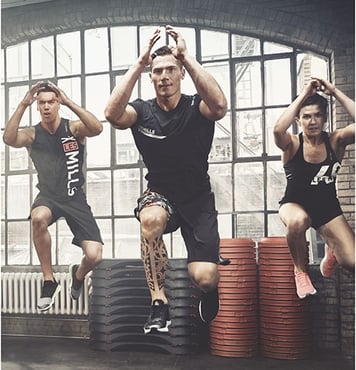
This month we are going to take a look at the NIFS Class of the Month, BODYATTACK! BODYATTACK is the sports-inspired cardio workout for building strength and stamina. This high-energy interval training class combines athletic aerobic movements with strength and stabilization exercises. Dynamic instructors and powerful music motivate everyone toward their fitness goals—from the weekend athlete to the hardcore competitor. This class can be catered to anyone, from the first-timer to the frequent attender. You will see a combination of athletic components like running and jumping intertwined with strength exercises like squats and pushups. You will also experience a variety of fitness styles including aerobics, plyometrics, agility exercises, upper- and lower-body conditioning, power movements, and core strengthening exercises[watch video].

BODYATTACK is a full-body workout lasting 60 minutes. And though the class may look intense from a distance, any group class like BODYATTACK can be tailored to each and every individual fitness level. No matter what level you are at and choose to do in the class, BODYATTACK is designed to burn calories, help you tone up, and get into better overall shape through the various movements.

Tips for Your First Class

With all this, I know it can still be scary stepping up to your first class at the facility. If it is your first time, allow me to give you a few pointers:

  • Get to class a few minutes early and introduce yourself to the instructor. This way you will feel more comfortable and the instructor can help you get set up if necessary.
  • Set up your stuff close to the front, or at least in good view of the class instructor so that you can watch what he or she is doing closely.
  • When the level options are given, take the lowest one first. Even if you consider yourself an elite athlete, sometimes classes may take you by surprise. Take the easiest level first and then ramp it up when you begin to feel more comfortable and confident.
  • Keep moving! You won’t master every single exercise or move during the class, and that is okay. If you mess up, just keep moving to the beat of the music and pick back up on the next move.
  • Don’t be intimidated! Contrary to popular belief, no one is watching you.
  • Be okay with giving it a second try—we all know how intimidating it can be when you walk up and you have all those “group ex-ers” who know the next move before it even begins. Be patient and try the class a second time. That will be you in no time!
  • Have fun! Laugh, make connections with others, and enjoy the next hour of time you have celebrating yourself and the journey to a healthier lifestyle.

Now that you are ready, give BODYATTACK a try! NIFS offers BODYATTACK two different times a week. Keep in mind all the great things that group exercise has to offer.

Not a member? Try a class for free!

Try a group fitness class for free

This blog was written by Amanda Bireline, Fitness Center Manager. To find out more about the NIFS bloggers, click here.

Topics: NIFS cardio fitness center group fitness strength Les Mills plyometric core strength strength training aerobic BODYATTACK Group Fitness Class of the Month

Game of Inches: Benefits of a Fit3D Body Composition Scan

One of the best ways to evaluate your progress as it relates to body-fat loss, weight loss, and muscle gain is by using girth measurements. From day one of my fitness career, my go-to question to people I worked with for fat/weight loss about whether their program was providing the results they wanted was, “How are your clothes fitting?” a few weeks after starting that new program.

Inches can be a quick and easy way to see whether your program is on the right track because they correlate really well to body-fat percentage. I’m sure many of you have stepped on the scale and not seen it budge, but your favorite jeans are much looser than before. That is a change in your body composition, presented by a change in your inches.

Screen_Shot_2016-02-08_at_11.40.50_AM.pngOther Things Your Inches Are Telling You
Here are a few other things your inches can be telling you.

  • Muscle gain: Also known as muscle hypertrophy, muscle gain is a result of progressive stimulus through a training program. Simply put, lift heavy things for a certain number of repetitions and your muscles will grow. Although a body composition measurement will indicate you have gained lean tissue (muscle mass), it won’t necessarily show you girth or cross-sectional increase of a particular muscle. 
  • Belly fat: Inches can tell us where on the body you may be storing fat, which can yield a great deal about your health. According to the Harvard Health Publications website, fat accumulated in the lower body is considered to be subcutaneous (near the skin), while fat accumulated in the belly is visceral (internal/surrounding organs). Visceral fat has been linked to many health complications and is considered to be a very dangerous warning sign. Circumference measurements can supply evidence of where this fat is being stored.
  • Hormonal environment: Where individuals store fat can also tell us a great deal about your internal hormonal environment. The experts at Precision Nutrition have reported several correlations between fat storage and hormones. Hormones play a huge role in almost everything health and fitness related and can be a hero or an enemy to your journey. This information can give a health professional a guide to help with decreasing body fat and the health risks that are associated with it. For example, high abdominal fat correlates to high cortisol levels and high stress levels. Knowing this, I could recommend lowering stress levels and adding frequent high-protein meals. High thigh and upper-arm fat correlates to high estrogen, calling for adding some cruciferous veggies like sprouts, and increasing exercise volume.

A Picture Is Worth a Thousand Words

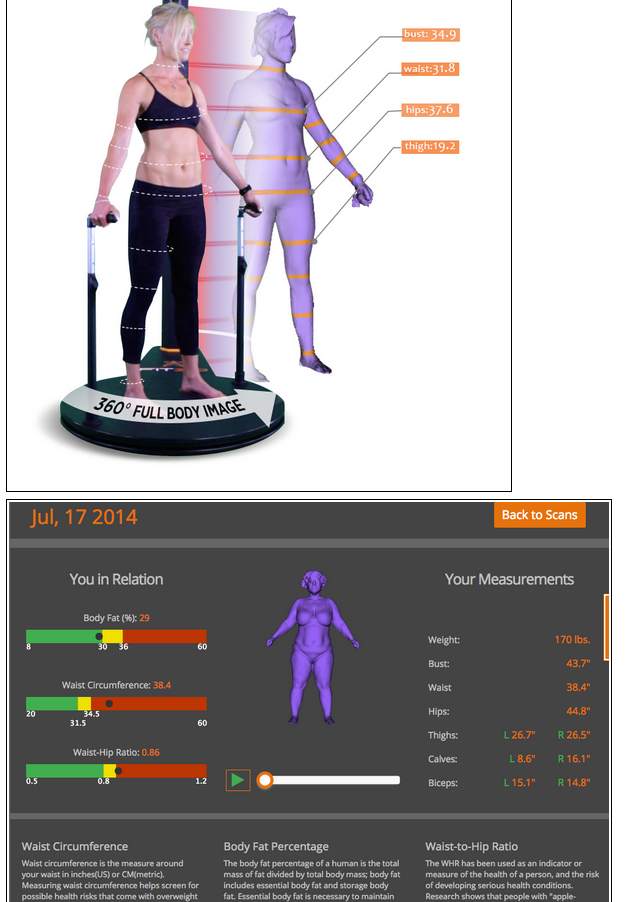
NIFS is excited to offer you a very cool scan called Fit3D that will measure your body’s circumferences and give you an accurate three-dimensional picture of your body, and arm you and your fitness professional with the information you need to tackle those goals you have set for yourself.

Here are three reasons to get a Fit3D scan at NIFS: 

  • A 3D picture of your body measurements: You will have a three-dimensional picture of yourself detailing exactly how your body looks. You will have your very own avatar that comes complete with all the measurements taken from the scan. Although numbers can tell us a great deal, think back to the example above with the loose pants. Numbers didn’t tell you that your clothes are fitting better; something real and tactile did. The same concept works for the 3D picture you get with your scan; you will be able to see what is happening to your body.
  • 21st-Century Before-and-After Photos: I am sure you have seen those before-and-after photos on social media and TV. Many companies use these to display how a certain program or product has changed the bodies of those posing for the photo. These photos (if done ethically) can really show how far someone has come in pursuit of their goals. With this scan, you will have your own before-and-after photo, 3D style, when you complete another scan. You will actually be able to overlay one on top of the other to really see the changes that are being made. It is a very cool option that this new scan can provide, resulting in proper adjustments of your nutrition and exercise program and ramping up your motivation to continue the hard work.
  • Accuracy and Ease: Before the introduction of the Fit3D, your fitness professional would use a basic measuring tape to collect the circumference data from 5 to 11 sites on the body. And although that is still a good practice in the hands of a seasoned professional, the scanner reduces the human error of the old way of measuring circumferences. The scan takes approximately 40 seconds, and measures the exact place on your body every time you do a scan; the same way every time.

***

Game-of-inches-logo-final.jpg

Winter is coming! Are you ready? Sign up for our newest incentive challenge at NIFS,
Game of Inches!

Choose the 6 week challenge that’s right for you!

Loss of Inches Challenge:
(Challenge yourself to stay fit this holiday season. Our weekly workouts and tips will help!)
    •    Fit3D measurements—waist, hips and thigh
    •    Winner determined by cumulative inches lost

OR

Gain of Muscle Mass Challenge:
(Challenge yourself to increase muscle mass and strength.)
    •    Fit3D measurements—bicep, forearm, bust, thigh and calf
    •    Winner determined by cumulative inches gained

Included in the challenge are:
•  Weekly Video Workouts emailed to you
•  Exercise of the Day video
•  Nutrition “tips” and recipes
•  Friday Fitness Challenge

Sign up and scan in starting November 6-12, 2016 at the track desk!

This blog was written by Tony Maloney, ACSM Certified Exercise Physiologist and Fitness Center Manager. To find out more about the NIFS bloggers, click here.


Periodization of Your Workouts for Maximal Strength Gains

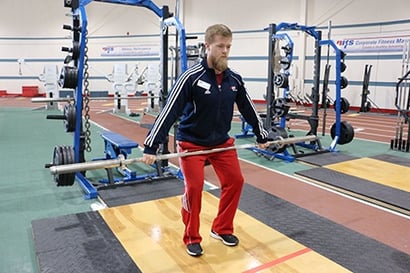
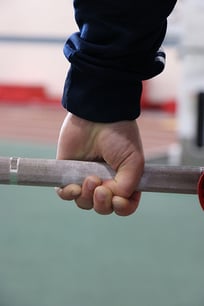
deadlift-3.jpgPeriodization is a fancy word for timing out your strength training to avoid mishaps such as overtraining, undertraining, or psychological “burnout.” A correctly periodized training program allows for maximal strength gains within the time frame of the program.

There are several different subcategories within the realm of periodization. The two most popular forms are linear and undulating periodization, and they can be similar in effect, yet they are quite different in execution.

Linear Periodization

This is a great example of the KISS (Keep It Super Simple) method. This type of programming calls for simply adding weight to your lifts, week after week, and trying your very hardest to outwork your previous workout. This tried-and-true method has shown results in all levels of lifters and athletes, from novice to advanced competitors.

“Linear” refers to the line of progression when you look at the weights used from each workout to the next. This line will slowly and steadily increase until the end of your program, when it is time to show off how strong you have gotten. A typical linear periodization program will last anywhere from 8 to 16 weeks.

Undulating Periodization

Now that you are familiar with linear periodization, take that nice straight line and make it a chaotic zig-zag from the first week of the program to the last, and now you have undulating periodization. Basically, instead of increasing weight or reps linearly throughout your program, you will consistently be adding or dropping weight and/or reps from each workout to the next.

The idea behind undulating periodization is to allow optimal recovery time between ultra-intense workouts, eliminating physical or mental overtraining. This is a method often used by more advanced lifters and athletes because of the commonly intense nature of the training sessions. For example, if a competitive powerlifter trained three days a week, a sample week of their program might look something like this (percentages shown are those of the respective one-rep max for each individual lift):

  • Day 1: Squat—80% 5 sets/3 reps
  • Day 2: Bench Press—70% 6 sets/3 reps
  • Day 3: Deadlift—75% 3 sets/8 reps
Which Method Should You Choose?

Neither of these methods has been proven to be better than the other. Each person will have their own opinions on which is better and why. I would suggest starting with linear periodization for two reasons:

  1. It is a very easy method to follow. There is no reason why anybody should start a linear program and not be able to finish it.
  2. It is a very accommodating method for beginner lifters. It is effort based, and what you give is what you get.

Like I said previously, these methods might not be ideal for everyone. They are great templates for individuals who want to get stronger, but they must be tailored to best fit you and your goals. For more information regarding training programs, ask of the NIFS Health Fitness Specialists to create one for you. If this methodology intrigues you and you would like to try it out, specifically mention this blog and they will create a program based on one of these training strategies.

This blog was written by Aaron Combs, NSCA CSCS. To find out more about the NIFS bloggers, click here.

Topics: NIFS workouts NIFS programs weight lifting strength powerlifting strength training programs periodization

How to Get the Most Out of Indoor Cycling (Spin)

cycling.jpgAre you one of those who either hate to run or find it is too hard on your body? You like to bike but right now it is way too cold to ride outside. Well, one of the greatest indoor group training classes that is offered is indoor cycling, or spin! While the benefits of spinning can be a whole additional blog, I’ll just say that it’s a great cardiovascular exercise as well as a tool to build strength in the legs and butt.

Adjusting the Bike

We’ve all been there one time or another: your toes go numb, your neck or lower back starts to hurt, or you begin to feel tingling in your fingertips. All these can be a result of not having the bike adjusted properly for your body. Don’t make the mistake of jumping onto a bike that someone else has just been riding on and think it’s the right fit.

Whether it’s a spin class, RPM, or another type of cycle class, making sure that you are set up on the bike properly is of utmost importance. Let’s take a closer, step-by-step look at how to get set up:

  1. Set the saddle (seat). Begin by standing next to the bike. Raise one of your knees to a 90-degree angle and locate where your hip bone is on that same leg. Once you have done so, you can put both feet back on the ground and raise or lower the seat to the spot on your hip that you have indicated. You can get onto the bike to feel for comfort. Another good indicator is that when your leg is fully extended on the pedal, there should be a 5- to 10-degree bend.
  2. Position your feet on the pedals. Get on the bike and place your feet so that the ball of your foot is on the axle or back part of the pedal. While pedaling, the pressure should go through the ball of your foot and not the arch. If you are wearing tennis shoes and have a cage, you will want to tighten the straps to help secure your foot.
  3. Position your knee. You need to be sure that your knee does not overshoot your toes. If you were to draw a straight line from the front of your kneecap down toward your foot, it should line up behind your toes. Do a few revolutions and make sure that you feel comfortable. If you are still not sure about your positioning, this is a good time for someone to easily help you. Have someone stand behind you while you are pedaling and watch your hips. There should be no movement or dropping of the hips as you extend through the pedal.
  4. Adjust the handlebar height. Much of this is personal preference, but there are a few tips for people who don’t bike all the time to get adjusted correctly: comfort, comfort, comfort! Start with the handlebars at the same height as the seat (look at the seat and see what your adjustment is; it may be indicated by a number or letter). As you begin to ride, you will want to be sure that you feel comfortable. Watch for neck or lower-back pain and shortness in the hamstrings. If you often ride a road bike, lower handlebars may be more comfortable. This is okay as long as you don’t begin to pull on the hamstrings.
  5. Adjust the distance of the handlebars. This is also heavily weighted on personal preference and comfort. You want your shoulders to be as much over your hands as possible and have a slight bend in the elbows. Remember, be comfortable! If you begin to feel tingly hands or numbness in the arms or neck, you need to adjust your handlebars.


Don’t Be Afraid to Ask for Help

If you are ever uncertain, you can always ask the class instructor to assist you. I would always advise you to get to class a few minutes early to get adjusted and ready. Enjoy, and cycle on!

This blog was written by Amanda Bireline, Fitness Center Manager. To find out more about the NIFS bloggers, click here.

Topics: NIFS exercise fitness cardio fitness center group fitness group training cycling biking spin indoor cycling RPM

Fitness Goal Setting: Why You Should (and How NIFS Can Help)

ThinkstockPhotos-487716564.jpgYou hear it all the time: “Set your goals!” I can assure you that this will not be the last time you hear about goal setting, either. The types of goals that you can set are endless: professional goals, personal goals, financial goals, exercise goals, and the list goes on. Well, goal setting is actually something vital to being as successful as possible, and has some extremely significant benefits to keep you focused and accountable, as well as help you measure progress. These benefits apply to all types of goals, so let’s take a closer look at why you should participate in goal setting.

1: Goals Help You to Move Forward—Energizer

Setting specific goals helps you to set your mind to something, to have direction, and to stay focused. They give you something to plan and work for, so when you begin to lose that motivation and focus, you are pushed quickly back on track. We all have those inner desires, and having goals allows those inner desires to move outward.

2: Goals Set You Up for Success and Positive Self Image—Confidence Booster

Having goals in place can definitely set you up for success and allow you the opportunity to boost your confidence and attitude. When you have specific goals and eventually are able to accomplish them, a part of you becomes proud of what you have done—and rightfully so! When you achieve those goals, you allow yourself to set even larger ones and boost the image that you have of yourself and what you can do.

3: Goals Help the Impossible Become Possible—Mountains Become Hills

We all have big dreams, and sometimes those dreams seem like they could never become reality. When you take the impossible goals that you have and create baby steps or smaller goals, that “impossible feat” suddenly becomes a small incline uphill, rather than a climb to the Everest summit. Setting goals and a realistic approach to achieving them allows you to really make something of what you truly hoped for.

4: Goals Help You Be Accountable for a Lack of Success—Accountability

Writing down concrete goals and setting a date of completion keeps you accountable. But in the event that something prevented you from accomplishing that goal, you can look back and learn from it. And it’s no secret that one of the best ways humans learn is from our mistakes. So instead of putting your tail between your legs if you don’t achieve what you wanted, allow it to be a teachable moment and grow from it.

5: Goals Stretch You—Make You Better

Putting specific and challenging goals ahead of yourself stretches you and makes you better. They push you out of your comfort zone, making you grow and realize how much you really are capable of doing. We all want to be the best possible versions of ourselves, and setting goals that challenge you allows you to do that.

So what are your goals? What is on that list in the back of your mind that you thought was impossible? Pull it out, strategize the stepping stones you need to take to get there, and start!

Like what you've just read? Click here to subscribe to our blog!       

This blog was written by Amanda Bireline, Fitness Center Manager. To find out more about the NIFS bloggers, click here.

Topics: NIFS exercise motivation goal setting group training mini marathon accountability NIFS programs attitude challenge HIT personal training goals 5k Mini-Marathon Training Program

Crucial Conversations: PRs Falling in NIFS Powerlifting Competition

PLM_2015.jpgThe NIFS 3rd Annual Powerlifting Competition is less than a month away, and the expectations for this year are high. From its modest beginnings, the powerlifting event at NIFS has doubled in the number of athletes registered, and the audience tripled from the first event to the second event. With big attendance and even bigger lifts, the outlook for this year’s event is very promising.

For me personally, the very cool part of this growth is that although we are currently a non-sanctioned event, the competition rises year after year. It’s about a community coming together to celebrate strength, competition, and sportsmanship. There is no shortage of high-fives and attaboys and attagirls on this fall Saturday morning. It is a great thing to witness previous strangers become warriors fighting the same war together; it’s quite moving, and impossible not to join in and feed off the energy.

A Conversation with Lifter Aaron Sparks

I had the opportunity to speak with a two-time (soon to be three-time) participant in this great event about what it takes to compete and what struggles he had to overcome to be at his best on event day. Aaron Sparks is a longtime lifter and athlete, and also works for us here at NIFS, so he is constantly around the barbell and plates. Aaron was gracious enough to take time out of his schedule to answer some questions and to share his experiences with you. Join me as we learn what it takes to take down personal records and compete at this level.

Tony: Tell the readers a little about yourself.

Aaron: My name is Aaron Sparks. I am 25 years old and currently a student in the DPT program at Indiana University. I love fitness and everything involved with it, including bodybuilding, nutrition, and powerlifting.

Tony: How long have you been lifting for strength and big numbers?

Aaron: I started lifting recreationally about 10 years ago while playing high school football, but I didn’t start taking it seriously until about 4 years ago when I started actually watching what I eat. I have been powerlifting and really trying to get stronger for the last 3 years.

Tony: Have you competed in any other fitness competitions?

Aaron: The only other fitness competitions I have been in are the two previous NIFS powerlifting competitions.

Tony: What made you take the risk and compete in the NIFS Powerlifting Competition?

Aaron: I have always loved competition and really miss it since my high school football days are over. This was an opportunity for me to show off how hard I have been working in the weight room. For the most part, not many people see all the hours you put in, so it is nice to have the chance to show people how much it has paid off.

Tony: What did it mean to you to compete in the first two NIFS Powerlifting Competitions?

Aaron: Competing was an overall great experience and the atmosphere was amazing. Everyone was there rooting for the person next to them to hit a PR, but at the same time, everyone wanted to lift more than the next guy or gal. It is always great to get a group of people together a common goal and see what they are made of. It gives everyone an opportunity to show off what they have been working for.

Tony: What struggles have you endured to lift and train the way you do?

Aaron: I’ll admit the hardest part for me with working out has always been the nutrition aspect. I love food and pig out every chance I get. On a more powerlifting related note, the hardest part is approaching each week to beat the numbers you hit the week before. Sometimes you have good days, sometimes you have bad days, but you never want to regress from the week before. It’s mentally exhausting to have to push yourself over and over again on such heavy reps so that you can continue making progress toward your goal.

“It is always great to get a group of people together with a common goal and see what they are made of.”

Tony: As a three-time competitor in this event, what brings you back year after year?

Aaron: For me, the main motivation is trying to beat my numbers from the year before, but I also absolutely love the atmosphere of the competition. Everyone is rooting for each other, but at the same time they are trying to beat the person next to them. It’s great seeing people new to the sport make progress and hit PRs. It is also a low-stress competition since it isn’t sanctioned, but it also gives people the opportunity to get exposed to the sport.

How Far Can You Go?

Aaron has placed in the top 2 of his weight class each year he has competed in this event. I know what he is after this year: VICTORY. And with his dedication to improvement, through countless workouts and nagging injuries, he is determined to be better. Aaron took a risk a few years ago in signing up to represent himself among a strong group of competitors and has reaped the rewards. T.S. Elliot once said, "Only those who will risk going too far can possibly find out how far one can go." Are you ready to see how far you can go?

There are a few spots remaining, so don’t wait to get registered for the NIFS 3rd Annual Powerliting Competition. Sign up today to be a part of a very special event hosted only once a year!

get registered for Powerlifting

This blog was written by Tony Maloney, ACSM Certified Exercise Physiologist and Fitness Center Manager. To find out more about the NIFS bloggers, click here.

Topics: NIFS weightlifting powerlifting competition Crucial Conversations