<img height="1" width="1" style="display:none" src="https://www.facebook.com/tr?id=424649934352787&amp;ev=PageView&amp;noscript=1">

NIFS Healthy Living Blog

What’s in Your Luggage?: The Best Traveling Fitness Tools

It’s summertime which is usually synonymous with vacations and miles of traveling. Summertime travels have been some of the best times of my life! The weather is great, there are so many things to do, the sun is out, and it’s time to relax and have some well-deserved FUN.

But it can be somewhat difficult to continue your regimen while on the road. Hotel gyms are not always the best (although most will get the job done in a crunch), you are staying in a rented home or cottage that does not include a fitness facility, and day passes to the local gym can play havoc with your vacation budget. If you are anything like me, you want do something quick but effective so you can get back to what the trip was intended for: RELAXING. So what are you to do?

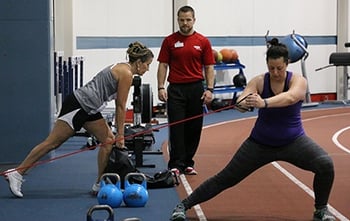
Planning to stay active during your travels doesn’t have to be a huge challenge. To help you plan to stay on track in your fitness, no matter the environment, I put together a list of great tools that travel really well. So when you are packing all the clothes you probably will never wear (I am the worst about that) and your sunscreen, leave a little extra room for a few of these great tools that stow easily and will keep you moving toward your desired outcomes.fitness-travel
TRX

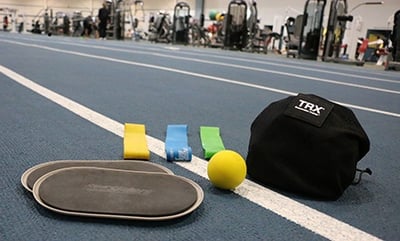
There is a reason the company that manufactures the very popular TRX is named Fitness Anywhere. The TRX can go and be used anywhere. From hanging the suspension trainer off your hotel door, to getting outside and securing it to a tree, the TRX is ready to go in a matter of seconds. The TRX is really your travel gym because most resisted movements you can think of that you perform in the gym can be done using the TRX. Not sold yet? The TRX rolls up into a super-small bag that won’t take up much room in your luggage or even your carry-on.

Resistance Band

Just like the TRX, the resistance band will add load to any movement and will take up no space in your bag. The band also provides many unique movements as well as tension throughout the entire range of motion. This equals big resistance in a small package.

Tennis/Lacrosse Ball

You have heard me speak about recovery many times before as being a huge part of your training program. A great time to spend some time recovering is when you are on vacation. Pack a tennis or lacrosse ball, or even a small foam roller to take care of your soft tissue rehab needs. Remember, the results from your program happen during recovery, so use this time to reap the benefits.

Val Slides

Also known as furniture movers, Val Slides are a great tool to add a little more oomph to your body weight exercise. With hundreds of ways to utilize these sliders to create a major metabolic and strength effect, they are a great choice to throw in your luggage. By the way, they weigh only a few ounces and are super flat, ensuring that they won’t send your suitcase over the weight limit.

Kettlebell

The kettlebell travels best if you are driving to your destination, not flying. But if you are choosing the automobile route for your vacation, the bell will fit very nicely in the trunk. I can’t even start to cover the multitude of movements that can be accomplished with the kettlebell. For those of you participating in Small Group Training or our HIT program, you’ve witnessed what a single kettlebell workout can look and feel like. The kettlebell is a very effective, very quick, and very easy tool to travel with. Grab one and throw it in the car—you will thank me for it!

These lists of workout tools is by no means exhaustive, but are the ones that I think provide the most impact while taking up the least amount of space. There is a tool I didn’t mention above, but can be the best tool of all and that is a pair of walking shoes. No matter the place, time, and who you are with, you can always go for a stroll. Enjoy your summer. You’ve worked all winter for it.

Like what you've just read? Click here to subscribe to our blog!

This blog was written by Tony Maloney, Health Fitness Specialist and Fitness Center Manager. To find out more about the NIFS bloggers, click here.
Topics: fitness running walking group training resistance kettlebell workout TRX recovery traveling

Personal Trainer Lingo 101: What Are These Exercises?

Not long ago, we posted a blog entitled “Where Do ‘They’ Come Up with These Exercise Names?” in which I discussed some of the more bizarrely named exercises and provided a little background for each. Here I’d like to extend that process and discuss Personal Trainer Lingo 101 (aka “Where Do ‘They’ Come Up with These Exercise Names? Part 2). We have all heard fitness center lingo for workouts such as Pyramid Sets, AMRAPS, Supersets, and so on, but what do they mean? Some of them make sense; others, not so much. Enjoy!

Pyramid Settraninig

A pyramid set has absolutely nothing to do with building a stone structure in Egypt, but the method’s format does look similar to that of a pyramid when diagramed out. The pyramid set is a routine that is made of several rounds in which the reps decrease and weight increases each round until you reach the fewest reps you are attempting. Typically you would perform 10, 9, 8, 7, etc. until you reach one repetition. This is common practice for someone who wants a good workout without too much thinking. 

When you have completed your pyramid set, you can complete the workout by doing a “reverse pyramid set” by increasing reps per set and decreasing weight until you reach the original starting point. 

AMRAP

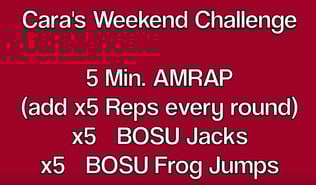
AMRAP is an acronym for “As Many Reps/Rounds as Possible.” This is meant to be a one-set-only bout in which maximal effort is given until exhaustion. Once your AMRAP is over (whether you are using time or effort as your end point), you will need to rest before attempting the same lift again. Many people like to do an AMRAP at the end of a workout to squeeze the last drops of energy out of their workout. 

Screen_Shot_2015-08-20_at_12.19.35_PMAs a funny side note, I like to think that if I were to give all my “might” on any particular exercise, I would therefore no longer have any “might” left and would need to take a nap to recover. The point is, even if you give all your effort, your body and mind probably won’t let you get that far before they shut down and you need to recover. As a challenge, Cara Hartman from NIFS shows a perfect example of this in her NIFS video blog series called Cara’s Weekend Challenge

Supersets

A superset sounds pretty fantastic! It is quite a handy technique that involves two complementary exercises working back to back in order to decrease rest time, promote calorie burning, and help keep your workout flowing smoothly. NIFS Intern Morgan Richardson adds, “For an awesome leg workout, I like to perform deadlifts followed by a round of plyometric box jumps.” Another example would be following your triceps extensions with biceps curls (or vice versa). You could say that would be “two tickets to the gun show,” but we will have to save that for the next installment of Personal Trainer Lingo 101.

***

There are so many terms, phrases, and gym lingo that we hear every day. Some are pretty obvious; others make us wonder what the trainers were thinking when they came up with the names and concepts. One thing we do know for sure is that it is a lot of fun to talk about them and sometimes poke a little fun. Fitness is a serious matter, but that doesn’t mean we can’t have fun doing it!

If you have any Personal Training Lingo 101 questions, please post them in the comments section below. We would love to discuss them (maybe you can even stump the trainer!). 

Until next time, Rejoice and Evolve,

Like what you've just read? Click here to subscribe to our blog!

This blog was written by Thomas Livengood, Health Fitness Instructor at NIFS. To find out more about the NIFS bloggers click here.

Topics: NIFS fitness fitness center Thomas' Corner workouts exercises

Wonder Woman: The Indy Women Fitness 2015

IWF2015As a fitness professional, I have had the honor and the privilege to work with some amazing women over the past decade. Strength, passion, and a focus on excellence are just a few of the characteristics that I have witnessed women displaying day in and day out, and I have gained strength and motivation from them. So when I was asked to join some of the strongest fitness minds on the planet to celebrate and inspire some of the women of our wonderful Indianapolis community, it was a no-brainer. I’m IN!

Using What You Learn

I have been attending seminars and fitness summits for some time now. I love them, because I absolutely love to learn. I have gained so much from attending different events, but mainly I have learned that you have to be a lifetime learner, no matter what you do vocationally or personally. 

Inspiration and motivation are served up in buckets at these events, and you can’t help but get amped up about the impact we as fitness pros have on people. I always return from summits refreshed, revived, and ready to rock. My Group Training warriors know when I go to these events and prepare for when I return from them. They know that we are going to take it to the next level and learn some very cool ideas. I just can’t wait to get back and share what I have learned. I believe that when you catch fire, you just can’t help but to spread it. 

A Preview of the Event

Unlike any other event in our great city, the Indy Women Fitness 2015 event is designed for women of all fitness ages (from enthusiasts to those just starting out) to come and learn, train, and be inspired on their journey to greatness. The event will be held July 18, 2015 at NIFS. One of the keynote speakers for this event, Molly Galbraith, puts it best by saying that “unleashing the inner wonder woman” inside all women will be a side-effect of attending this event. Molly is the co-founder of Girls Gone Strong and dedicates her life to the education and empowerment of women everywhere; I really look forward to meeting and working with her.

Mike Robertson, our other keynote, will be breaking down many fitness misconceptions and teaching how to transform cookie-cutter exercise programs into individual-driven programming. I have attended one of Mike’s presentations and walked out of it having gained so much in so little time. Mike’s partner in crime, Bill Hartman, will be covering “Butts & Guts”; I love that title, by the way. Bill will be speaking the truth about what strategies and principles are actually effective in building “strong abs and a shapely posterior.” These two guys are fountains of knowledge and are sure to lay it all out for you.

The NIFS Presenters

Our very own Kris Simpson dives into those daily habits that women may fall into which negatively affect posture and increase pain. Kris will cover strategies to help you shoulder the load of your daily tasks to maximize productivity in the real world and in the gym. One of the super members of NIFS, Buffy Linville, will be discussing the habit of a new normal and ways to stop sabotaging your health and fitness. Buffy is a complete story of health and fitness success and will explore what has worked for her and what will work for you.

As for me? Presenting and public speaking is something I truly enjoy! Since I have been attending different seminars and summits over the years, it has been my ultimate goal to be one of those presenters and be considered good enough to rub elbows with the best in my field. Through many opportunities leading up this July 18th event, I have been honing my skills for this awesome chance to join a team of great presenters and impact our community. It truly is a dream come true to take this first of many steps to be one of those great presenters I have revered for so long. 

I am so excited to cover what an effective, movement-based, and fun program will look like for any woman at any level of fitness. Consistent with what I love to do, we will start the session moving and not stop till that bell rings! We will cover everything from warm-up to metabolic finishers and grab a taste of everything. By no means will this session be exhaustive, but will certainly cover the crucial basics of any program.

If you are a woman searching for some direction, new to fitness or looking to take your health and performance to the next level, you won’t want to miss this event. Join me in the excitement of learning, training, and being inspired to be a better you! Early bird pricing runs through June 18, 2015 and you will receive $100 off the registration cost.

Get Registered

This blog was written by Tony Maloney, Health Fitness Specialist and Fitness Center Manager. To find out more about the NIFS bloggers, click here.
Topics: NIFS fitness NIFS programs education Indianapolis women

Foundations of a Strong, Healthy Body: Cardio Workouts

ThinkstockPhotos-77293911Rome wasn’t built in a day, and neither is a physically fit and healthy body. The great city was built as the result of the culmination of years and years of hard work. From streets to buildings, each single brick or stone was set with a vision in mind to create the best city in the world. I’m sure many mistakes were made throughout the process; however, those mistakes were only microscopic setbacks in the overall plan.

In exercise, the same rules apply. Some programs you try may yield great results; others may fall flat. You may see success for a couple months and then plateau. Remember: it is all a part of the process. Having a strong fitness foundation sets you on the best path to success in your goals and helps minimize the fitness mistakes you make along the way.

Physically fit characteristics must be set individually. These specific traits, such as cardiovascular fitness, muscular endurance, muscular strength and power, and body mobility, are all equally important. They are the foundation of building a strong and healthy body. You must work on them to maintain or improve your current levels. The majority of individuals possess the ability to improve their current state of health throughout these fitness aspects. Whether or not they choose to address them is another story.

Cardiovascular Fitness

I start by talking about cardiovascular fitness. When it comes to starting a program, begin with the basics: running (or walking), biking, and rowing. These three modes of exercise can all be used to help build that cardiovascular base that you can improve upon continually throughout your exercise program. Although it may seem like it is very basic, all individuals need to have some sort of cardiovascular base they can work off of. Without it, your ability to get through workouts (running, lifting, etc.) will be compromised.

My Recommendation: Intermediate Skill Levels*

  • Run/Walk: 10 minutes at a moderate pace
  • Bike: 10 minutes at a constant and moderate pace
  • Row: 10 minutes, 1 minute at a fast pace, 1 minute at a slow pace

*Adjust time or intensity based on your individual skill level.

Part 2 of this blog series will focus on muscular endurance and how to structure your workouts to improve your muscles’ ability to withstand long-duration workouts.

As always, get after it!

Like what you've just read? Click here to subscribe to our blog!

This blog was written by Alex Soller, MS, CSCS, IUPUI Strength and Conditioning Coach and NIFS Trainer. To find out more about the NIFS bloggers click here.

Topics: exercise fitness cardio running walking workouts cycling

The Importance of Recovery After Exercise

ThinkstockPhotos-184767539One of the most important elements of performance and exercise is rest, and it’s also one of the hardest things to do! According to ACE (a fitness governing body), recovery is the most important part of any person’s program. Taking time to rest your body can be challenging mentally, but rest has significant physical benefits.
The Recovery Stage

To get better at a sport or to enhance your personal fitness, you must expose your body to stresses. Different stresses include training and exercise programs like weightlifting, sprinting, endurance runs, etc. But upon completion of these stresses the human body needs to adapt to the stresses it just underwent, and this is where we get the recovery stage. 

Neglecting the recovery stage can lead to injuries. Many programs have built-in rest days, but if you are creating your own program to follow, be sure to find where to fit one in! It’s essential to listen to your body and gauge how you are feeling as well. If you are physically worn out, take a rest.

It’s Worth Making the Time for Rest

So maybe this is enough to get you to take a day or two off a week. But I know there are still some of you out there saying, “Okay, Amanda, thanks for the tip, but I’m in the middle of training hard right now for the half Ironman in Wisconsin, so I can’t afford to take a day of rest.” Let’s take a look at the benefits of recovery on the body. 

The whole purpose of recovery in exercise is to allow your muscles to repair themselves and to engage muscles that are sore from your workout. There are also different things that you can do during the recovery stage to help move the process along and come out ready to perform better than your pre-rest stage. 

Top 5 Recovery Techniques

Here are some things to keep in mind and apply while recovering:

Rest: Now we are talking about actual rest, sleep. This is one of the most important ways to get your body to quickly recover from the physical and mental demands of hard training.

Hydration and eating: One of the most vital aspects of both training and recovery is being properly hydrated. And nourishment falls right in line with hydration. Food helps to restore the body’s energy supply, so try to eat good, healthy options at the right windows of time to enhance your performance and recovery.

Massages: Getting a massage helps to loosen up muscles, increase oxygen and blood flow into muscles, remove lactic acid buildup (which is what makes you sore), and deliver nutrients from your body to your muscle.

Contrast therapy: If you are or were an athlete this may be familiar to you, but those who don’t have a facility at their disposal might not use it as frequently. You will be contrasting between an ice bath and a hot shower. You want to be sure to start and end with cold (like an ice bath). Jump in the ice bath for about 45 seconds and then into the hot shower for 3 to 4 minutes. Repeat this three times. The benefits of contrast therapy are to increase blood flow to the muscles and speed up the removal of lactic acid.

Ice bath: A familiar process to many, an ice bath causes the blood vessels of the body to constrict, pushing the blood away from the muscle because of the cool temperature. Once you are done and start to warm up, the vessels open up and allow blood flow back into the muscle, bringing with it more oxygen to help you recover.

No matter where you are currently in your workout regime, I encourage you to take some recovery time. It will benefit your performance in significant ways down the road. Consider trying a method from above that you haven’t before and see if it helps you. Different things work for different people, so find out what’s best for your body. You can also consult one of our health fitness specialists here at NIFS for advice. Most important, take time to rest and recover to avoid injury!

Like what you've just read? Click here to subscribe to our blog!

This blog was written by Amanda Bireline, Health Fitness Specialist. To find out more about the NIFS bloggers, click here.

Topics: exercise fitness running marathon training injury prevention endurance weightlifting recovery

Running with Scissors: The Art of Stupidity in Fitness

ThinkstockPhotos-462463965A recent study published in the British Medical Journal (BMJ) looked at the winners of the past Darwin Awards. These awards are given to people who die in an idiotic manner, thereby insuring the long-term survival of the human species by removing themselves from the gene pool.

The study examined 318 cases. Of them, 282 (or 88.7%) were men. These results support the emerging “Males are Idiots Theory” (MIT). The authors were at a loss to explain the reasons for males dominating the art of stupid death, but they offered that men are more willing to take unnecessary risks simply as a rite of passage, for male social esteem, or perhaps just for bragging rights. It is also believed that alcohol had a lot to do with the outcomes (duh!).

Macho Man Cuts Off Own Head

My favorite Darwin Award went to Polish farmer Krystof Azninski, who in 1996 cut off his own head while trying to prove how macho he was by one-upping his friend who had just cut off his own foot with a chainsaw. Azninski won. And lost.

The bout started while drinking (again, duh). They began hitting each other over the head with frozen turnips. But when Azninski’s friend cut off his own foot, Azninski felt compelled to respond.

As kids, we were all warned about the dangers of running with scissors: “It’s all fun and games until someone pokes an eye out.” When you’re 4 years old, that gruesome image stays with you and vividly comes back every time you hold scissors. Running is the last thing on your mind, at least for most people.

But there are some who never listen and seemingly never learn. Tell them the stove is hot and they’ll end up with a second-degree burn because they had to prove it to themselves. Their universe is a lot different than ours, and if we were able to listen in on the conversation in their heads, we would twitch in disbelief. Logic? What logic?

Fitness and the Male Ego

What does this have to do with fitness? Well, while walking around the gym, I twitch a lot because I see bad technique. I see really dumb exercises. And worse, I see really dumb exercises done badly—and you guessed it: mostly by men. In this environment, I assume alcohol is not involved, so it must be something else. Let’s try the male ego.

Maybe it’s a guy thing, but very few males will seek out proper lifting instruction, and there are some who will not even accept it when it is offered. Their pride won’t let them consider that they may be doing something wrong, and they are not going listen to another male tell them that they are. Female trainers, in this situation, stand no chance in helping these men regardless of their qualifications and experience.

Females, on the other hand, are not invested in false pride and are more interested in exercising correctly. They have no unrealistic expectations of strength and are pleasantly surprised when strength arrives. Their major concern is that they simply want to lift correctly and avoid injuries, and are therefore more willing to listen and follow through on instructions. Because of this, they progress better toward their goals and suffer from fewer injuries on the way.

I see the gym’s version of Krystof Azninski round-backing deadlifts, knees collapsing inward while squatting, totally missing the point of the Olympic Lifts (which is power development, not conditioning), engaged in a death struggle under the bar while benching, not having the strength and proper technique to handle the weight they’re using on any exercise, etc. The point is they are more interested in demonstrating strength than actually developing it.

Running with scissors, running with dumbbells; it’s all metaphorically the same. It’s all fun and games until you poke out an eye, rupture a disc, blow out a knee, or turn a shoulder into hamburger.

Guys, take pride in “doing it right.” Let results come to you naturally; don’t chase them. Stop running with scissors, and for god’s sake put down that chainsaw!

To learn more about how a NIFS personal trainer can help you with injury prevention, click here.

This blog was written by Rick Huse, NIFS Health Fitness Specialist. To find out more about the NIFS bloggers, click here.

 Like what you've just read? Click here to subscribe to our blog!

Topics: fitness fitness center injury prevention injuries personal training

Enhance Your Fitness with Heart Rate Training

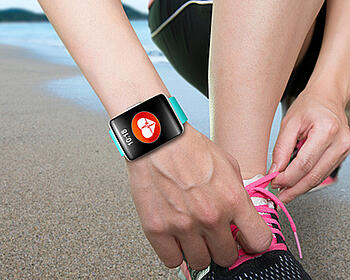
heart-rateThere are several different ways that you can train. Common training methods are interval training, total time and sets/reps, but heart rate training is one that is growing in popularity. Heart rate training has different zones in which subtle physiological effects occur that will enhance your fitness. This type of training can benefit a variety of people who are exercising from the most elite athlete to the least-fit person!

What Heart Rate Training Is

Let’s take a deeper look into what heart rate training is. There are different zones that you want to train in depending on what your goals are. Zones are simply a range of heartbeats based on how frequently your heart is beating. Let me describe the different zones to you:

Heart-Healthy Zone: This zone is 50 to 60% of your maximum heart rate and is generally easy and comfortable to exercise in. You may be breathing a little heavier than your general breathing pattern goes, but you will be able to carry on a full conversation.

Fitness Zone: This zone is 60 to 70% of your maximum heart rate and is a little more challenging than the Heart-Healthy Zone. You will be breathing a bit more heavily and have some shortness of breath, but you should still be able to carry on a conversation. This zone is used for weight loss and building endurance.

Aerobic Zone: This is 70 to 80% of your maximum heart rate and is considered much harder work. You will be breathing heavily and unable to have a conversation, and able to speak in only short phrases. The Aerobic Zone is used to train for endurance and encourages your body to build new blood vessels and increase your lung and heart capacity. This zone is used for maintaining weight and improving your cardio fitness.

Anaerobic Zone: 80 to 90% of your maximum hart rate. This is intense exercise and you will be unable to speak except in gasps.

Red-line Zone: This zone is 90 to 100% of your max heart rate and you will not be able to stay in this zone for more than a minute or two.

Calculating Your Zone

Now we need to take a few minutes to calculate your zone, which is done by finding your maximum heart rate and your resting heart rate. One method that is used quite often is to subtract your age from 220. So if you are 40 years old, 220 minus 40 is 180, so your max heart rate would be 180. 

However, this method does not take into account your current fitness level, which can vary your max heart rate by up to 10 to 20 beats per minute! You can also use this calculator to estimate your zones. 

Tracking Your Heart Rate

With all the different forms of fitness technology, tracking your heart rate is getting easier. Standard heart rate monitors sync with the machine to show your heart rate. Fitbits, Jawbones, and other fitness tracking devices work. And, of course, the machines have heart-rate sensors on them. Take a week in the final winter weeks and try some heart rate training!

This blog was written by Amanda Bireline, Health Fitness Specialist. To find out more about the NIFS bloggers, click here.

Like what you've just read? Click here to subscribe to our blog!

Topics: fitness cardio training heart rate

How to Add Sprinting to Your Training in the New Year

465261305The use of sprints in the world of fitness and sport performance is nothing exceptionally new, but can be really new to you. Actually, sprinting (fast, short bouts of running) was used to stay alive long before we used it as a mode of training.
Author Mark Sisson has spent a great deal of time spreading the message of the importance of sprinting to overall health, and that it was a huge part of the daily life for our very early ancestors. He believes, and I like his theory, that primal humans (represented by a caveman known as Grok) owed their fitness to three important concepts.

  • They walked great distances during their hunting and gathering trips.
  • They lifted heavy things such as building materials and large animals.
  • They sprinted for their lives from time to time from wild animals, and chased down game for their paleo dinner.

So Mark says, walk a bunch, lift heavy things (and set them back down, of course) and sprint once in a while and fitness will find you. I think he nailed it. There isn’t much difference between a sound fitness program and what I just described. But for now, we will focus on the sprinting part.

The Benefits of Sprinting

There are easily a hundred benefits of sprinting. This acute stressor can have many positive effects on your body. Here are just a few benefits of adding sprint work into your training.

  • Sprinting can be used across all fitness levels.
  • Sprinting doesn’t take a lot of time to do.
  • Sprinting burns fat.
  • Sprinting improves endurance.
  • Sprinting improves insulin sensitivity.
  • Sprinting is a fun and easy way to get and stay lean.

When implementing sprinting into your training, there are some pretty important steps to follow. To help you get started, here are a few tips that will get you on your way to sprinting more in 2020.


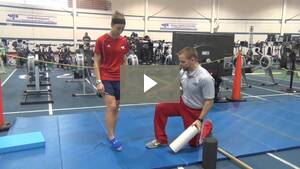
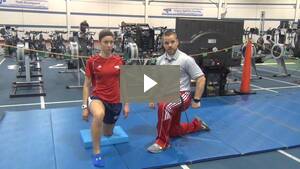
Step #1: Prepare Your Feet and Mobilize Major Joints


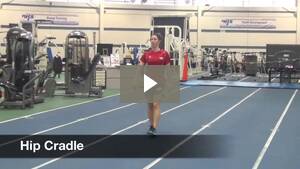
Step #2: Perform a Proper Warm-up


Step #3: Ease into Sprinting

When starting your sprinter program, follow a progressive level of intensity and volume. You do not want to start out with all-out sprints for 100 meters for sets of 5 to 10. That is a surefire recipe for an injury at worst, and failure to perform the movement properly at best.

A great tip I picked up from Eric Cressey is to start by sprinting uphill first before moving to the track or any flat surface. This will help with proper mechanics and decrease the chances of injury because you are less likely to overextend. Your timed intervals should start at a 1:2 work-to-rest ratio and gradually ramp up to a 1:1, and even a 2:1 ratio. For example, do :20 of max work followed by :40 of rest, then repeat for the desired number of sets.

I am also a huge fan of using your heart rate as both a measure of intensity and for determining your rest. You would rest until your heart rate recovered to 110–120bpm before starting your next set. The bottom line is that there will be no first-place ribbon waiting for you at the end of your sprint, so know your limits and use a progressive program when implementing sprinting.

Step #4: Mix It Up with Different Types of Sprinting

One of the best things about sprinting is that there are several ways to sprint, and they don’t always have to be fast. Fast is a relative term, and is specific to you and what you are trying to accomplish. Your sprints don’t have to be rep after rep of 100m dashes, unless that works for you and you are well prepared to take on such intensity. If you intersperse a couple periods of higher effort levels with periods of lower effort levels, you will be in good shape (pun intended).

Here are some other sprinting options:

  • Treadmill Sprints (video)
  • Airdyne Bike Sprints
  • Rowing Sprints
  • Cross-Trainer Sprints
  • Ski Erg Sprints

Sprinting can be a fun and very effective training tool in both fat burning and performance. I can’t stress enough the importance of a proper warm-up and easing into higher-intensity sprints. Stay healthy so you can stay moving! (And if you get injured, see this blog for tips on working through it.)

Like what you've just read? Click here to subscribe to our blog!

This blog was written by Tony Maloney, Health Fitness Specialist and Fitness Center Manager. To find out more about the NIFS bloggers, click here.

Topics: fitness running sprinting paleo

Taking a Step Forward: A Fitness Lesson

stairs-2What has become of our society and fitness? We hear reports all the time that state that the obesity epidemic is only getting worse. In the not so distant past, say around the time our grandparents or great-grandparents were our age, obesity was pretty rare. The average woman would eat seemingly 4,000 calories per day and stay relatively thin. By today’s standards, that same person could be eating 1,800 calories per day and be 20 pounds overweight. What gives?
People Are Moving Less

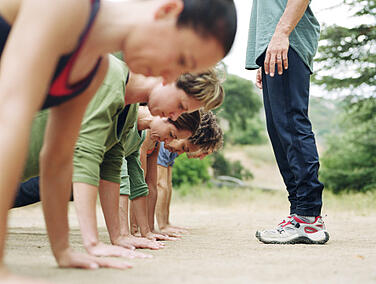
The short and easy answer is that we are becoming lazier. I do not disagree with that statement, but we should also look at how our environment promotes a sedentary lifestyle. Modern conveniences have abetted the downfall of fitness levels around the world. The invention of the elevator caused people to take the stairs less and less (or not at all); the invention of the microwave oven allows us to barely lift a finger to prepare a meal, and the invention of the TV remote control, although great, makes it so we do not have to get up and walk six feet to push a button on the TV set. I don’t feel it necessary to throw these inventions under the bus, but fitness-conscious individuals do have options—good options that can improve health and burn more calories.

Thinking back on what it was like for our grandparents or great-grandparents, fitness and working out wasn’t really even necessary because there were many chores around the house or farm that required manual labor. Need water? Carry two buckets of water across the field every day. Need food? Hoe, sow, and reap the field. Need new clothes? Take a 2.5-mile walk into town and back. They did not need a gym membership to stay fit.

Today’s modern conveniences and sedentary work environments have made it so we barely move any more than we need. Calorie burning slows when the body’s lean body weight (fat-free weight) decreases, affecting the Resting Metabolic Rate (RMR). This decrease, in turn, causes us to pack on extra, stored body-fat weight.

Find Ways to Burn More Calories

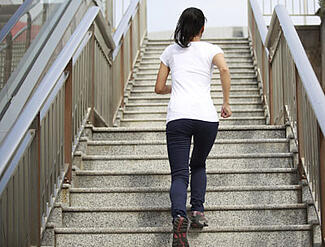
My suggestion to anyone wanting to make a difference in their life is to start by being conscious of their environment. Taking the stairs can burn around 10 calories per minute (and here are some other easy ways to burn calories). Surprisingly, you can burn calories cooking, at a rate of 100 calories per hour (and this site will show you how many calories you burn doing other activities). Let’s face it, remotes will not go away, but we can do various exercises during commercial breaks, like squats, crunches, or pushups. You could even squeeze in a few exercises of yoga while watching your favorite game show.

When options arise, make the effort to challenge your body. Do this every day for the best results and encourage others (in a nice way) to take a step forward.

This blog was written by Thomas Livengood. To find out more about the NIFS bloggers, click here.

Like what you've just read? Click here to subscribe to our blog!


Topics: fitness Thomas' Corner weight loss calories weight management

“Sir! Yes Sir! May I Have Another?” The Militarization of Fitness

200069247-001There is a fitness trend that has been bothering me for a long time, and in recent years it has gotten exponentially worse. There are exercise programs that have actually declared war on the human body, and by doing so, have widened the gap further between health and fitness.

I know that they are commonly linked, but please understand that health and fitness are not the same thing. You can have very healthy biomarkers and still be unfit. Likewise, you can have tremendous strength or outrageous endurance and be very unhealthy.

The Trend of Intense, Dangerous Workouts

This current version of “beating the body into submission” by the evil triumvirate of ego, willpower, and ignorance started with the media marketing experiment of P90X and its search for the limits of stupidity that people would pay for. At about the same time, there was the appearance of neighborhood boot camps that were conducted on strip mall parking lots and/or any available piece of grass that no one would be chased off of, led by unqualified trainers out to make a quick buck by riding the trend of selling pain to the fitness gullible. And then came the growth of CrossFit and its many copies selling to the male ego: SWAT Team, MMA, and Special Ops–inspired training so that “You can be the man!”

The common theme of this period is finding the limits of discomfort that the public can be convinced to invest their time, energy, and money into by marketing to the ego’s desire for quick and nearly impossible change by violating the basic laws of human biology and twisting logic to arrive at “the-end-justifies-the-means” training: No Pain, No Gain! Train to Failure. Train Hard or Go Home!

Currently, we have a cultural fitness myth that is doomed to fail because it is not sustainable. The human body cannot live on the “edge” for long without breaking down. The changes we desire actually occur during recovery as a result of proper exercise stimulus. More stimulus is not better; it is just more, and too much can retard recovery and greatly increase the risk of injury.

Jonathan Angelili wrote a very thoughtful blog published on Greatist titled, “The Massive Fitness Trend That’s Not Actually Healthy at All,” where he states that the fitness industry has come to “glorify exercise as an all-out war on the body.” Instead of living within our bodies and having fitness and health evolve naturally, the ego/mind plays the role of sadistic coach intent on whipping the lazy body to reach some arbitrary goal as quickly as possible, at which time another arbitrary goal is launched, so the beatings continue.

P90X, boot camps, and CrossFit didn’t create this antagonistic attitude toward the human body, but rather they simply took advantage of it. We, as a culture, have had a very long history of the mind being separated from the body and the belief that success, however you define it, must be chased down and wrestled to the ground at all cost, including the loss of health. The belief is “the more you want it, the more you must sacrifice to get it.” Sadly, way too many people are quite willing to sacrifice their health for what they have been convinced is The Standard for Fitness, not realizing that health and fitness can be diametrically opposed.

Pain Is a Great Teacher!

Punch a shark long enough in the nose and it will eventually bite you. Living on the extreme edge of training because it makes the ego feel special and supported by the mistaken beliefs that more is better and more often is better yet, a breakdown is inevitable. If you want to put a smiley face on this situation, pain is a great teacher.

Pain gets your attention in a way that nothing else can. Movement can no longer continue without a constant reminder that something is very wrong, and more than likely, you are responsible.

The mindset that led to the pain happening in the first place will begin by muscling on: icing, taking OTC pain relievers, and even metaphorically just “rubbing dirt on it.” You know, just suck it up and move on. Next will come a quick trip to a doctor for the next level up pain relief so that the same training can continue without missing a beat. If none of that works, then comes the specialist with X-rays, MRIs, PT, and possible surgery. That same training that got you here has stopped and the search begins for “what can I do now?”

Like a shop teacher accidentally cutting off his fingers with a band saw: Oops! At least, you’re helping the medical economy.

There is inherent risk in exercising. Most waiver forms state that exercise can even cause death, extremely rare but still possible, but the injuries I’m referring to come under the heading of “Can Be and Should Be Avoided” with an eye toward injury prevention.

Reasonable goals, properly designed workout programs, and just some plain common sense can go a long way to safely reaching your goals with few injury setbacks. If you are involved in fitness for the long haul, these three elements can lead to an enjoyable life of fitness and health.

Just ask yourself two questions:

  1. Is what I’m doing striving toward health and fitness?
  2. Am I learning to live within my body and experiencing greater joy while on this journey?

If your answers are yes, cool, you’re on your way.

If your answers are no, then “Sir! Yes Sir! May I Have Another!”

This blog was written by Rick Huse, NIFS Health Fitness Specialist. To find out more about the NIFS bloggers, click here.

Like what you've just read? Click here to subscribe to our blog!

Topics: fitness injury prevention challenge boot camp overtraining health injuries pain fitness trends CrossFit