
 One of my favorite things to do during summer in Indiana is to visit the various farmers’ markets around the Indianapolis area. As a dietitian I am a sucker for the fresh fruits and veggies, but I also love the homemade desserts, candles, pasta, kettle corn, fresh flowers, and other wonderful items you can find.
The Top 5 Reasons to Shop at Your Local Market
Here are my top 5 reasons why visiting your local farmer’s market is a must.
- Support the local community. Since the produce is grown and purchased locally, the money remains in the community and stimulates the local economy. Also, when you shop at the farmers’ market you are cutting out the middle man, and the product is generally less expensive than if you purchased it in the grocery store.
- Eat foods that are in season. Farmers’ market produce is picked ripe and sold soon after picking. Supermarket produce, on the other hand, can take up to two weeks to travel from the farm to the store, even when it is in season. The produce tastes richer and more flavorful and the nutrients are better retained. This handout for Indiana allows you to see which produce is in season so you can plan ahead for meals and shopping on your next outing. If you don’t live in Indiana, check with your local government websites to see if they have a similar calendar to help you make the best local eating choices.
- It’s good for you. The average American eats 4.4 servings of fruits and vegetables per day. The current recommendations are 9 servings per day. Picking up multiple servings of fruits and veggies and incorporating them into recipes, meals, and snacks is a great way to get closer to the 9-serving-per-day-goal. This will guarantee you are meeting your recommended vitamin and mineral nutrition requirements, increasing your daily fiber intake, and acquiring cancer-fighting antioxidants. Locally grown produce is also lower in pesticides and chemicals.
- You can talk to the farmers who grew the food you are about to eat. You can meet the farmers who grew your food, ask when it was picked, how it was grown, and ways to prepare it. When else do you get the opportunity to learn so much about what you are putting in your mouth?
- There is certain to be one that fits your location and schedule. I love being able to go to the local farmers’ market close to work on my lunch break mid-week to grab items to get me through the rest of the week. Saturday mornings it’s off to the farmers’ market closer to my house to purchase goodies for the weekend and first part of the next week. To find out farmers’ markets close to you, check out the Farmers Market Directory on the USDA website.
An Inexpensive Way to Stock Up for Healthy Eating
Whether you are picking up items for tonight’s dinner or for the whole week, the local farmers’ market is an inexpensive, healthy alternative to the grocery store. Try to get there early to get the best variety and options. Not all vendors accept credit cards, so be sure to have cash on hand. Finally, bring along your own reusable grocery bag to put all of your goodies in so it is easier to carry home your fresh, delicious finds.

This blog was written by Angie Mitchell, RD, Wellness Coordinator. To find out more about the NIFS bloggers, click here.

 In my
In my 
 Who would you recommend this training program for?
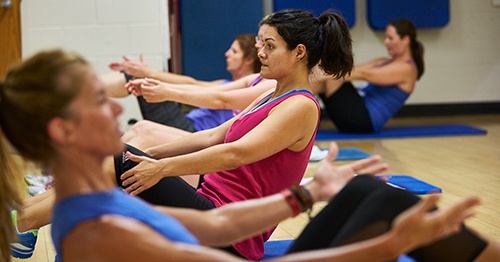 When it comes to working out, I have always been the “faster, harder, stronger, better” type. If I’m not going to sweat and feel like I’ve accomplished something, what’s the use? As such, I never put much stock in mind/body classes. What could that type of exercise possibly offer that I wasn’t getting through my intense cardio and/or strength training sessions?
 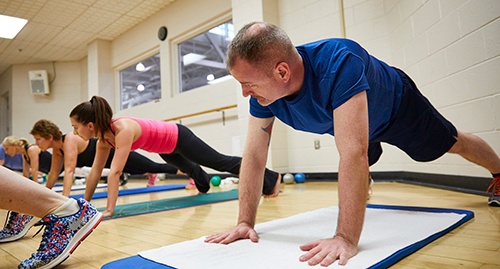 So the ultimate question is, what specifically can you expect when you walk into the NIFS Group Fitness Studio shortly before 5pm on Wednesdays? You can expect a low-impact entire-body workout that flows nonstop for 50 minutes to upbeat, current, familiar music. You can expect careful instruction on form. You can expect an occasional self-assessment on strength and flexibility. And, even though this is not a cardio class, you can expect to sweat! Mats will always be used, and often you will be instructed to grab a small piece of equipment (small weighted balls, light dumbbells, springloaded rings, small towels, and exercise bands are commonly used). Shoes are optional. Let the instructor know if you have any injuries.
  Here are four exercises you should do if you don’t have time to do your usual routine:
 A few summers back, I spent 5 fantastic days in Maui with my wife and her family, and as you can probably imagine, I had the best time of my life there! I have been so lucky to be included on my wife’s family vacations and have had the opportunity to visit some amazing places, each one better than the last. For that, I am extremely thankful!
 For the month of May, we are highlighting Boot Camp as our
 Salutations NIFS friends! Our facility has a partnership that allows members
  Burning more calories, developing more strength, and building the ultimate body in less time is an equation I think we can all get behind. In our world of “on-the-go” fitness—and, well, pretty much everything—finding ways to get more done in less time is a priority in many of our lives. But being effective and getting things done are two different things, in my opinion, and movement does not always result in progress. Being efficient and getting results at the same time in your fitness programming takes planning and choosing the best exercises for your desired outcomes.